【Method Logic Details⑥】Presence/absence of volatility: The simple standard taught by professionals that most effectively reduces losses
【Detail of Method Logic ⑥】 Volatility present or not — the most effective, expert-titched standard to “reduce losses”
This article focuses on the following
【Detail of Method Logic ⑥】 Presence or absence of volatility
For other indicators, please refer to other articles
How do we decide? This alone is premium-grade information, so please read on if you like
■ Overview of the entire method
We focus on the “probability of going up (expectation)” rather than the “win rate”
1-minute time frame scalping trading method
Even though it is scalping,
it follows the medium-term trend (direction of higher-timeframe)
and captures the short-term momentum at that time
as the method
Also, avoid areas with low volatility
Follow the momentum without going against the higher-timeframe trend
Where there is momentum
Where entry leads to rapid moves upward (or downward) right away
Trade only where there is an expectancy, and accumulate profit overall
■ Combination of excellent logics
We combine several logics that can alone enable trading
■ What each indicator determines
※ Each blog will explain one by one
【Logic Explanation ①~⑤ of the Method】
[○○] is an indicator
【Logic Detail ①】[Bollinger Bands]
【Logic Detail ②】[MACD (short-term)]
【Logic Detail ③】[Two EMAs]
【Logic Detail ④】[MACD (mid-term)]
【Logic Detail ⑤】How to take entry points and exit points
【Logic Detail ⑥】Presence or absence of volatility
Then, below, regarding 【Logic Detail ⑥】 Presence or absence of volatility
I will write about it
Among what my master taught me, this is the most shocking logic
How do we determine it? This alone is premium-grade information, so please read on if you like
■ In technical analysis, whether volatility exists or not is a key point
In a state with no volatility, most technical-analysis-based methods fail to work
There was a famous FX info product that used a range-trade logic in no-volatility conditions, but when tested it didn’t work at all
Therefore, my technique and my master’s technique trade with a certain level of volatility present
Now, how do we determine whether volatility exists or not?
We will explain from here
We determine volatility presence using two indicators
■ In the mid-term trend, whether volatility exists
■ In the short-term trend, whether volatility exists
We determine these two things
■ In the mid-term trend, whether volatility exists
First, in the mid-term trend, the trend of the higher timeframes, we determine whether volatility exists using
[Bollinger Bands]
※ See article 【Logic Detail ①】[Bollinger Bands]
The indicator [Bollinger Bands] expands outward when price starts moving
A state where there is a certain gap in the [Bollinger Bands] is judged as having volatility
In my method, I determine this by whether the width of ±1σ of the [Bollinger Bands] is at least XX pips
What is the width of +1σ and -1σ in pips?
In a no-volatility state, this width becomes extremely narrow
In that state, even if all other logics are satisfied, price often cannot move as expected and slows, leading to frequent false signals
This increases trades that fall for a trap
In my method’s explanation, how many pips wide should it be?
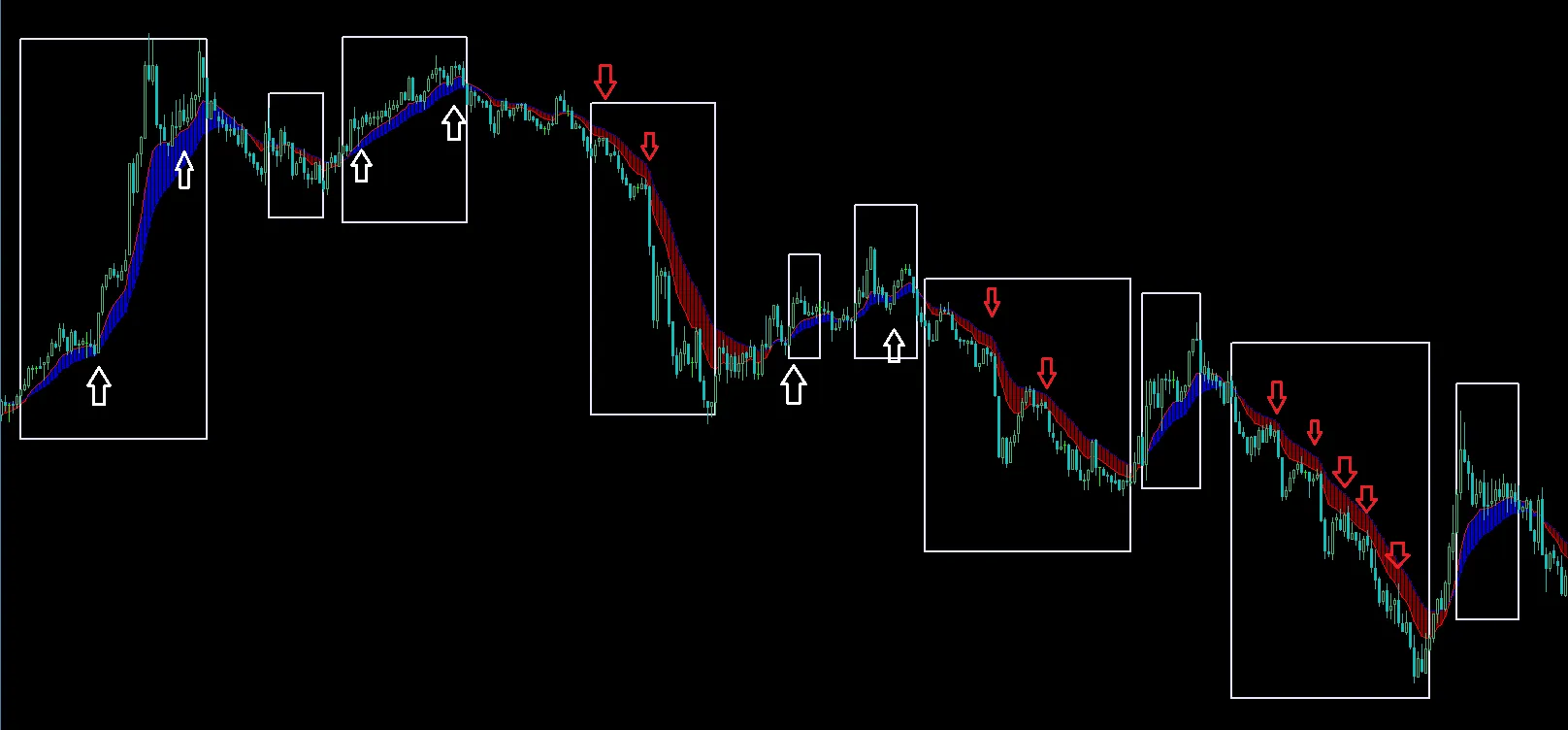
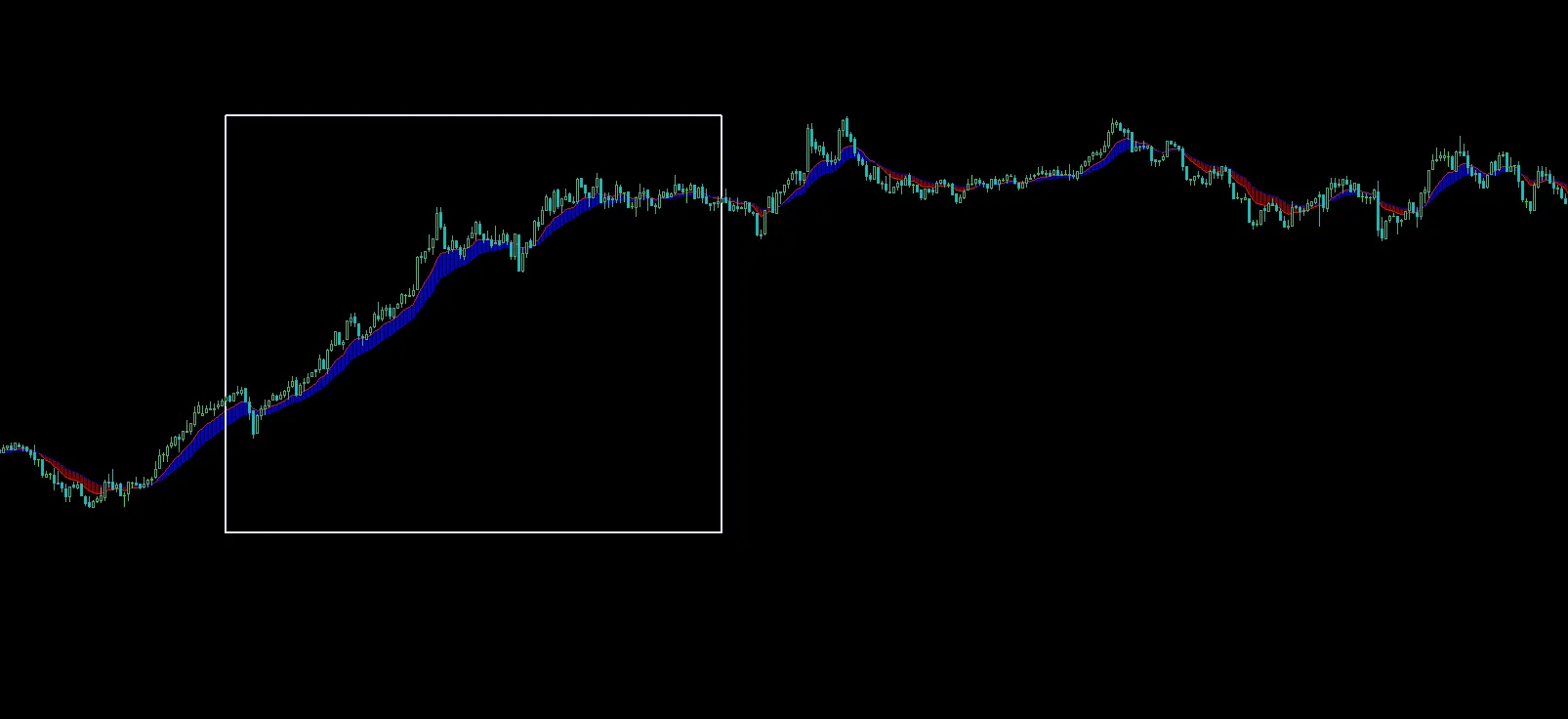
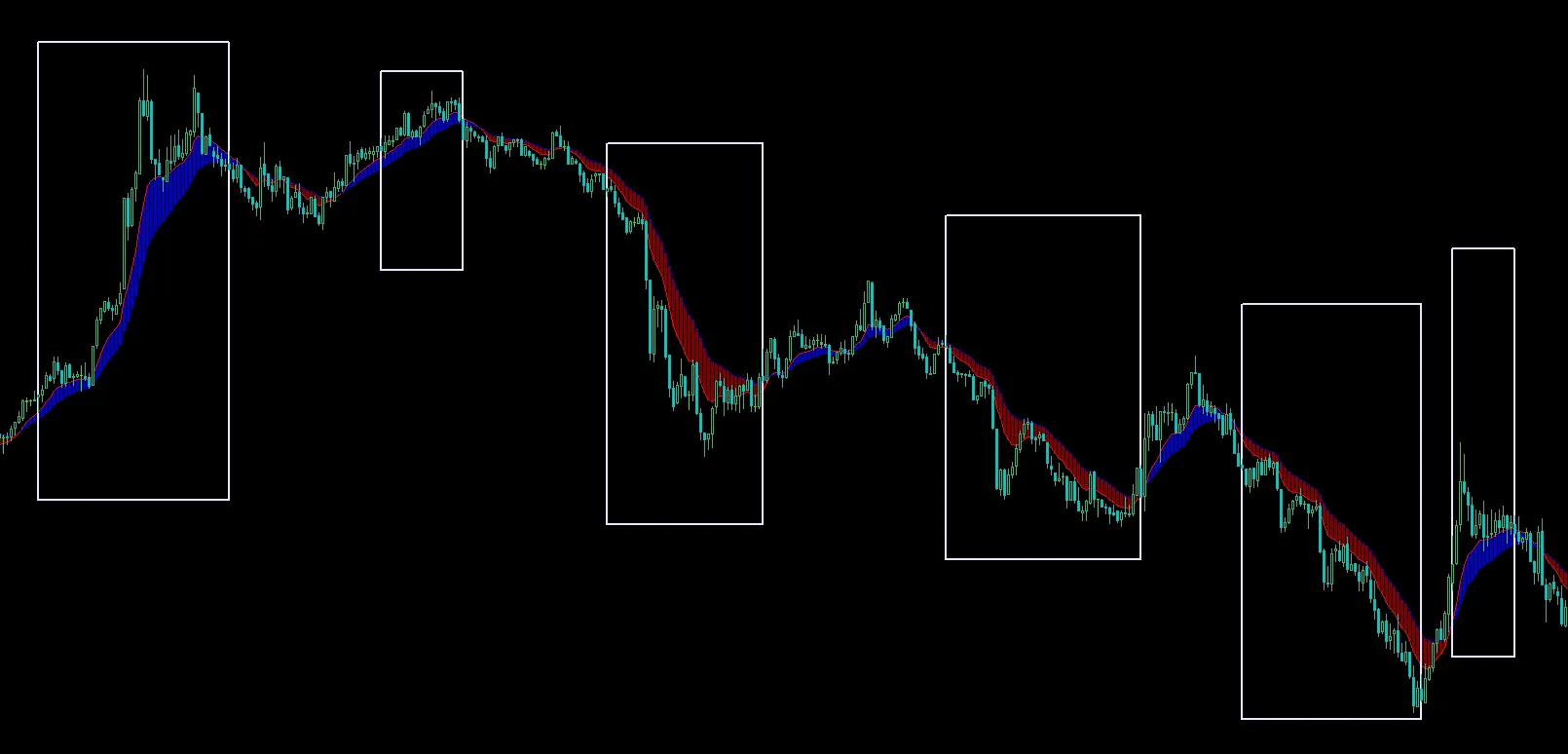
Below, the boxed areas in the image indicate states with volatility
Areas not boxed by a square are sideways or range-bound
■ In the short-term trend, whether volatility exists
Next, in the short-term trend, whether volatility exists
Numerically, [MACD (short-term)]
Visually, determine using the [Two EMAs] logic
※ See article 【Logic Detail ③】[Two EMAs]
The condition that satisfies [MACD (short-term)] is the state of volatility
Visually, in that condition, the width of the [Two EMAs] is reasonably wide
Below, the boxed areas in the image indicate states with volatility
The arrows indicate entry points within them
■ Summary
The width logic of [Bollinger Bands] ±1σ
and the width logic of [MACD (short-term)] or [Two EMAs]
When both are satisfied, it indicates a certain level of volatility
In that situation, with a certain level of volatility satisfied,
we trade using the method’s logic
It is very important, yet many methods
neglect to determine volatility
Most do not fully incorporate this logic
Is volatility present?
By adding this single perspective, you can reduce “false signals”
In other words, you can reduce losses
Among the master trader mentors I learned from, this was the most helpful perspective
It has been a highly effective standard for reducing losses
It is not an exaggeration to say
※ The numerical values are a spoiler, so not stated here, but
If you are interested, please verify for yourself what width you deem appropriate for volatility
This explanation discusses “what width is good?”
This alone is quite a spoiler and premium-grade informationI think
All that remains is to set the width!
I hope this information is useful
The method I am currently practicing is here
【Steadily +10 pips per day】
A 1-minute FX method taught by a professional trader that helped me escape the losing group (2–5 hours per day)
Explained with smartphone chart images
【Entry points】【Exit points】are easy to understand with this logic
■ Thinking of overseas professional traders (legendary investor Buffett and Soros)
A trading method not to win, but to earn
Trade only with expectancy of long positions where the probability of going up is high, not by win rate
↓
https://www.gogojungle.co.jp/tools/ebooks/76385
#USDJPY #EURUSD #FXMethod #FXBeginner #FXHolyGrail #FXWayToWin #RealTrade #Scalping #Indicator #ProTrader #FXTrade #DayTrade #DayTrader #DayTrading #WantToBeATrader
#Investing #SelfInvestment #InvestmentLifestyle #WantToBecomeAnInvestor #Freelance #WantToBeFreelance #FreeWork #SeekFreedom #SecondCareer #StockActivity #JobChange #HomeWork
#AssetFormation #Funding #AssetManagement #StartABusiness #SoleProprietor #WantToBeSoleProprietor #Startup #WantToEarn #HowToEarn #WantToStartBusiness #QuitSalaryman #SideBusiness #SideHustle #HouseholdBusiness #EntrepreneurWoman #MamaEntrepreneur