【Dollar-Yen, Emergency Situation】 About 70% of individual FX investors are buying yen? Crisis of rising unrealized losses?
【Dollar/Yen, Emergency Situation】 About 70% of individual FX investors are buying yen? The risk of increasing unrealized losses?
① Is it true that about seven in ten individual FX investors are buying yen?
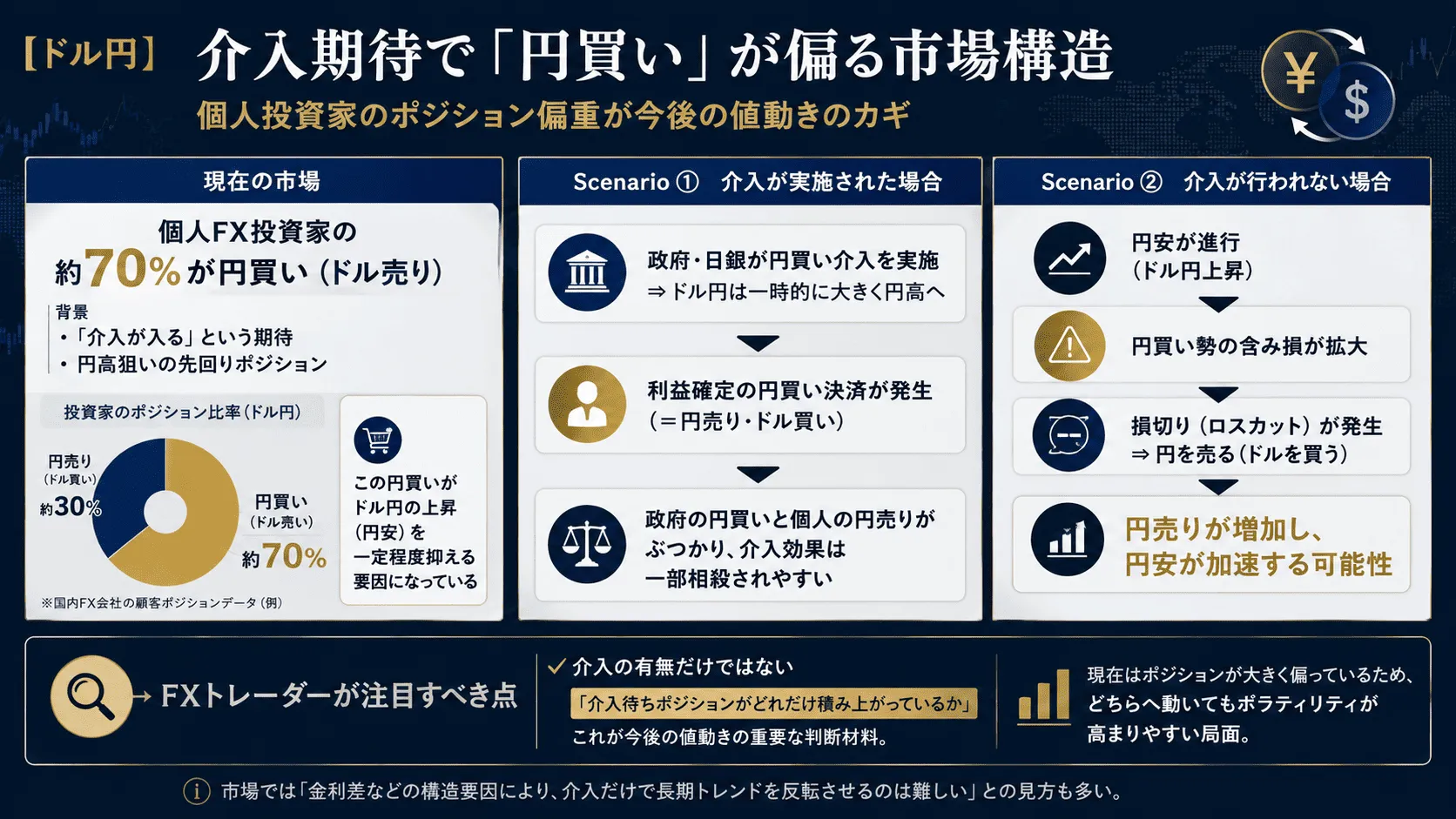
Currently, according to data from domestic FX companies, the ratio of “yen buying (selling dollars)” in the dollar/yen pair is in an unusual state above 70%. The background is,
“If it exceeds 160, intervention should come”
“Intervention could cause a rapid drop of 5–10 yen”
and many individual investors are preemptively selling dollars and buying yen. This has been considered a relatively high level even since 2013.
② Are individual investors preventing yen depreciation?
Ironically, because individual investors are buying yen ahead of the government’s moves, the current yen collapse is being kept at the brink.
For example,
Originally, if there are 100 market participants
30 people buy yen
70 people sell yen
yen would depreciate.
But now
70 people buy yen
30 people sell yen
Thus,
individual investors’ yen buying orders are restraining dollar/yen from rising (yen appreciating) to some extent.
Because individual investors are buying yen in anticipation of intervention,
dollar/yen is less likely to rise than usual
③ Why does intervention by the government and the BOJ have little effect?
This is the most important part.
If the government truly uses enormous funds to conduct “yen-buying intervention,” the yen would surge higher as intended in an instant.
However, if that happens, the individual investors who bought yen ahead of time would say, “Great! We predicted it and made a huge profit!”
To lock in profits, investors would liquidate all their yen holdings
(i.e., sell yen to buy back dollars)
Government: desperately buys yen to stop the yen from weakening
Individual investors: sell yen all at once because they made money
For example
If USD/JPY is at 164 and many individual investors
think, “I’ll take profits when it drops to around 160,”
they consider
If the government intervenes,
164 yen → 160 yen
a sudden drop occurs.
Then individual investors
think, “Profit is realized!”
and settle their yen-buy positions.
To settle a yen-buy position means
selling yen and buying back dollars.
In other words
Government → buy yen
Individuals → sell yen
causing a large opposite-order flow,
which makes the intervention effect easily offset
④ What if there is no intervention?
Conversely, what happens if the government never intervenes?
Sitting out, overseas investors may push further with “yen-selling and dollar-buying,” accelerating the yen’s depreciation.
If that occurs, individual investors who had held yen hoping for yen appreciation would face large losses (unrealized losses). In FX, there is a rule called “loss cut” (forceful liquidation) when losses become large.
If exhausted investors suddenly cut losses, they would be forced to sell their yen holdings (this is the “pump” and the “massive yen selling back”).
Already in a yen-down environment, if Japanese individual investors panic and sell yen en masse, an even more unstoppable yen depreciation could strike.
If intervention does not come and
164 yen → 166 yen → 168 yen
rises,
those who bought yen would be in unrealized losses.
If they cannot bear it,
loss cutoff
↓
sell yen (buy dollars)
↓
further yen depreciation
which makes a “short squeeze” more likely.
This is the FX traders’ short squeeze phenomenon.
Key points for FX traders
Right now, the dollar/yen is being pulled by
two forces: heavy yen-buying positions from intervention expectations
and fundamental pressure from interest-rate differentials driving yen depreciation
Therefore,
intervention could cause a temporary big move toward yen appreciation
if no intervention, yen depreciation could accelerate due to losses from yen-buying positions
either scenario is possible.
Meanwhile, many in the market believe “the current yen depreciation is also supported by structural factors like interest-rate differentials, so intervention alone is unlikely to reverse the long-term trend.”
From an FX trading perspective,
not only whether intervention will occur, but
how many positions are waiting for intervention have accumulated
also provide important clues.
Now those positions are heavily skewed, so whichever way the market moves, volatility is likely to increase.
The method I am currently practicing is here
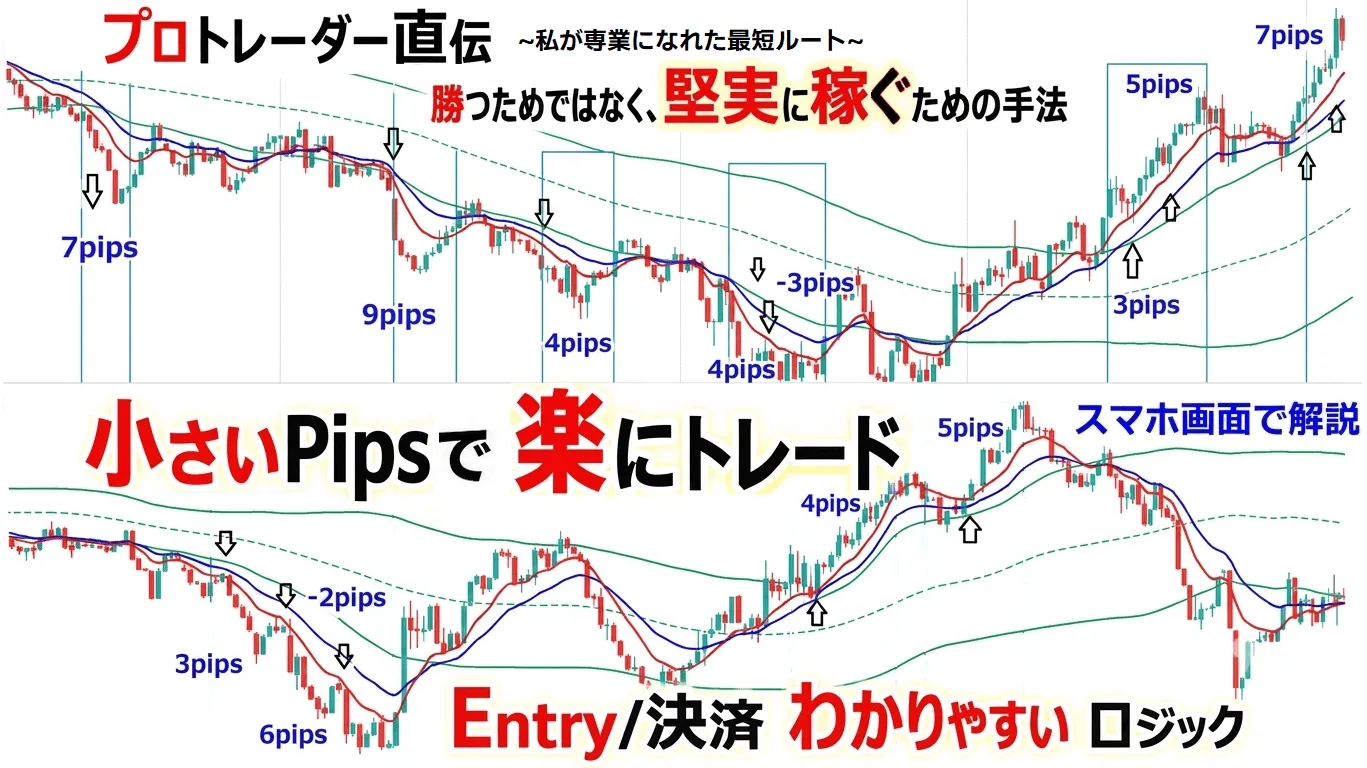
【Steady daily +10 pips】
A 1-minute FX method I learned from a pro trader that helped me escape the losing group (about 2–5 hours a day)
Explained with smartphone chart images
【Entry points】【Exit points】are easy to understand in this logic
■ Thinkings of overseas professional traders (legendary investors Buffett and Soros)
Trade not to “win” but to “make money”
Trade based on expectation only—“go long where the probability of rising is high,” not on “win rate.”
↓
https://www.gogojungle.co.jp/tools/ebooks/76385
#DollarYen #EuroDollar #FXMethods #FXBeginner #FXSacred #FXWinStrategy #RealTrade #Scalping #Indicator #ProTrader #FXTrade #DayTrade #DayTrader #WantToBeATrader
#Investment #SelfInvestment #InvestmentLife #WantToBeAnInvestor #Freelance #WantToBeFreelance #FreedomOfWork #Freedom #SecondCareer #StockLife #JobHunting #RemoteWork
#AssetFormation #FundRaising #AssetManagement #StartingABusiness #Entrepreneur #IndependentBusiness #WantToStartUp #MakeMoney #HowToMakeMoney #Entrepreneurship #LeaveCorporateLife #SideBusiness #SideJob #HouseholdSideJob #EntrepreneurWoman #MamaEntrepreneur