
How to protect yourself on days you lose with automated trading
TrendSync ― Trade, Verify, and Design Your Strategy
When you talk about trading, you inevitably focus on “how much you can win.”
But just as important for long-term consistency is how you protect yourself on losing days.
This time, about TrendSync's defensive design.
Losing days will happen
Every strategy has a market it doesn’t fit; losing streaks will come.
The issue is how far you can cut losses on those days.
Without defense, a bad day can undo everything you’ve built up.
Therefore, you should predefine a line for “this far.”
What happens if you don’t stop
Here is a real example. This is Murata Manufacturing (6981) on a certain day.![]()
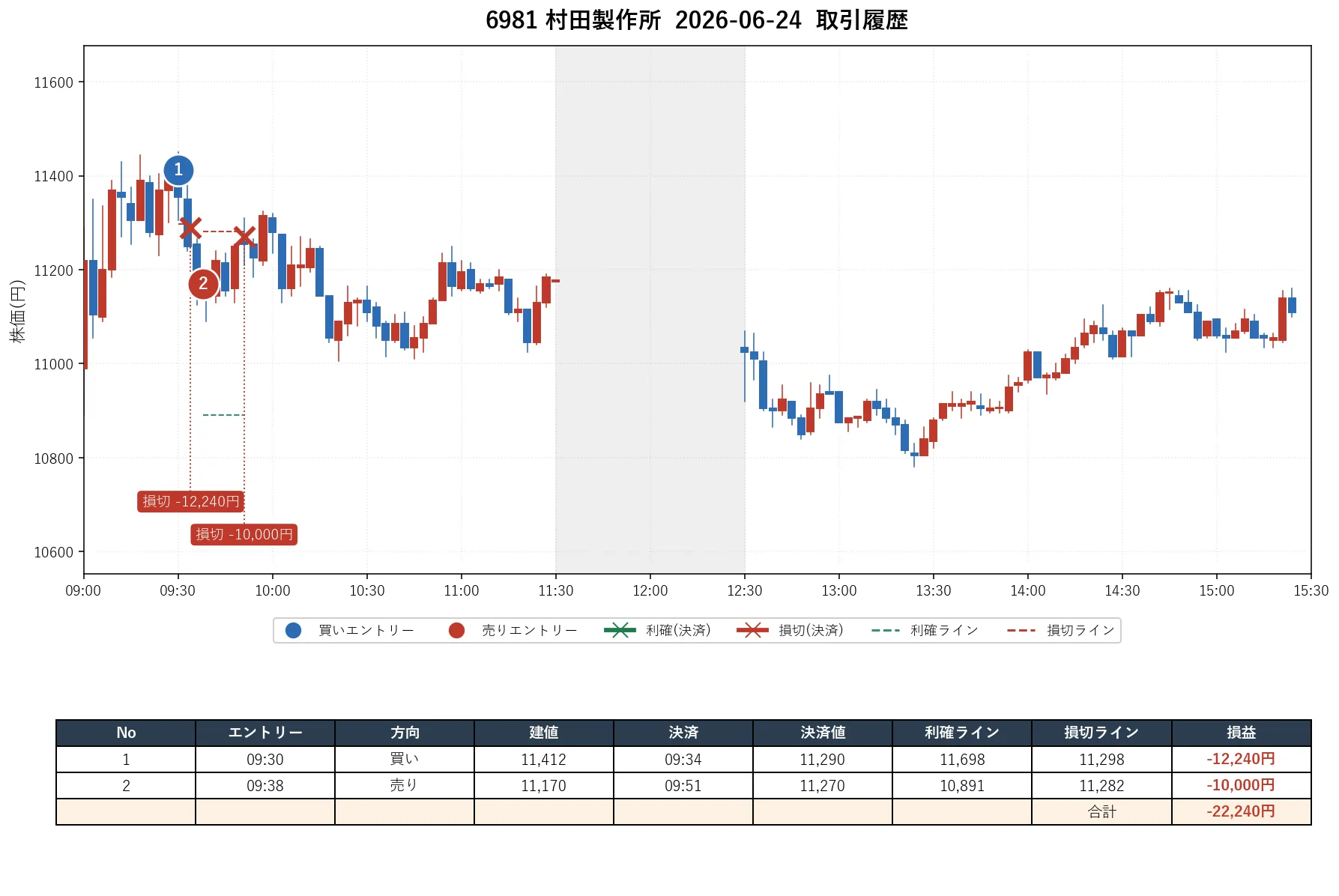
In the morning, you bought after seeing an uptick, but it quickly fell and you cut losses (−12,240 yen).
Then you entered short, but it rose instead, and you cut losses again (−10,000 yen).
In just two trades, this one stock alone lost −22,240 yen.
In a choppy market where both buying and selling backfire, such days occur for any strategy.
The problem is continuing to trade on the second and third losses. The wounds deepen.
Two ways to stop
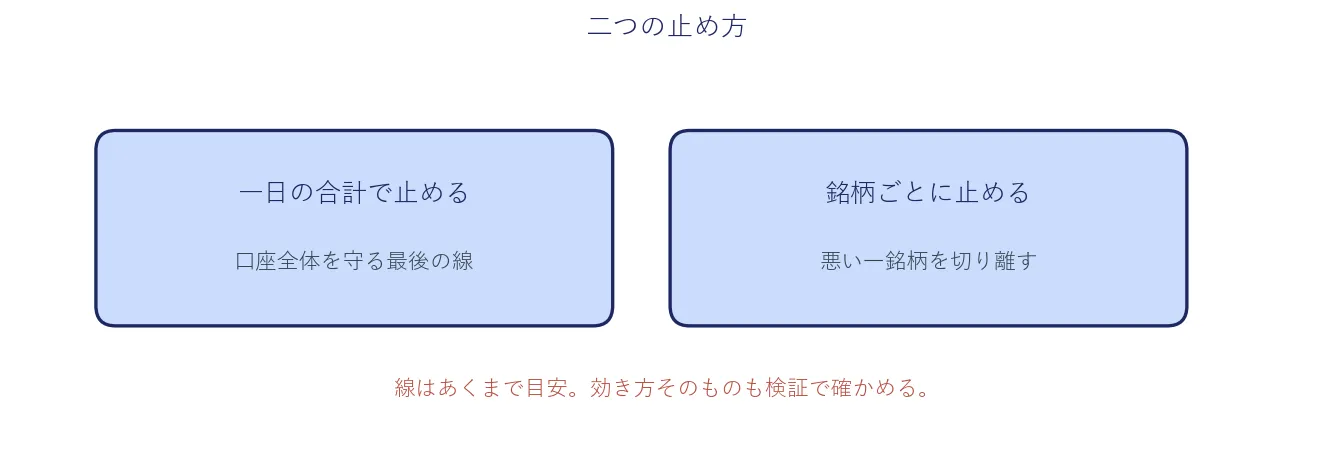
So TrendSync provides a mechanism to stop losses.
• Stop by the day's total
If the day’s profit and loss falls to a predetermined amount, stop new trades for the day.
The last line to protect the entire account.
• Stop by each asset
If one asset loses up to a set amount, stop new trades for that asset only.
Isolate the bad single asset.
Even on the earlier day, if you had drawn “this asset stops here,” you could have halted new trades for that asset at the first loss. The second loss could have been avoided.
Defenses exist to lessen the damage on bad days.
The line is a guideline, not an absolute rule
The stopping line is an estimate; depending on the timing of trades, the actual line may shift slightly.
In the first-round validation introduced, for the stock that hit this boundary, the actual results differed from the simulation.
Moreover, stopping can backfire on some days.
If you hadn’t stopped and kept trading, you might have recovered losses. Defense isn’t simply “strong is better.”
Decide stopping methods through validation
Defense settings should be verified through validation, not intuition.
Compare days when you stopped versus when you didn’t, using historical records.
There are days when stopping reduced losses, and days when stopping caused you to miss rebounds. Count and compare both.
If too effective, you may stop even when there’s room to extend. If too lenient, on bad days the damage deepens.
That’s why, instead of assumptions, you verify with real market data and tune to a balanced line.
Summary
Defensive design becomes as foundational as aggressive trading.
TrendSync provides a stopping mechanism and verifies its effectiveness through validation.
Before chasing flashy wins, learn how to get through bad days. Set that design with numbers as you go.
Note, the trades shown here are just one example. Results vary with market conditions and settings. Treat this as a reference.
Next time, we will introduce daily workflows for implementing these practices every day.