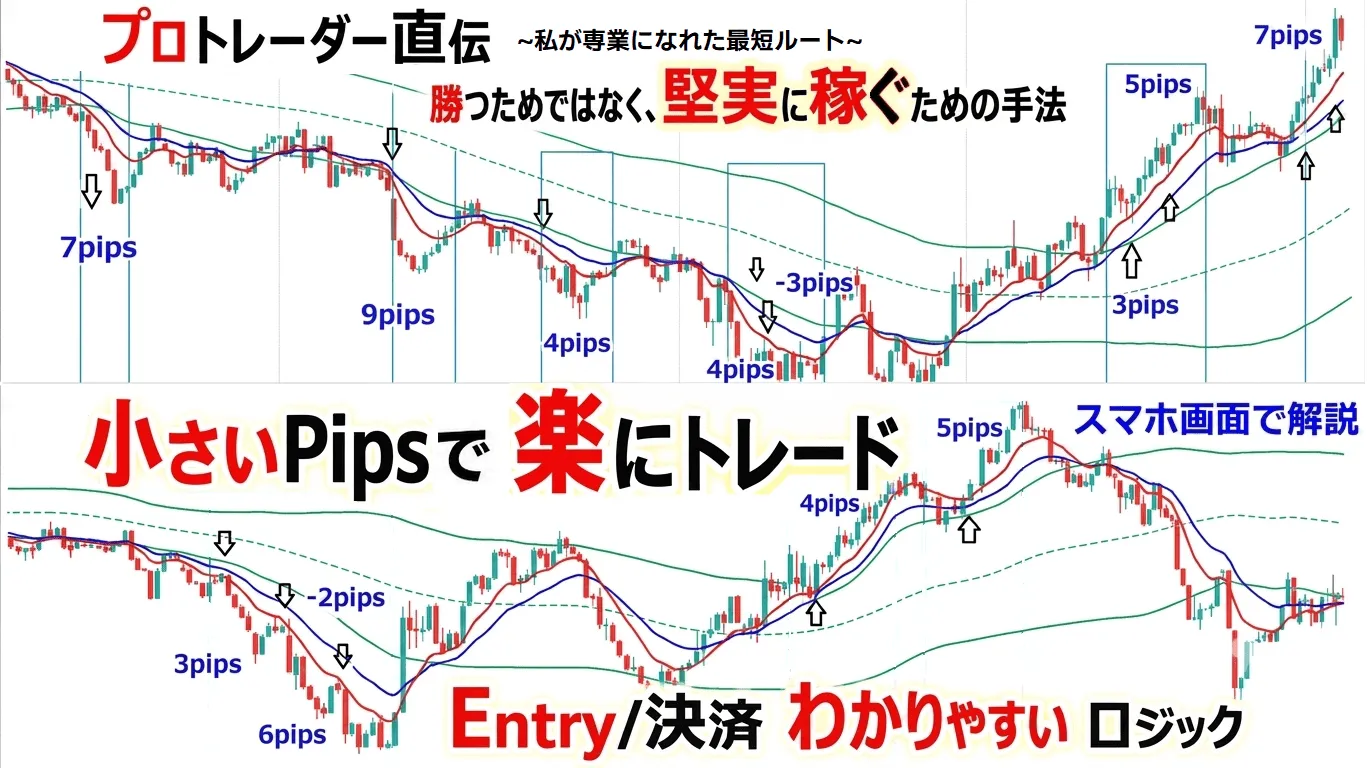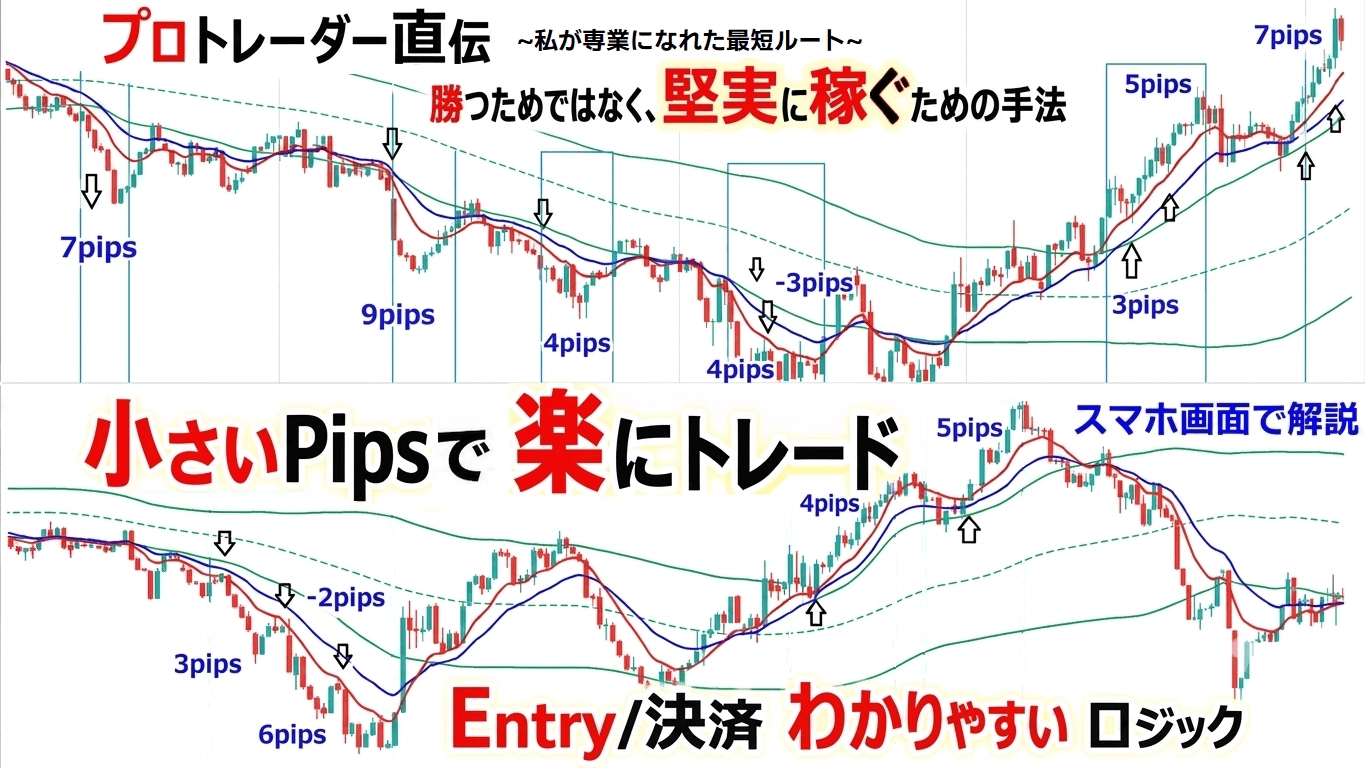
[Method Explanation ①] The entry targets the "expectation" that tends to produce unrealized gains, i.e., the moment where it seems like it will rise in the next instant
[Technique Explanation ①] Enter with the expectation that the moment you enter, the position is likely to rise or fall, targeting an “expectation value” that tends to produce unrealized gains
If you enter at a point where unrealized gains are likely, taking profit or cutting losses becomes easier, right
Enter,
“It suddenly stagnates,”
“Moves in the opposite direction to incur a loss, then waits for a recovery”
Rather than such a situation,
Enter,
“Initially, unrealized gains appear”
in this situation
Of course, it’s obvious, but it’s very easy, isn’t it
Of course, I can’t say it happens every time, but
If you enter where there is momentum, where momentum starts to appear
it tends to become unrealized gains quite easily
And to formalize that momentum into a logic
■ Enter at points where unrealized gains are likely
With such a trading method... isn’t that enough to be easy?
When I first learned this from my mentor, this way of thinking was truly eye-opening
Unrealized gains can end at just 1 pip sometimes
There are times you cut your losses after reversing by 1 pip from 1 pip of profit
Unrealized gains can extend to 3 pips, or 7 pips, sometimes 15 pips
For example, in these two cases, the outcomes are the same, but what you do is completely different
① After becoming -5 pips, it returns to -1 pips, then cuts losses
② Unrealized gains reach 3 pips, then reverse, cutting losses at -1 pips
Same “loss,” same -1 pips
No change in win rate
But the mental state is completely different
There is also a notable point that losses can be cut more easily
■ Entry
Entry at a position where unrealized gains are likely
That is
Enter at a place where there is momentum, where momentum is starting to appear
Logics aimed at this, and the corresponding settlement method
■ Settlement
Take profit when it extends
If suspicious, cut quickly (small loss, small gain, at break-even)
If it moves against you, cut at the maximum stop loss value (-6 pips)
All of these are interconnected, so
It becomes not “trading to win” but “trading to earn”
■ Considering the method by win rate
From the above cases, when viewed from the angle of “what is the win rate?”...
Escape with a small loss ⇒ losing
Escape with a small gain ⇒ winning
Also
① After becoming -5 pips, it returns to -1 pips and cuts losses
② Unrealized gains reach 3 pips, then reverse and cut losses at -1 pips
Both are just losses
No matter the form, win is win and loss is loss
It’s nonsensical to separate win rate into win and loss
The method I am currently practicing is here
[Steady +10 pips per day]
A one-minute FX method taught by a professional trader that helped me escape from the losing camp (1–2 to 5 hours a day)
Explained with smartphone chart images
Clear logic for Entry Points and Settlement Points
■ Mindset of overseas pro traders (legendary investors Buffett and Soros)
Trade not to win, but to earn
Trade based on the expectation that you will long at places with a high probability of rising, rather than on “win rate”
↓
https://www.gogojungle.co.jp/tools/ebooks/76385
#DollarYen #EuroDollar #FXStrategies #FXBeginners #FXHolyGrail #FXWaysToWin #RealTrades #Scalping #Indicators #ProTraders #FXTrading #DayTrading #DayTrader#DayTrade #WannaBeATrader
#Investing #SelfInvestment #InvestmentLife #WantToBeAnInvestor #Freelance #WantToBeFreelance #FreedomOfWork #WantFreedom #SecondCareer #StockLife #JobHunting #RemoteWork
#WealthFormation #FundRaising #AssetManagement #IndependenceStartUp #SoleProprietor #WantToBeSoleProprietor #Entrepreneurship #WantToMakeMoney #HowToMakeMoney #WantToStartABusiness #LeaveCorporateLife #SideBusiness #WantASideJob #HousewifeSideBusiness #EntrepreneurWoman #MomEntrepreneur