Combine
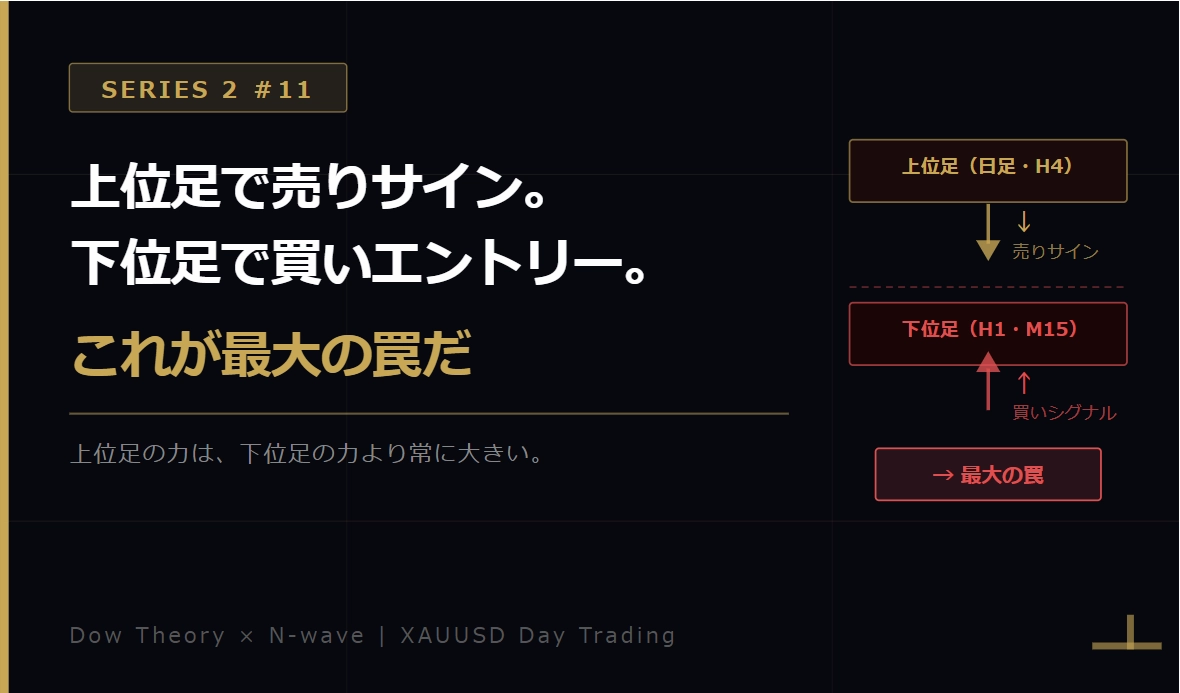
Selling signal on the higher time frame. Buying entry on the lower time frame. This is the biggest trap
That choice becomes the most expensive tuition.
There is a trap that traders who have learned multi-time frame analysis often fall into. Even though they are confirming the trend and direction on the higher time frame,they end up entering because the lower time frame signals pull them into enter.
For example, suppose the daily and H4 time frames form a clear downtrend. However, when you look at H1 or M15, there is a short-term upward move. Then you judge that it “seems likely to rebound from a pullback” and enter to buy.
This is adirect entry against the flow of the higher time frame.The short-term rise on the lower time frame is only a “retrace” within the higher time frame’s downtrend. Once the retrace ends, the decline resumes.
Why do we get pulled in by the lower time frame signals
If you are supposed to be confirming the direction on the higher time frame, why are you being drawn to the reverse signals on the lower time frame? There are mainly three reasons.
First is,“because the movement is visible”. The lower time frames have faster candle movements. When you look at M15 or H1, the movement “is rising right now” becomes visually strong. Compared to the static downtrend on the higher time frame, the dynamic rise on the lower time frame creates an illusion that “if I buy now, I can profit.”
Second is,“the psychology of not wanting to miss a chance”. The urgency of “If I don’t buy here, I’ll miss the move” pushes you to postpone confirming the direction on the higher time frame. Haste distorts analysis.
Third is,“the desire to trust one’s own judgment”. The intuition that “this one will go up” tries to justify itself with the lower time frame signals. This is not analysis but self-deception.