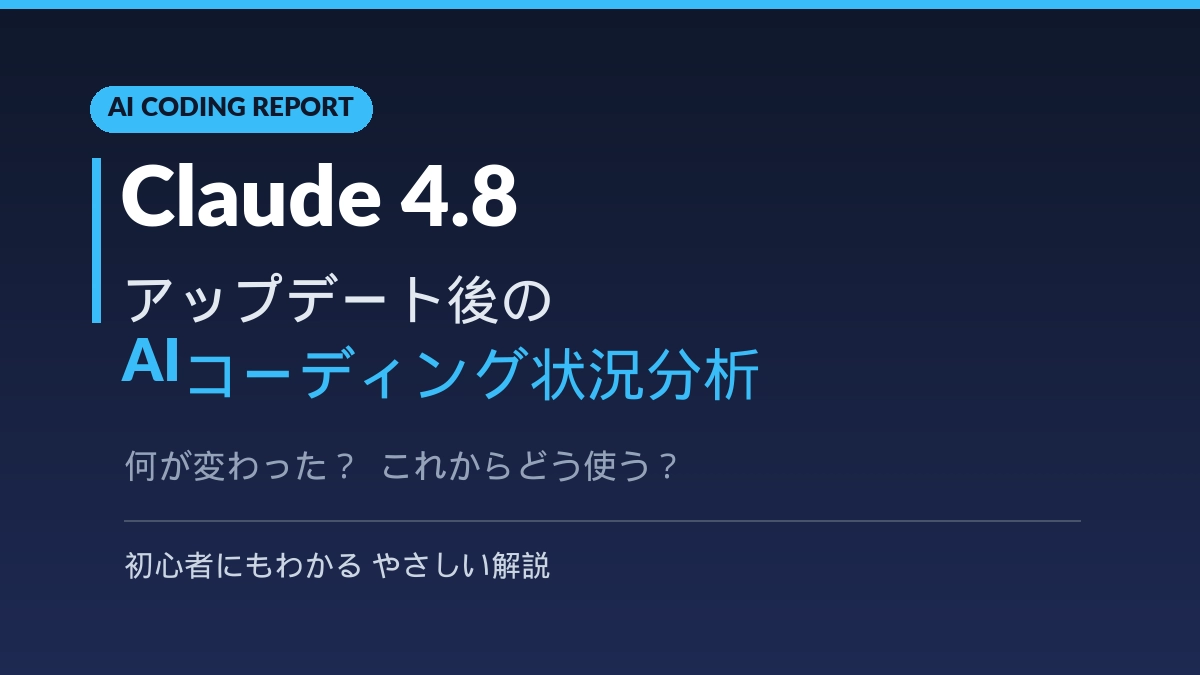
━━━━━━━━━━━━━━━━━━━━━━━━━━━━━━━━━━━━━━━Claude 4.8 After-update AI coding status analysis
~ What has changed? How will you use it from now on? ~
━━━━━━━━━━━━━━━━━━━━━━━━━━━━━━━━━━━━━━━
【Introduction: About this article】
This article is for people who are developing trading tools such as MT5 using AI
(artificial intelligence).
There will be technical terms, but to help beginners understand, we will proceed with simple explanations.
First, here are three terms to know to read more comfortably.
◆ Simple Term Notes ◆
・Claude (Claude)AnthropicというAI company that makes AI that writes text and programs.
This time the new version "4.8" is the topic.
・Skill / Harness (Skill / Harness)AI with a “setting mechanism” that you pre-instruct with rules to perform tasks.
It is a valuable asset that developers spend time building.
・Sub-Agent (Sub-Agent)
A system that divides a large task into smaller AI units to share the workload.
Think of it as teamwork.
━━━━━━━━━━━━━━━━━━━━━━━━━━━━━━━━━━━━━━━
■ Overall status summary
━━━━━━━━━━━━━━━━━━━━━━━━━━━━━━━━━━━━━━━Claude 4.8 (Code name: Fable5) After the update,
in the MT5 coding现场 the
occurs several critical problems.
Many traders and engineers feel that the quality has degraded, and this is not just about a few people,
it is becoming a common perception across the industry.![]() ━━━━━━━━━━━━━━━━━━━━━━━━━━━━━━━━━━━━━━━
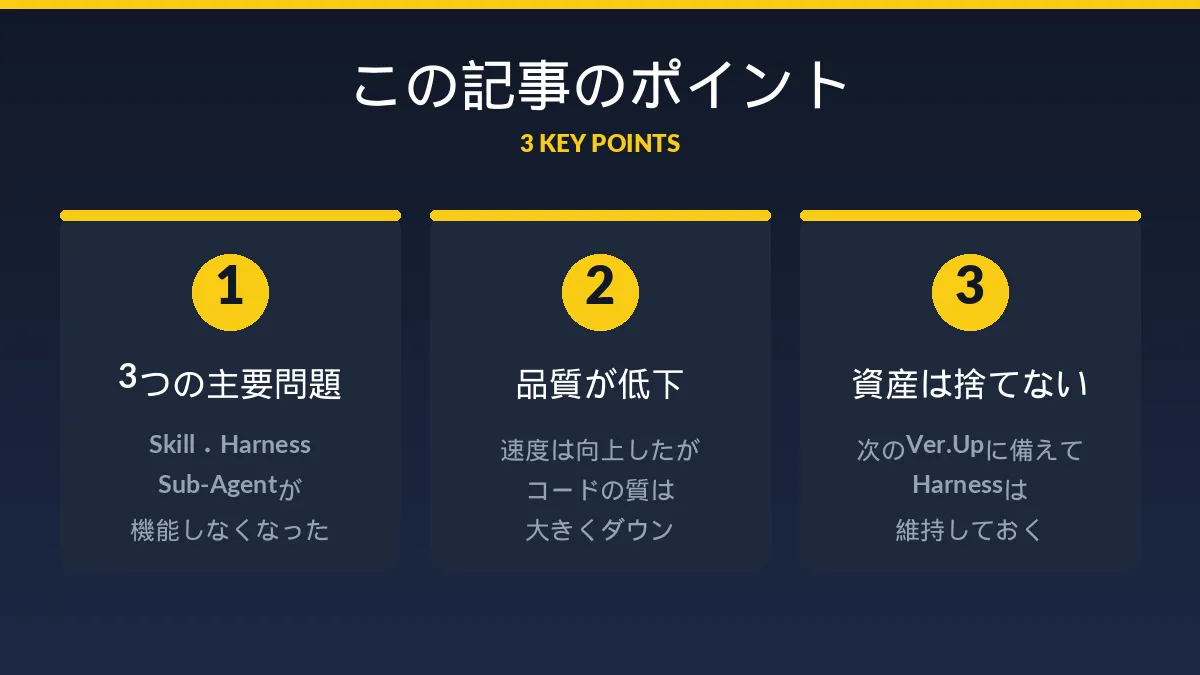
■ The three major problems now occurring
━━━━━━━━━━━━━━━━━━━━━━━━━━━━━━━━━━━━━━━
─────────────────────────────
Problem1: Deliberate assets do not function
─────────────────────────────
・Skill → ineffective
・Harness → ineffective
・Sub-Agent → ineffective
Highly developed systems built over time no longer work after the update.
This is not just a personal environment issue; it is reported industry-wide.
─────────────────────────────
Problem2: InternalSub-Agent becomes uncontrollable
─────────────────────────────Sub-Agent (decomposedAI) movements can no longer be controlled from the user side.
It does not operate as intended, and AI proceeds with its own judgments.
─────────────────────────────
Problem3: Faster but quality greatly degraded
─────────────────────────────
・Processing speed → faster
・Quality of deliverables →2 levels down
・Code quality → graduate student level
↓
middle school level
Speed has indeed increased.
However, the quality of the generated code has dropped significantly.
No compile errors (non-runnable errors), but the depth and sophistication of the logic have regressed.
━━━━━━━━━━━━━━━━━━━━━━━━━━━━━━━━━━━━━━━
■ On-site countermeasures
━━━━━━━━━━━━━━━━━━━━━━━━━━━━━━━━━━━━━━━
◆ Methods many developers are taking
Those who care about quality or are in a hurry downgrade to
“degenerate” (return to older versions) such as Sonnet or Opus 4.7.
◆ What the author verified
After testing by returning to Opus 4.7, the behavior of
Skill, Harness, and Sub-Agent ignoring certain things did not change
even when the version was rolled back.
This is a very important finding.
・"Is the problem with the model itself?"
→ × ruled out
・"Is there a problem with surrounding processing?"
→ ◯ likely the case
In other words, it is not that the AI model itself is faulty,
but due to security measures,
the surrounding systems that perform preprocessing and post-processing of work have been significantly altered.
This is a situation where we have to wait for the AI provider (LLM provider) to respond.
━━━━━━━━━━━━━━━━━━━━━━━━━━━━━━━━━━━━━━━
■ The best approach at present
━━━━━━━━━━━━━━━━━━━━━━━━━━━━━━━━━━━━━━━
◆ Tips for using Fable5 / Opus 4.8
・Existing assets → keep them, do not discard
・New development → do not port old assets; rebuild from scratch
・Expected value adjustment → do not expect “Fable5 is amazing!” in advance
◆ The reality of code quality
・Compile errors → none
・Quality of logic → 2–3 levels down
・Time to restore to desired level → 1 week or more
If you value time efficiency, it is safer to proceed with options other than Fable5.
However, trying Fable5 to understand what it is like is acceptable.
━━━━━━━━━━━━━━━━━━━━━━━━━━━━━━━━━━━━━━━
■ Why is this happening?
━━━━━━━━━━━━━━━━━━━━━━━━━━━━━━━━━━━━━━━
◆ Sub-Agent Movements (hypothesis)
The current AI mainstream divides work into fine steps and assigns tasks to multiple Sub-Agents.
Within this framework, the following is presumed to be happening.
◆ “First-come, first-served” logic adoption
1. Multiple Sub-Agents process tasks simultaneously
2. The first returned logic is adopted
3. Fast = simple = fewer bugs = adopted
4. Other Sub-Agents adjust to it
◆ Inversion phenomenon where high-quality code is rejected
Even if the terminal Sub-Agent codes ideally,
when connected to other pre-existing “middle school level” code, errors occur.
Then the AI judges thus:
Advanced = ideal = bug source = adoption rejected
To prevent this kind of behavior, there should be Skills, Harness, and Rules.
But now, at the terminal level, the effectiveness of user-created
Skills and Harness does not reach and is ignored.
━━━━━━━━━━━━━━━━━━━━━━━━━━━━━━━━━━━━━━━
■ Infer the strategy of the AI provider
━━━━━━━━━━━━━━━━━━━━━━━━━━━━━━━━━━━━━━━
◆ Has priority changed?
Current AI providers are presumed to prioritize in this order:
[High priority]
1. No bugs
2. Source that runs normally
3. Output extremely quickly
[Low priority]
- Advanced algorithm implementation
- Respect for custom frameworks
◆ Which users are they targeting?
・Majority of users
(No bugs, speed prioritized)
→ Keep them satisfied with the current state
・Minority of users
(Higher level expected)
→ Planned to be addressed in the next version update
AI providers appear to optimize for the majority of users who just want something that “works,”
and are seemingly pursuing strategies to optimize for them.
━━━━━━━━━━━━━━━━━━━━━━━━━━━━━━━━━━━━━━━
■ The future of Harness engineering
━━━━━━━━━━━━━━━━━━━━━━━━━━━━━━━━━━━━━━━
◆ Reasons not to discard
Harness engineering remains effective, and discarding it wholesale is not recommended.
・Current status → no effective impact
・Next Ver.Up → planned support for advanced algorithm implementations
・Format → may change
・Importance → expected to return
◆ Recommended preparations
In preparation for the next version upgrade, prepare for changes in Harness engineering formats.
Even as frameworks evolve, there is a strong likelihood that it will re-emerge as a core AI coding technology.
━━━━━━━━━━━━━━━━━━━━━━━━━━━━━━━━━━━━━━━
■ Practical recommended actions
━━━━━━━━━━━━━━━━━━━━━━━━━━━━━━━━━━━━━━━
◆ Short-term strategy (now)
・Urgent and quality-focused
→ Use Opus 4.7 / Sonnet
・Want to try Fable5
→ For verification only. Do not use in production
・Keep existing Skill / Harness
→ Do not delete, store them
・New development
→ Rebuild with new formats
◆ Medium-term strategy (until next Ver.Up)
・Continue Harness engineering research
・Organize existing assets → store with version control
・Explore new formats → continue trial and error
・Monitor provider trends → keep an eye on them
◆ Long-term strategy
Wait for the AI providers to resume support for a small group of advanced users.
In anticipation, keep Harness engineering skills maintained and evolving.
━━━━━━━━━━━━━━━━━━━━━━━━━━━━━━━━━━━━━━━
■ Conclusion
━━━━━━━━━━━━━━━━━━━━━━━━━━━━━━━━━━━━━━━Claude 4.8 update changes surrounding processing due to security measures,
causing user-developed Skill, Harness, and Sub-Agent to stop functioning.
The essence of the problem lies not in the AI model itself, but in the “first-come, first-served” logic used in parallel processing of Sub-Agents.
As a result, there is a reverse phenomenon where high-quality code is rejected.
AI providers seem to optimize for the majority of users who want it to work,
but the next version update is scheduled to support advanced algorithm implementations.
Therefore, you should not discard Harness engineering assets and should maintain them.
At present, if you require quality, a practical option is to degrede to Opus 4.7 or Sonnet.
This article includes the situation and conjectures as of the time of writing.AI model specifications and quality may change in the future.
━━━━━━━━━━━━━━━━━━━━━━━━━━━━━━━━━━━━━━━
━━━━━━━━━━━━━━━━━━━━━━━━━━━━━━━━━━━━━━━
■ The three major problems now occurring
━━━━━━━━━━━━━━━━━━━━━━━━━━━━━━━━━━━━━━━
─────────────────────────────
Problem1: Deliberate assets do not function
─────────────────────────────
・Skill → ineffective
・Harness → ineffective
・Sub-Agent → ineffective
Highly developed systems built over time no longer work after the update.
This is not just a personal environment issue; it is reported industry-wide.
─────────────────────────────
Problem2: InternalSub-Agent becomes uncontrollable
─────────────────────────────Sub-Agent (decomposedAI) movements can no longer be controlled from the user side.
It does not operate as intended, and AI proceeds with its own judgments.
─────────────────────────────
Problem3: Faster but quality greatly degraded
─────────────────────────────
・Processing speed → faster
・Quality of deliverables →2 levels down
・Code quality → graduate student level
↓
middle school level
Speed has indeed increased.
However, the quality of the generated code has dropped significantly.
No compile errors (non-runnable errors), but the depth and sophistication of the logic have regressed.
━━━━━━━━━━━━━━━━━━━━━━━━━━━━━━━━━━━━━━━
■ On-site countermeasures
━━━━━━━━━━━━━━━━━━━━━━━━━━━━━━━━━━━━━━━
◆ Methods many developers are taking
Those who care about quality or are in a hurry downgrade to
“degenerate” (return to older versions) such as Sonnet or Opus 4.7.
◆ What the author verified
After testing by returning to Opus 4.7, the behavior of
Skill, Harness, and Sub-Agent ignoring certain things did not change
even when the version was rolled back.
This is a very important finding.
・"Is the problem with the model itself?"
→ × ruled out
・"Is there a problem with surrounding processing?"
→ ◯ likely the case
In other words, it is not that the AI model itself is faulty,
but due to security measures,
the surrounding systems that perform preprocessing and post-processing of work have been significantly altered.
This is a situation where we have to wait for the AI provider (LLM provider) to respond.
━━━━━━━━━━━━━━━━━━━━━━━━━━━━━━━━━━━━━━━
■ The best approach at present
━━━━━━━━━━━━━━━━━━━━━━━━━━━━━━━━━━━━━━━
◆ Tips for using Fable5 / Opus 4.8
・Existing assets → keep them, do not discard
・New development → do not port old assets; rebuild from scratch
・Expected value adjustment → do not expect “Fable5 is amazing!” in advance
◆ The reality of code quality
・Compile errors → none
・Quality of logic → 2–3 levels down
・Time to restore to desired level → 1 week or more
If you value time efficiency, it is safer to proceed with options other than Fable5.
However, trying Fable5 to understand what it is like is acceptable.
━━━━━━━━━━━━━━━━━━━━━━━━━━━━━━━━━━━━━━━
■ Why is this happening?
━━━━━━━━━━━━━━━━━━━━━━━━━━━━━━━━━━━━━━━
◆ Sub-Agent Movements (hypothesis)
The current AI mainstream divides work into fine steps and assigns tasks to multiple Sub-Agents.
Within this framework, the following is presumed to be happening.
◆ “First-come, first-served” logic adoption
1. Multiple Sub-Agents process tasks simultaneously
2. The first returned logic is adopted
3. Fast = simple = fewer bugs = adopted
4. Other Sub-Agents adjust to it
◆ Inversion phenomenon where high-quality code is rejected
Even if the terminal Sub-Agent codes ideally,
when connected to other pre-existing “middle school level” code, errors occur.
Then the AI judges thus:
Advanced = ideal = bug source = adoption rejected
To prevent this kind of behavior, there should be Skills, Harness, and Rules.
But now, at the terminal level, the effectiveness of user-created
Skills and Harness does not reach and is ignored.
━━━━━━━━━━━━━━━━━━━━━━━━━━━━━━━━━━━━━━━
■ Infer the strategy of the AI provider
━━━━━━━━━━━━━━━━━━━━━━━━━━━━━━━━━━━━━━━
◆ Has priority changed?
Current AI providers are presumed to prioritize in this order:
[High priority]
1. No bugs
2. Source that runs normally
3. Output extremely quickly
[Low priority]
- Advanced algorithm implementation
- Respect for custom frameworks
◆ Which users are they targeting?
・Majority of users
(No bugs, speed prioritized)
→ Keep them satisfied with the current state
・Minority of users
(Higher level expected)
→ Planned to be addressed in the next version update
AI providers appear to optimize for the majority of users who just want something that “works,”
and are seemingly pursuing strategies to optimize for them.
━━━━━━━━━━━━━━━━━━━━━━━━━━━━━━━━━━━━━━━
■ The future of Harness engineering
━━━━━━━━━━━━━━━━━━━━━━━━━━━━━━━━━━━━━━━
◆ Reasons not to discard
Harness engineering remains effective, and discarding it wholesale is not recommended.
・Current status → no effective impact
・Next Ver.Up → planned support for advanced algorithm implementations
・Format → may change
・Importance → expected to return
◆ Recommended preparations
In preparation for the next version upgrade, prepare for changes in Harness engineering formats.
Even as frameworks evolve, there is a strong likelihood that it will re-emerge as a core AI coding technology.
━━━━━━━━━━━━━━━━━━━━━━━━━━━━━━━━━━━━━━━
■ Practical recommended actions
━━━━━━━━━━━━━━━━━━━━━━━━━━━━━━━━━━━━━━━
◆ Short-term strategy (now)
・Urgent and quality-focused
→ Use Opus 4.7 / Sonnet
・Want to try Fable5
→ For verification only. Do not use in production
・Keep existing Skill / Harness
→ Do not delete, store them
・New development
→ Rebuild with new formats
◆ Medium-term strategy (until next Ver.Up)
・Continue Harness engineering research
・Organize existing assets → store with version control
・Explore new formats → continue trial and error
・Monitor provider trends → keep an eye on them
◆ Long-term strategy
Wait for the AI providers to resume support for a small group of advanced users.
In anticipation, keep Harness engineering skills maintained and evolving.
━━━━━━━━━━━━━━━━━━━━━━━━━━━━━━━━━━━━━━━
■ Conclusion
━━━━━━━━━━━━━━━━━━━━━━━━━━━━━━━━━━━━━━━Claude 4.8 update changes surrounding processing due to security measures,
causing user-developed Skill, Harness, and Sub-Agent to stop functioning.
The essence of the problem lies not in the AI model itself, but in the “first-come, first-served” logic used in parallel processing of Sub-Agents.
As a result, there is a reverse phenomenon where high-quality code is rejected.
AI providers seem to optimize for the majority of users who want it to work,
but the next version update is scheduled to support advanced algorithm implementations.
Therefore, you should not discard Harness engineering assets and should maintain them.
At present, if you require quality, a practical option is to degrede to Opus 4.7 or Sonnet.
This article includes the situation and conjectures as of the time of writing.AI model specifications and quality may change in the future.
━━━━━━━━━━━━━━━━━━━━━━━━━━━━━━━━━━━━━━━