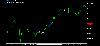

What are you looking at and where?
Can you accurately state the highs and lows? If you can’t, you’ll lose
People who can’t do this are the ones trying to use Dow Theory.
I’d like to ask traders who say, “I use Dow Theory” or “I trade trend-following.”
Where are the current chart’s “highs” and “lows”?
Many people can’t answer this immediately. They say, “I think it’s here” or “I think the recent point is here,” while rechecking the chart multiple times. That’s becausethey haven’t defined highs and lows.
Highs and lows are not decided by intuition. They are determined by clear rules. Traders who decide highs and lows without rules end up recognizing highs and lows at different places each time. That can’t lead to stable trend judgments.
What does it mean to “know the highs and lows”
The definitions of highs and lows in Dow Theory are simple.
- High: the peak after an up move that turns into a down move. The candle is higher than its surroundings and is surrounded on both sides by a bearish candle or a lower wick
- Low: the trough after a down move that turns into an up move. The candle is lower than its surroundings and is surrounded on both sides by a bullish candle or an upper wick
What’s important is,you can only recognize a high or low after you have confirmed that a reversal actually occurred. The peak of a continuing-up candle is not a high yet. Only after a subsequent pullback confirms it did peak there can you say “that was a high.”
People who don’t understand this still call rising prices “highs.” Then they judge a trend reversal because “it exceeded the high,” enter on the counter-trend, and the price keeps rising, hitting stop losses.
Why do perceptions of highs and lows become misaligned
The main reason perceptions of highs and lows differ between traders is“which timeframe is being used” isn’t standardized.
Viewed on a daily chart, you see large highs and lows. On H1 there are many finer highs and lows. On M5 there are even more fine waves. If you haven’t decided which timeframe to base highs and lows on, your highs will change with every analysis.
clearly define the highs and lows for the time frame you use for context (e.g., H4) and judge the trend on that timeframe. On the entry timeframe (e.g., H1), always be aware of the H4 highs and lows and time your entries using the H1 highs and lows. Do not mix the “highs and lows you are looking at” across higher and lower timeframes.
What happens in trades when highs and lows can’t be stated
Traders who can’t define highs and lows precisely share common patterns.
First,trend judgment changes every time.Yesterday they said it was an uptrend, today they say it’s a range. It’s not the chart that changed; the highs and lows they are looking at changed.
Next,they can’t place stop losses.Even with a rule like “place stops below the most recent low,” if you can’t state where that recent low is, the stop location becomes vague every time. As a result, you either enter without a stop or place your stop at an arbitrary, unjustified level based on feeling.
More seriously,they can’t review trades.When trying to explain why they entered at a certain point after the fact, if the highs and lows at that time weren’t recorded, there’s no basis for review. A trade that cannot be improved is just a repetition.
Things you should do right now
Open the chart and look at today’s XAUUSD on the H4. Then mark the most recent “high” and “low.”
Show those marks to someone and can you explain why this is the high and why that is the low?
If you can explain, you have laid the groundwork for trend judgment. If you can’t,your top priority is to solidify that definition now.This comes before any strategy, indicators, or money management.
A person who can’t state highs and lows accurately has no right to talk about Dow Theory. It may sound harsh, but that’s the reality. Conversely, once you solidify this, the accuracy of trend judgments will rise dramatically. Those who don’t neglect the basics are the traders who ultimately survive.