

Analyzing 10x stocks and the “three features” I noticed and how to use them (Can I get closer to Buffett: Part 2)
I, who felt limits in investing in plunging stocks by investing in Sulga Bank (8358),analyzed stocks such as those that were past 10-bagger stocks or comparable.

Three common features of 10-bagger stocks
SpecificallyPepper Food Service (3053), Yamashin Filter (6240),Nitori HD (9843), etc.
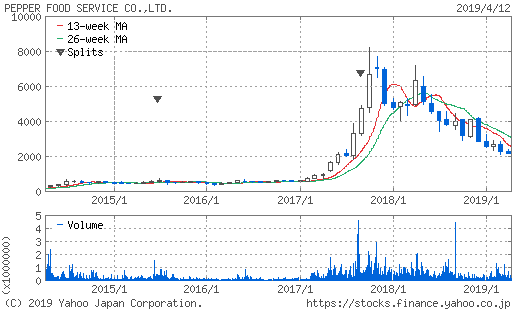
Pepper Food (3053) 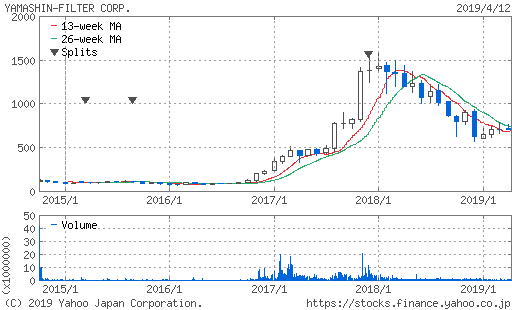
Yamashin Filter (6240) 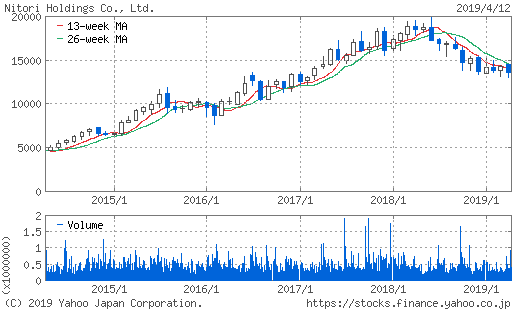
Nitori HD (9843)
What these stocks have in common can be succinctly described by the following three points.
- They are growing profits
- Before the stock price rises, they are overlooked (P/E under 10)
- When momentum builds, they rise more than needed (P/E around 50, etc.)
My mistake of missing the conditions for growth stocks
It is natural that stocks with growing profits rise. However,I foolishly did not place emphasis here. This is because the following content from “The Future of Stock Investing” kept clinging to my mind.
If you are dazzled by growth, you will fall into a trap. Investors caught by this trap pour their assets into whatever seems like the next wave. But it is rarely the case that the newest, leading companies are a bargain for investors (the Growth Trap).
Jeremy Siegel, The Future for Stock Investing, Nikkei BP, 2005
Growth stocks typically carry high valuations (P/E etc.). However, as expectations fade, P/E declines and profits may also drop due to intensified competition. If you use this book as a model,the correct approach is to buy stable companies at low valuations.
Indeed, that is one correct approach. If you continue this investment, you might outperform the index in the long run.
However, since you are buying individual stocks, merely outperforming the index slightly would not be worthwhile.If index investing is a factory-made teddy bear, investing in individual stocks should aim for one-of-a-kind carved bears.

“Rare” is “uncommon”
Returning to the quote, at the end it says “rare.” That implies“the possibility is not zero”.
So, this leads to the second topic. Indeed, the valuation of well-known growth stocks tends to be high, but there are cases where it is not the case.
Specifically,patterns where the market has not yet noticed their growth potential, or cases where growth has progressed but is nearing its limit. Pepper Food and Yamashin Filter are the former, while Nitori is the latter.
Finding the former is not easy.It certainly requires constant vigilance of corporate trends and discernment.
In that case, the latter becomes relatively easier to identify objectively.When a company with an established position faces concerns like growth deceleration, its stock price tends to stagnate.
When a company's growth continues, investors may think, “This cannot grow any further.”If a coin flip keeps coming up heads, eventually you expect tails to come next. This is called the gambler's fallacy.
However, in reality, if a company has been winning, profits accumulate, and it can reinvest to fuel further growth. Thus,the winning companies become even more winning. This is a fundamental principle of capitalism.
Due to the gambler’s fallacy, growth companies can sometimes be undervalued.Even Nitori, which had 32 consecutive profitable quarters, was at times priced at P/E around 10. Of course, stock prices are also influenced by the overall market environment.
A savvy investor buys good companies at a low price at such moments. To do this,you must constantly search for good companies and, when the timing comes, buy decisively. That will not be frequent.
Even recently,there was a sharp stock price drop around last Christmas. At that time, there were unbelievably cheap prices. If you had bought, you would have been greatly rewarded by now.

Good companies eventually attract enthusiasm
If you could buy excellent growth stocks at a cheap price, you just have to wait. The stock price may stagnate or fall, butif profits are growing, the investment is likely to be rewarded. Buffett also said the following.
It may take a long time for the company's actual state to be reflected in the market or stock price. However, as long as the business succeeds and is widely recognized as such, there is no problem. Moreover, slower recognition is often preferable for investors. It means bargains keep coming for investors.
If you invest in growth companies, as the market recognizes them, their stock price rises. And,the better the business is doing, the more momentum the stock price gains.
Pepper Food and Yamashin Filter, which do not have extremely large market capitalizations, as well as Nitori, exceeding 1 trillion yen, have all risen to an elevated level where P/E around 30 is considered “expensive.”and even Nitori with more than 1 trillion yen market cap rose to a level where P/E 30 could be considered expensive.
In other words, it would be too late to invest at such levels. Here again we must recall the “growth trap” from The Future of Stock Investing.
The true meaning of “holding good companies”
After this analysis, I finally feel I have found the possibility of“achieving substantial returns while limiting downside risk”. It means
“When well-known quality stocks fall to undervalued levels due to investor sentiment or market trends, act decisively to buy and then wait quietly for the company to grow and the market to recover”
I wonder if I have come a little closer to Buffett’s thinking.
For investors,the number of trades can be only a few per year. This makes it feasible for people who are usually busy with work. It saves time and minimizes fees and taxes. If you don’t sell, there is no capital gains tax.
I hope that with this method, the “ordinary person” can become familiar with investing, grow their wealth, and live with peace of mind. My ability is still imperfect, but I want to continue improving and provide better advice little by little.
One thing I can say with certainty is thattime is on your side. The earlier you start, the easier it is to grow wealth through compounding, and your own abilities will improve as well.
Ultimately,the ideal is to approach investments and life with a calm and composed mindset. The journey has only just begun, so would you like to walk this path with me?