

If you buy a hot stock, can you make money in the short term? The pitfall I fell into (Can I get closer to Buffett: Part 2)
I analyzed stocks that had surged and then fallen in value, and I thought that if I could determine there were no problems, I could make substantial profits in a short period. Eventually, I began to search mainly for scandals and companies with deteriorating performance.

From the disclosed materials, there are no problems
Around 2017 the market was good, and the lack of undervalued stocks further accelerated this tendency.In Buffett-style investment methods, there are almost no things you can buy during a favorable market. I wondered, as an investment advisor, whether that was appropriate.
Then came the incident that landed in my path,The Pumpkin Carriage incident at Suruga Bank (8358). The Pumpkin Carriage sold low-profit-share houses to employees with little investment experience, and Suruga Bank was handling those loans.
In fact, I had previously analyzed regional banks in my prior job.I knew in advance that Suruga Bank was delivering unusually high profits and understood its business model.
Therefore, when the news came out, I thought, “This might be a buying opportunity.”
The disclosed materials stated that one-third of the loans were for apartments, with the remaining two-thirds being home mortgages. Indeed, lending to low-profit apartments is high risk, butI believed the company would be fine because its backbone was home loans.
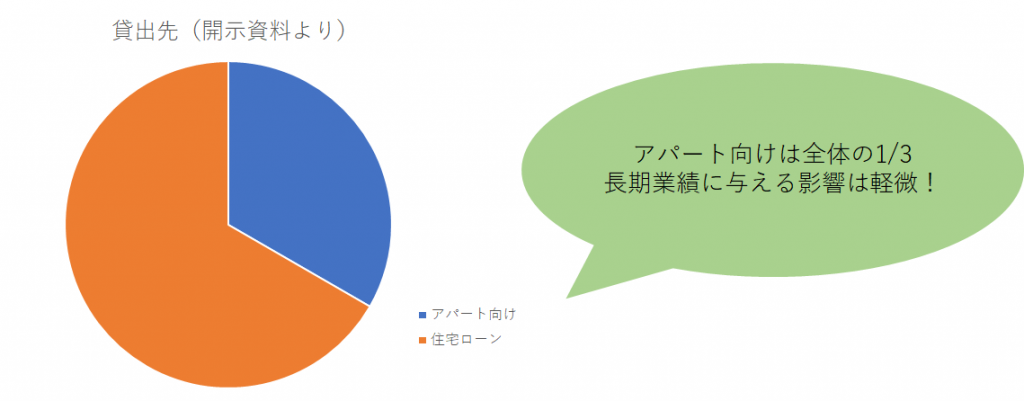
My former supervisor also had a home loan from Suruga Bank. The reason for taking a high-interest loan from Suruga Bank was that it was for a second home, located in an area designated as urbanization control. Since I earned a decent salary at the company, there would be no problem repaying, and I believed such loans would accumulate.
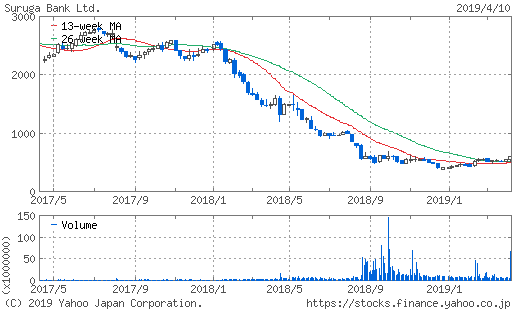
When the Financial Services Agency conducted an on-site inspection and the stock price dropped sharply, I recommended buying. There was a lot of troubling news, but I was confident in my analysis, andI dismissed these as trivial and overconfident.
Confidence backfired, leading to an irrecoverable loss...
However, reality proved harsh.
According to the findings of the third-party committee,the majority of the financing labeled as home loans was actually for apartments. It may not be outright falsification, but I cannot help feeling there was manipulation in the company’s disclosures.
As the harsh reality became evident,the stock price plummeted. On the day information appeared in the Nikkei newspaper, I issued a sell recommendation early in the morning, butit hit a limit-down halt, and it was already too late. This caused losses for many members.
There is no 100% correct answer. After the failure, I realized the essence of risk
After the Suruga Bank failure, I rethought my prior concepts from the ground up.
- Trying to achieve big profits in a short period leads to pitfalls
- Disclosure information is not perfect, so no matter how careful you are, mistakes occur
- Even things that worked well so far might have just been a matter of "luck"
Buying stocks involves taking on risk. There is no 100% correct answer anywhere. Therefore,betting everything on one side is no different from gambling. I learned this lesson the hard way after suffering large losses.
If, no matter how much you analyze, there is always a possibility of loss, simply investing in undervalued stocks is unlikely to yield substantial overall returns. Moreover,hot stocks, even when looking cheap, carry a high possibility of losses.
In other words, to achieve substantial profits, you must invest in something that, while limiting the chance of loss, can deliver large returns if things go welland thus you seek investments with that balance.
What kind of stocks can offer both limited losses and large gains? I pursued research into not only undervalued stocks but alsoten-bagger stocks from the past.
(Continued in Part 2)