

Combine a trend-following method in USD/JPY with a grid martingale averaging! I tested whether a holy-grail EA can be created
This time, I examined a theme that every EA developer has likely considered at least once.
That theme is,
“Can you create a Holy Grail EA by combining a trend-following strategy with a mean-reversion grid ( Martingale ) in USD/JPY?”
Another way to say it is.
Aim for profits with trend-following, while also stacking profits with mean-reversion martingale.
If this works well, it would be an ideal EA that can profit in both trending and ranging markets.
So, can we actually create such an EA?
In short, in this test,even if you naively fuse them into one EA, it did not become a Holy Grail EA.
Rather, the strengths of trend-following and mean-reversion did not complement each other well, and the combined result canceled out their advantages.
This time, I will discuss the test results and the way of thinking about EA management that emerged from them.
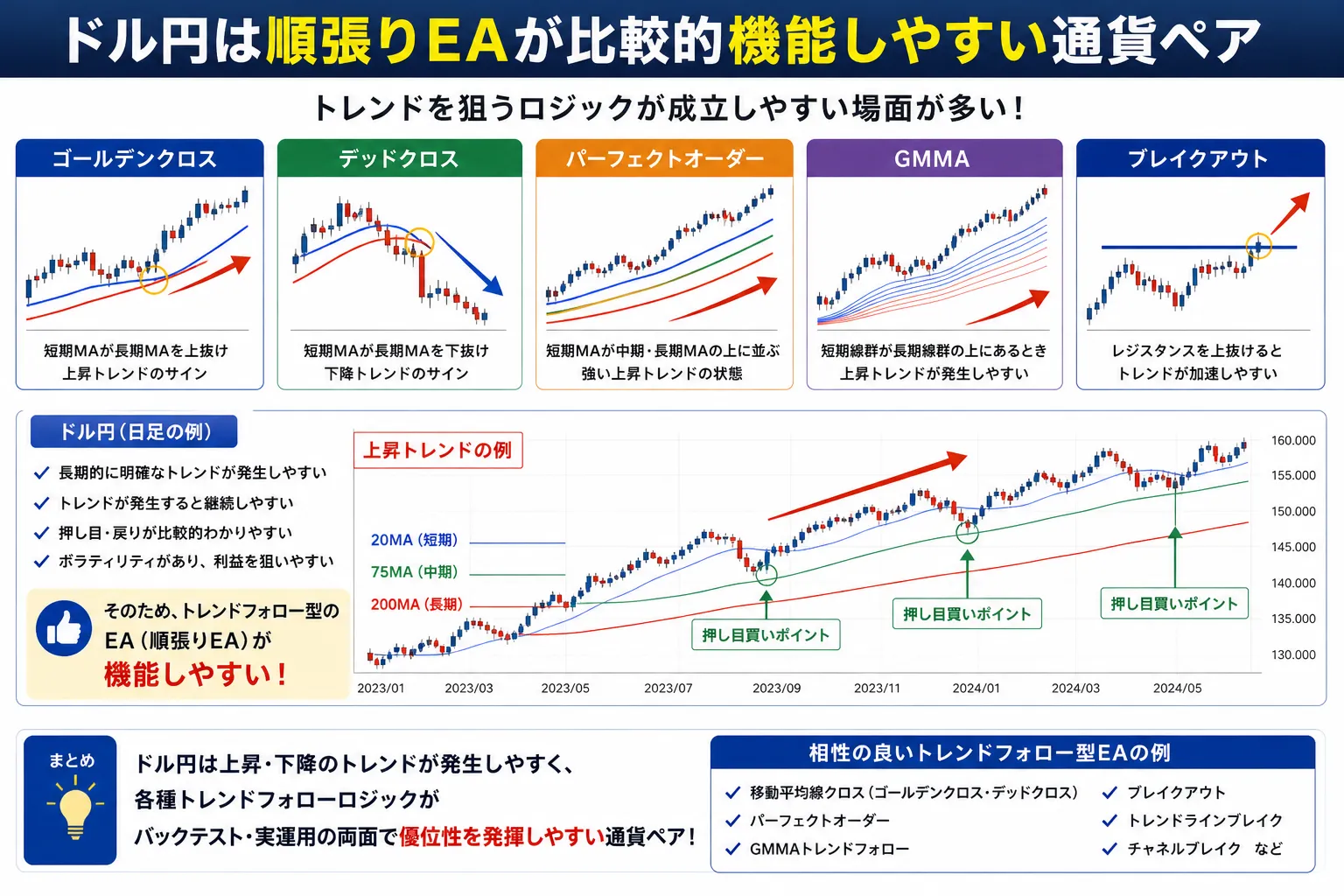
USD/JPY is a currency pair where trend-following EAs are relatively easier to create
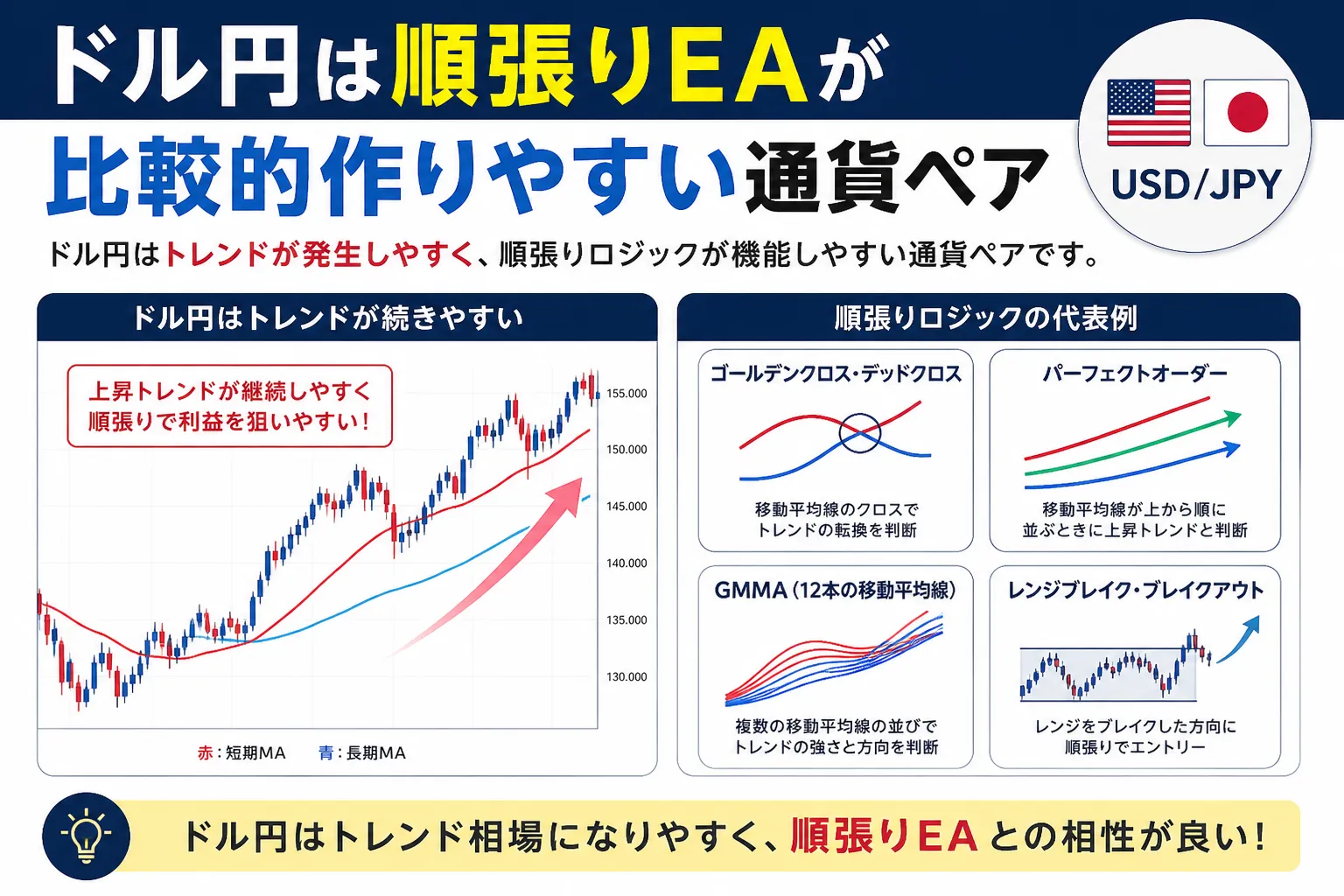
In fact, I have developed several trend-following EAs and indicators targeting USD/JPY.
For example, representative ones include:
- A two-moving-average logic using Golden Cross/Dead Cross
- A three-MA logic using Perfect Order
- GMMA trend logic using 12 moving averages
- Range-breakout and breakout-type logics
These are examples.
Of course, there is no guarantee of profit in all market conditions.
However, long-term backtests show that USD/JPY tends to allow trend-following EAs to extract profits when there are large trends.
In other words, USD/JPY is a currency pair where riding the trend direction yields relatively easier profits than ranging markets.
What happens if you combine a USD/JPY trend-following EA with a mean-reversion martingale EA?
Here, many people would think:
“If trend-following EAs make profits in trending markets, why not combine them with a mean-reversion martingale EA that thrives in ranges?”
This is a fairly natural idea.
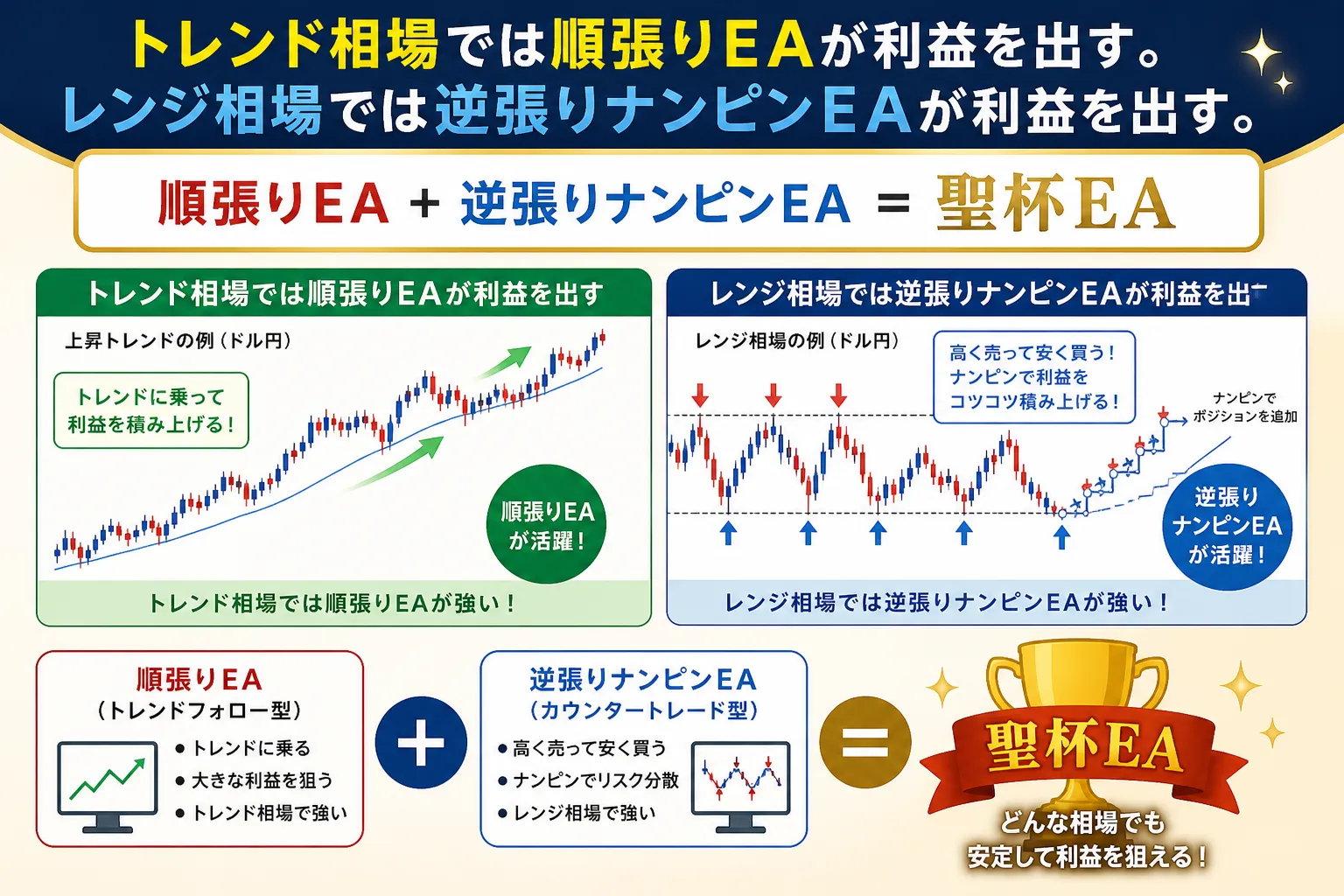
In trending markets, trend-following EAs generate profits.
In ranging markets, mean-reversion martingale EAs generate profits.
If so, you could have an EA that consistently aims for profits regardless of market conditions, right?
That is,
Trend-following EA + Mean-reversion martingale EA = Holy Grail EA
I myself have built many mean-reversion EAs so far.
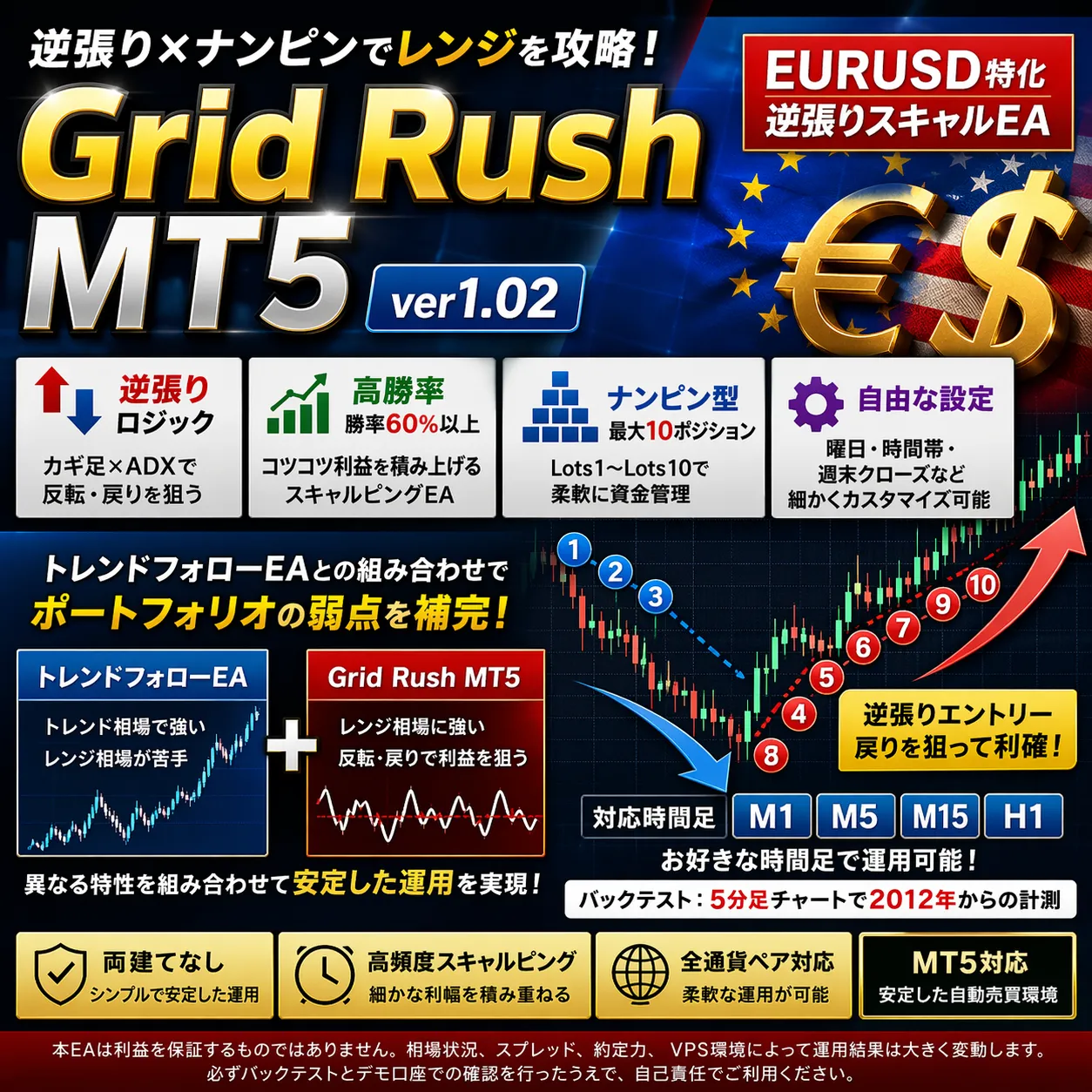
Among them, the most recently developed isGrid Rush MT5.

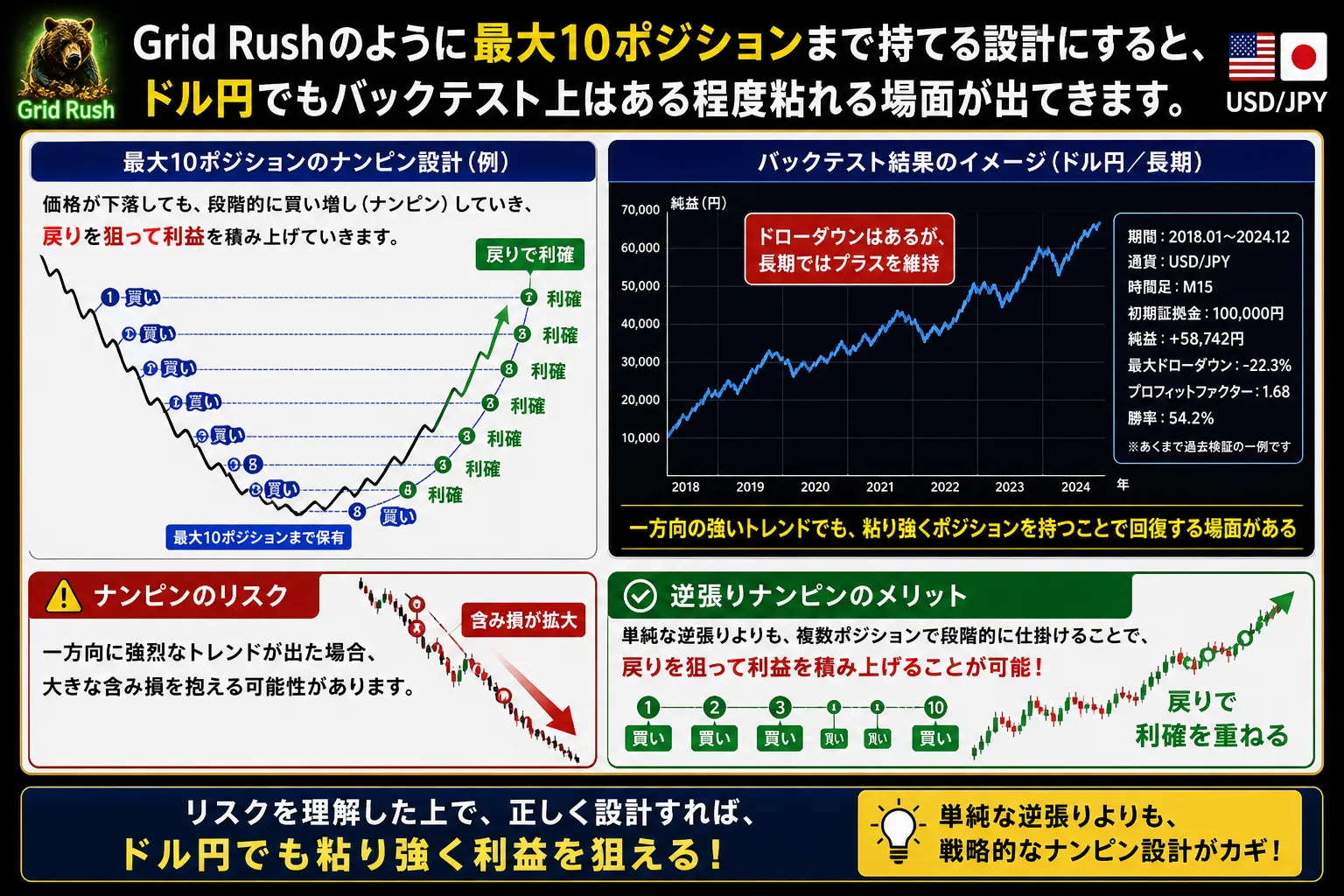
MT4 version Grid Rushis essentially a mean-reversion martingale EA targeting EUR/USD, but the MT5 version is designed to hold up to 10 positions.
And when I tested it, this up-to-10-position martingale logic showed a certain edge even in USD/JPY.
Single-position or about 3 positions cannot withstand a deep USD/JPY trend
Trading mean-reversion with only a single position tends to be disadvantageous in markets like USD/JPY that move decisively in one direction.
Even with a maximum of about 3 positions in a martingale strategy, when caught in a deep trend, some cases do not recover to break-even.
In other words, when it comes to mean-reversion in USD/JPY, you must anticipate movements deeper than shallow pullbacks to endure over a long backtest.
By contrast, designing to hold up to 10 positions, like Grid Rush, allows for some endurance even in USD/JPY in backtests.
Of course, martingale carries risk.
If a strong one-way trend appears, there is a possibility of large unrealized losses.
Nevertheless, by entering in stages with multiple positions rather than a single simple reversal, you can target the pullback and accumulate profits.
Trend-following logic profits. Mean-reversion martingale profits. But what if you combine them?
From these results, many traders would think this:
In USD/JPY, trend-following logic backtests are positive.
Moreover, even with a maximum of 10 positions for the mean-reversion martingale logic, backtests show profits.
So, if you put these two into one EA, wouldn’t it become a stronger EA?
I also tested several patterns.
- Move the trend-following logic and the mean-reversion logic as one EA
- Enter with trend-following conditions, use mean-reversion logic as the exit condition
- Only during mean-reversion martingale do you pyramid with trend-following
- Manage trend and mean-reversion positions as hedged positions
- Adjust maximum positions and entry conditions
I tried various combinations like this.
However, in the end, it did not work well.
1+1≠2. It rather cancels out and loses power
The strongest realization from this test is that an EA’s logic does not simply get stronger by addition.
Trend-following EA alone can be profitable.
Mean-reversion martingale EA alone can also be profitable.
But that does not mean combining them will make profits double.
Rather, their logics clash and negate each other’s strengths.
Trend-following may extend profits while mean-reversion holds positions in the opposite direction.
When mean-reversion targets a pullback for profit, trend-following may place unnecessary entries.
As a result, the logics clash, and overall performance does not improve.
This is the major point that became clear in this test.
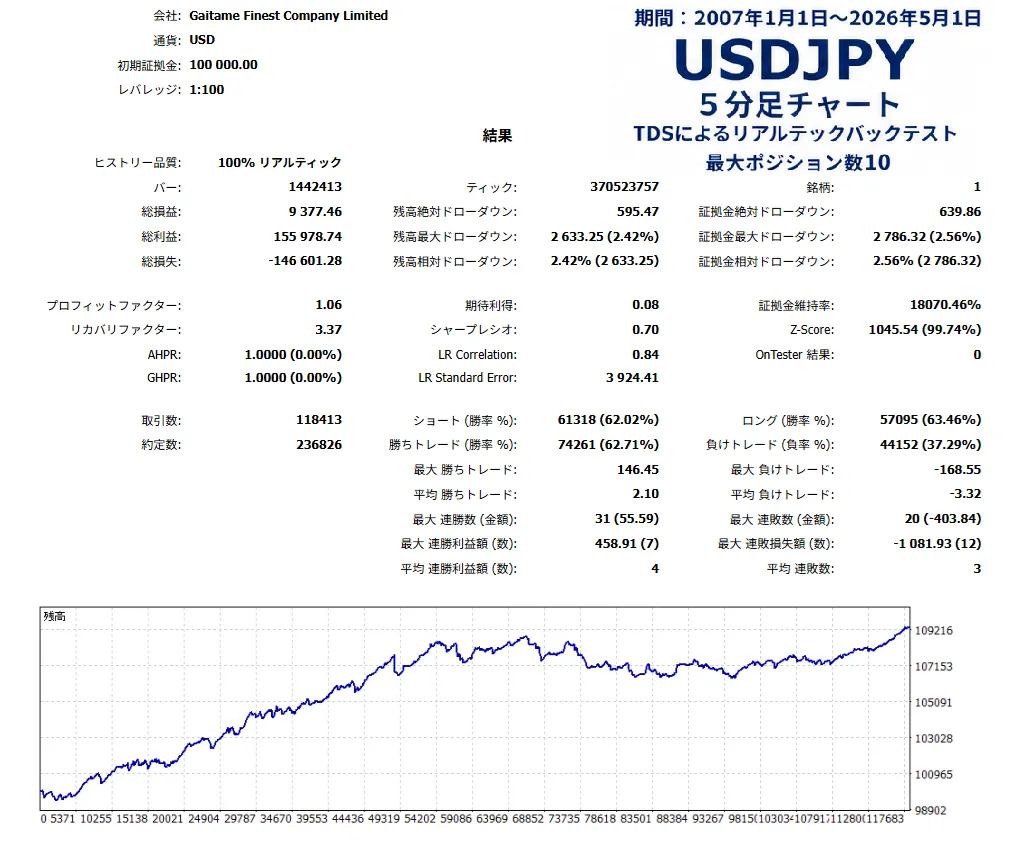
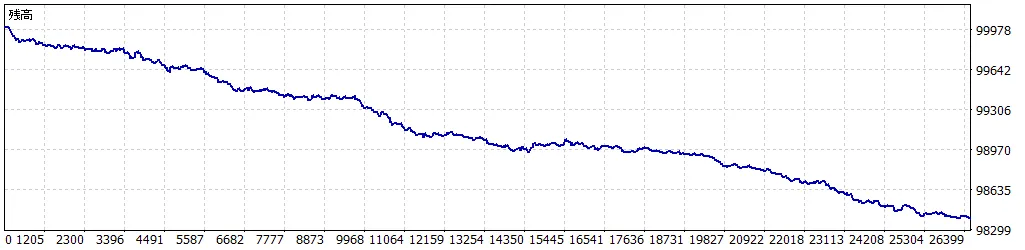
The asset chart below shows the backtest results of an EA that combines USD/JPY trend-following and mean-reversion logics.
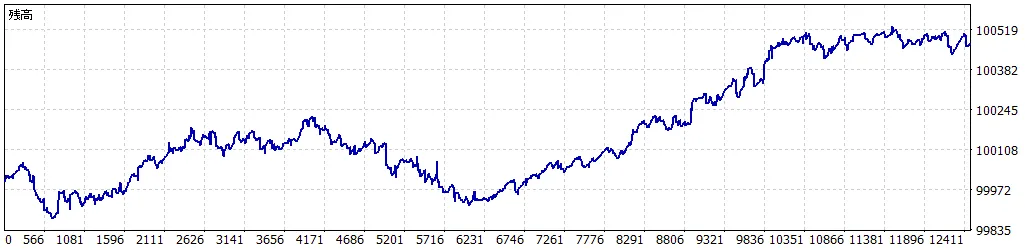
Even if you combine winning logics, it does not necessarily become a winning EA
as a conclusion.
Does the Holy Grail EA exist?
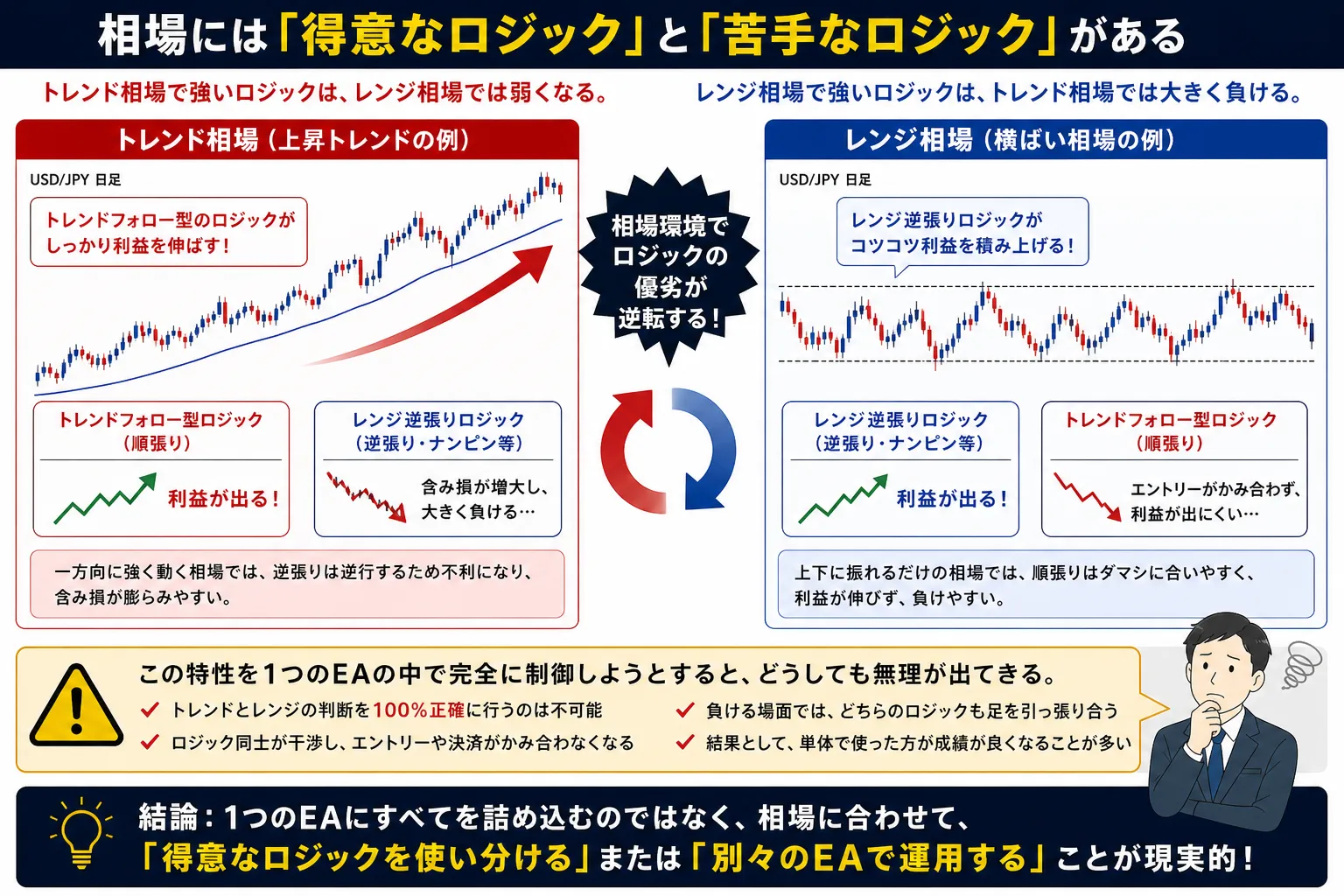
Many EA creators seek the Holy Grail by combining various methods.
Trend-following, mean-reversion, martingale, breakout, pullback buying, pullback selling, anomalies, multi-time-frame analysis.
If you combine such logics, you might think you can create an EA that wins in any market.
But when you actually try, it often fails.
In trending markets, strong logics become weak in ranges.
In range markets, strong logics lose in trends.
Trying to fully control this property within a single EA inevitably leads to unrealistic expectations.
This study clearly highlighted that point.
So how should you think to win in FX?
What matters here is,
“There is no Holy Grail EA = you cannot win in FX”
This is not the case.
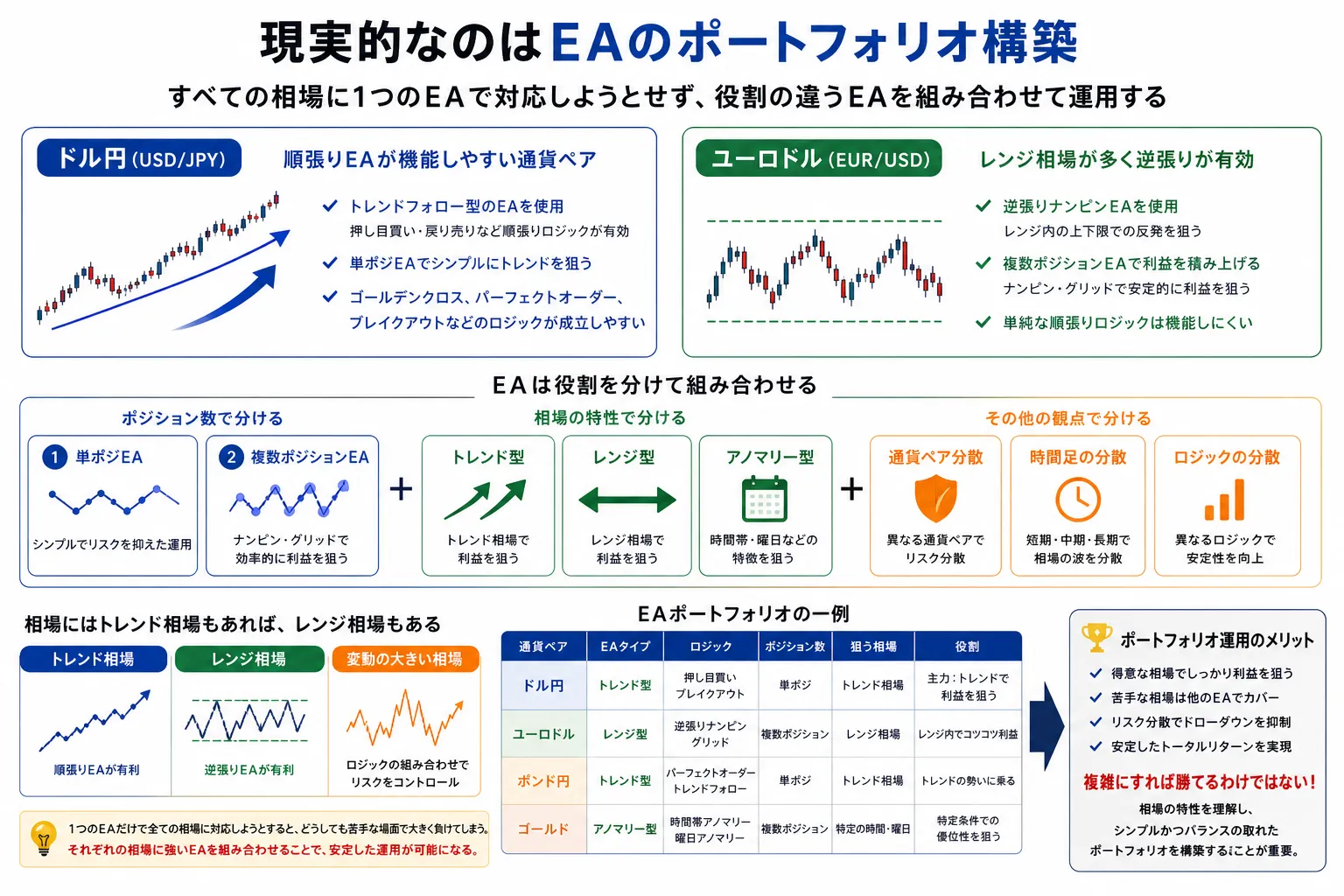
Rather, what matters in EA management is not packing all logics into one EA, butconsidering a portfolio of independently operated EAs.
In other words, instead of trying to make one EA handle both trending and ranging markets, think of combining multiple EAs with different roles.
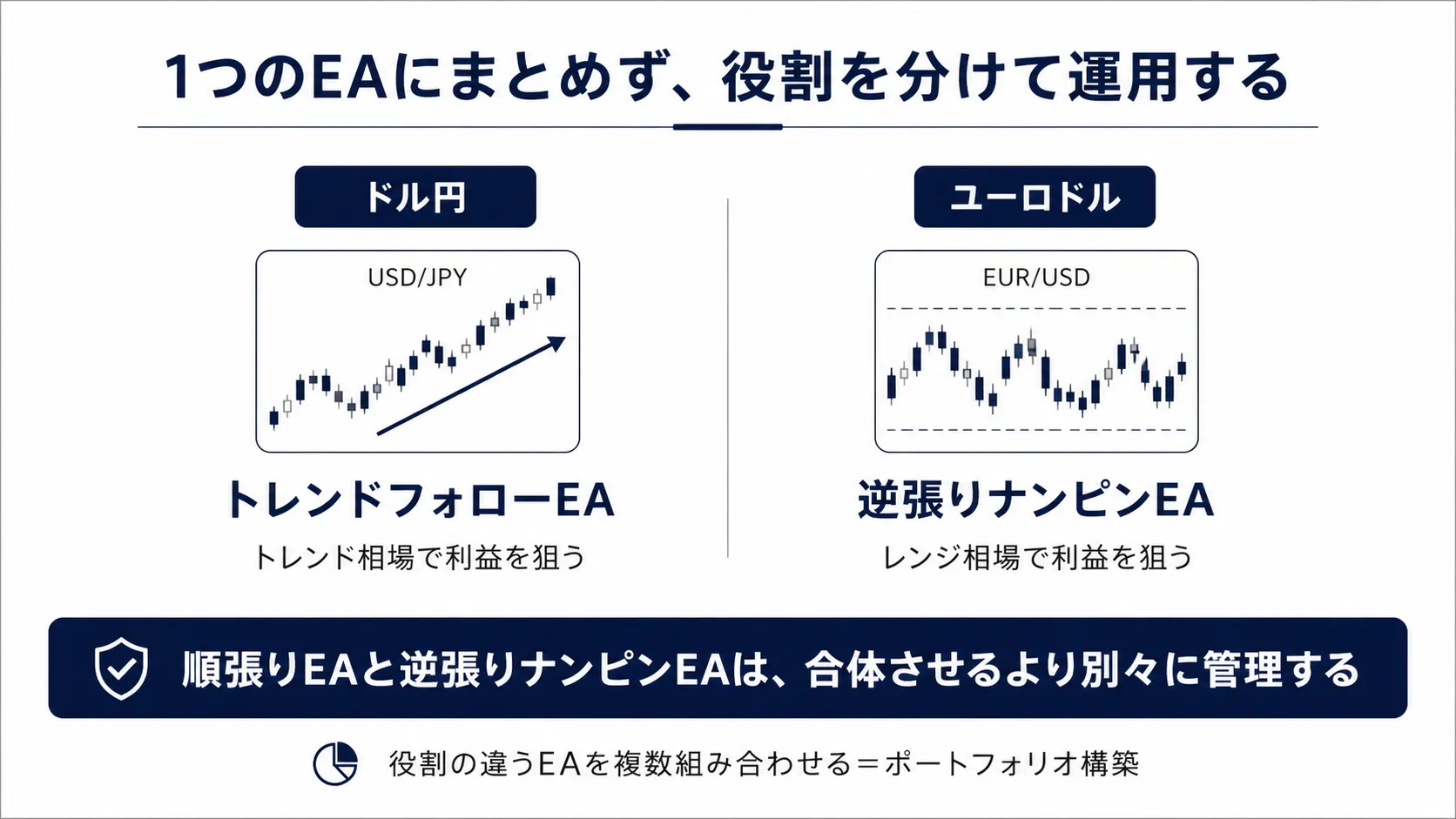
Meanwhile, run a range-friendly mean-reversion martingale EA in EUR/USD.
Alternatively, manage USD/JPY withseparate EAs for trend-following and mean-reversion.
I believe this is a realistic approach.
Reasons why it's better to run separately rather than in one EA
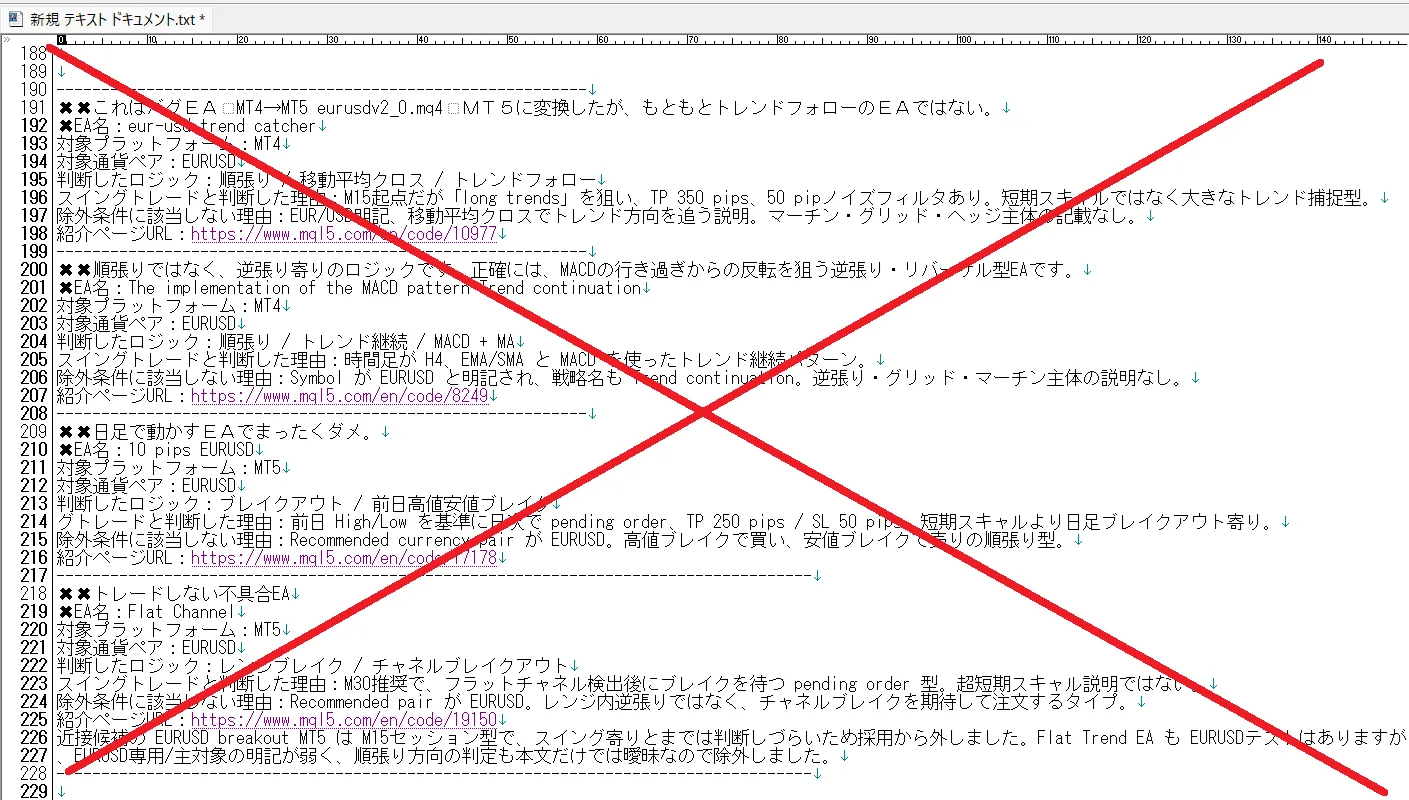
If you merge trend-following EA and mean-reversion martingale EA into one, the logics may interfere.
However, by running them as separate EAs, you can leverage each of their characteristics more easily.
Trend-following EAs aim for profits in trending markets.
Mean-reversion martingale EAs aim for profits in ranging markets.
By separating roles like this, you no longer need to force decisions inside a single EA.
Of course, creating a portfolio does not guarantee profits.
Markets have both trending and ranging phases.
Rather than trying to cover all markets with one EA, you should combine EAs that excel in each market.
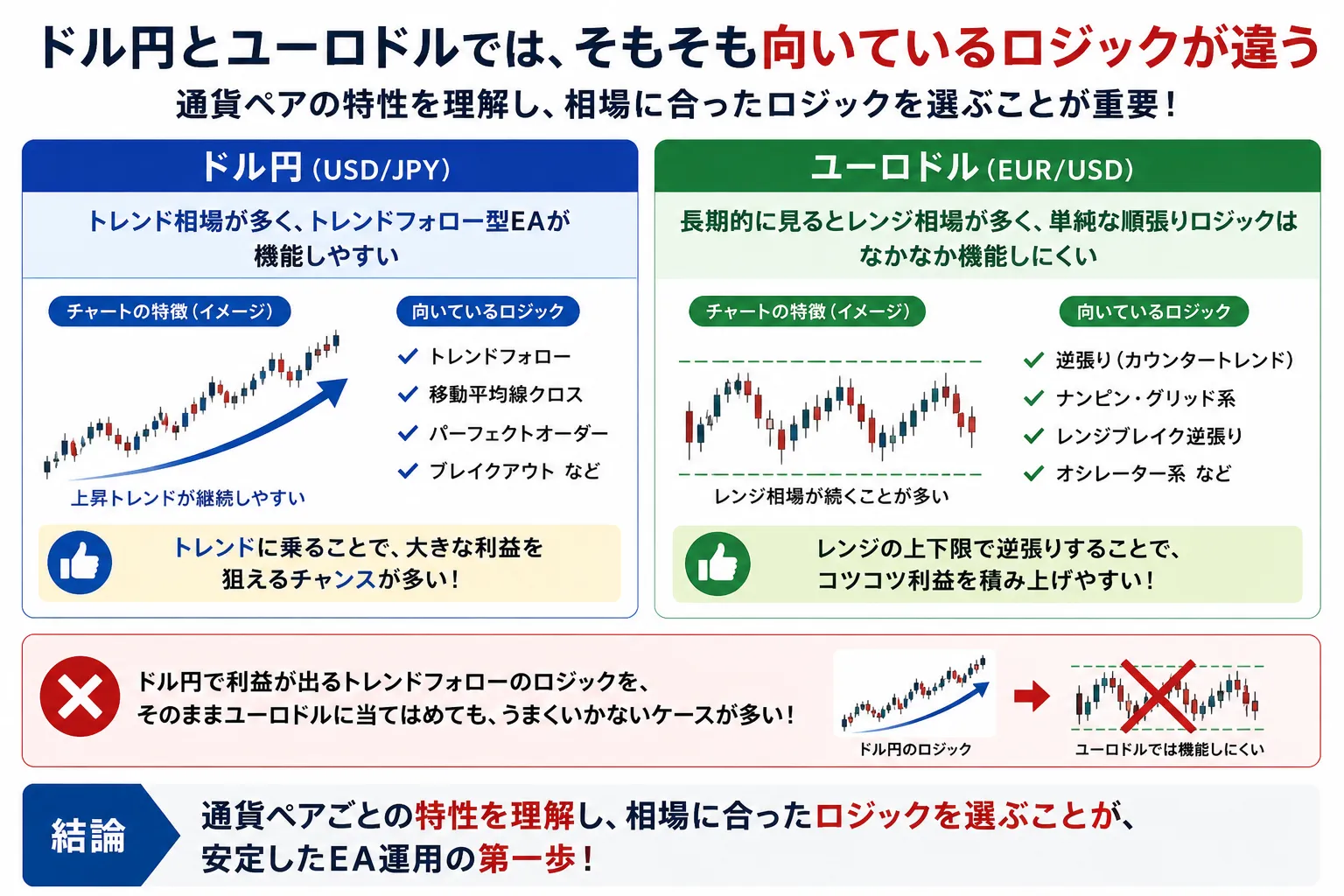

Summary: aim for a Holy Grail portfolio, not a Holy Grail EA
In this test, I examined whether USD/JPY trend-following and mean-reversion martingale can be combined to create a Holy Grail EA.
As a result, simply consolidating into one EA did not become a Holy Grail EA.
Mean-reversion martingale EA alone can be profitable.
However, when combined, 1+1 does not equal 2.
Instead, it can negate each other’s strengths.
This is the difficult part of EA development.
However, this is not a pessimistic result.
Rather, in EA operation, it is more realistic to build a portfolio composed of multiple EAs than to search for a single Holy Grail EA.
There are logic sets that suit USD/JPY specifically.
There are logic sets that suit EUR/USD specifically.
Trend-following has its strengths, and mean-reversion has its strengths.
The key is not to cram them into one EA, but to separate and leverage their roles.
Rather than searching for a Holy Grail EA,
build a portfolio that moves toward the Holy Grail.
That is the conclusion this study has revealed.
━━━━━━━━━━━━━━━━━━
? Grid Rush series
━━━━━━━━━━━━━━━━━━
MT5 sign indicator
Volatility Rush Indicator
https://www.gogojungle.co.jp/tools/indicators/80364
MT4 sign indicator
Grid Rash_Arrow_Indicator
https://www.gogojungle.co.jp/tools/indicators/55251
MT5 automated trading EA
Grid Rush MT5
https://www.gogojungle.co.jp/systemtrade/fx/78797
MT4 automated trading EA
Grid Rash EURUSD
https://www.gogojungle.co.jp/systemtrade/fx/55503
※This article covers technical and educational content related to EA development and backtesting verification and does not constitute financial investment advice. There are risks of loss in FX, CFDs, and automated trading. Please make all trading decisions at your own risk.