

[Image Included] Explanation of liquidity by country for Tokyo Time, London Time, and NY Time
【With Images】 Explaining Liquidity by Country for Tokyo Time, London Time, and New York Time
This is Shirou!

How much liquidity does each country have during Tokyo time?

How much do holidays in each country affect the market?
For those who want to know, this article will explain not only for myself but also for you,
Tokyo time, London time, and New York time — which countries have how much liquidity
based on the latest data from the Bank for International Settlements (share of trades by country).
【With Images】 Explaining Liquidity by Country for Tokyo Time, London Time, and New York Time
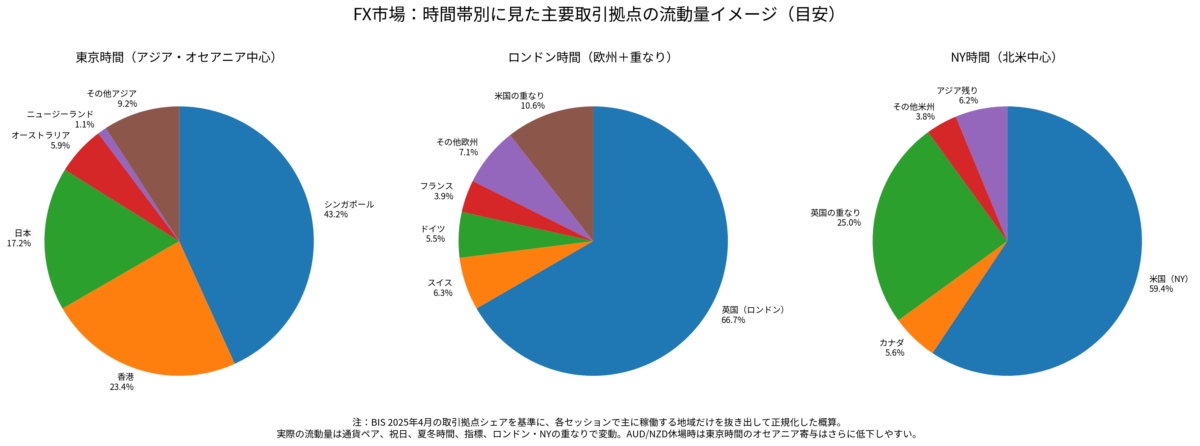
I created a pie chart by researching and using the BIS data (latest data on each country's share of trading).
Let’s start with Tokyo time.
Tokyo Time
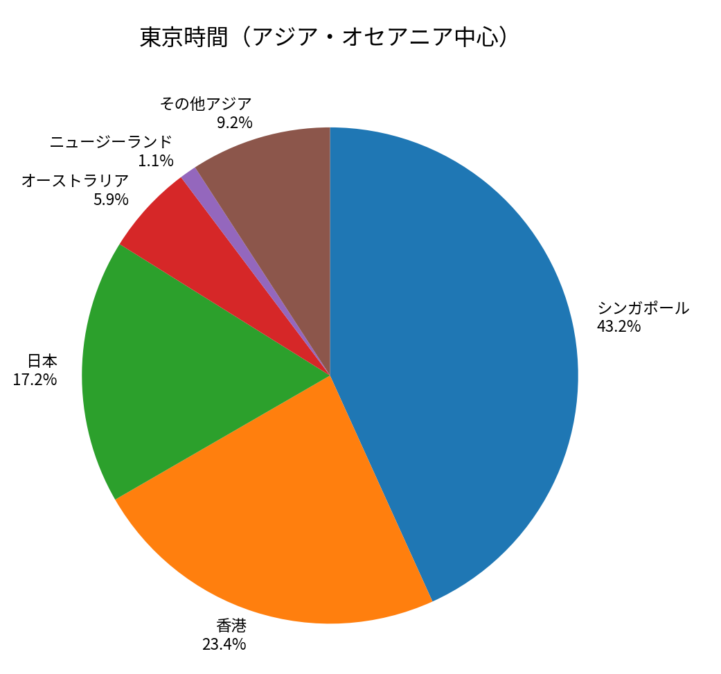
Surprisingly, Singapore and Hong Kong account for a large share.
Singapore uses SGD, but it seems to influence other major currencies (across 28 currency pairs, etc.) as well.
Recently, Singapore holiday was Good Friday on April 3, butTokyo time was quiet indeed.
Tokyo time → London time, 1-hour interval, currency pair random
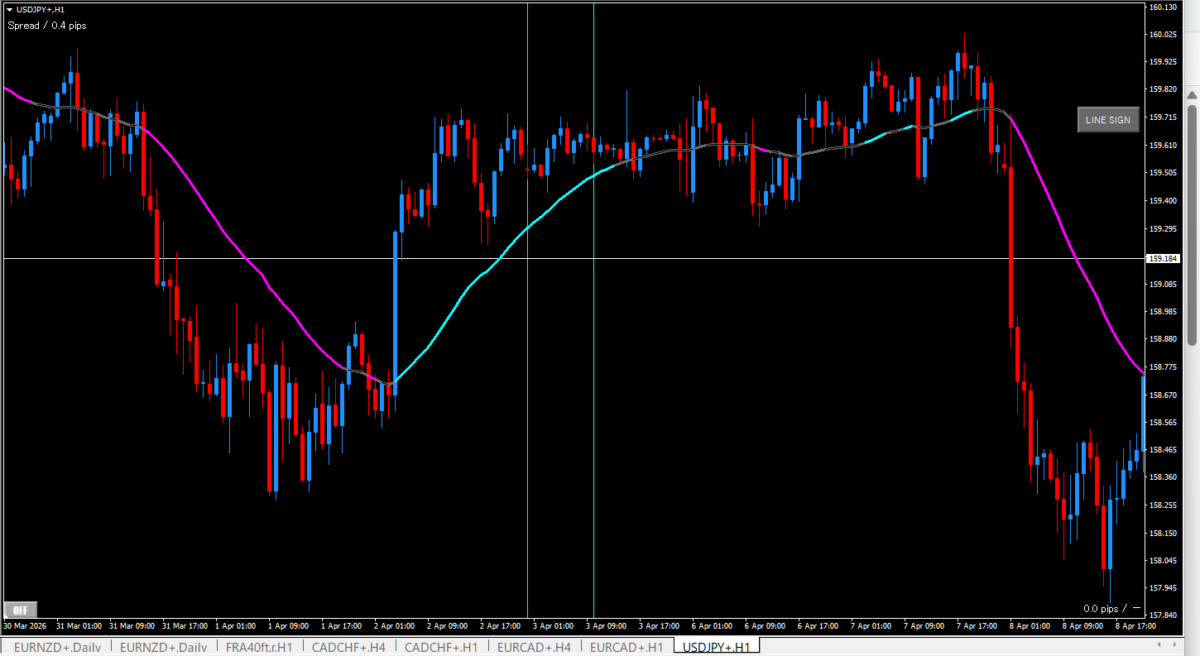
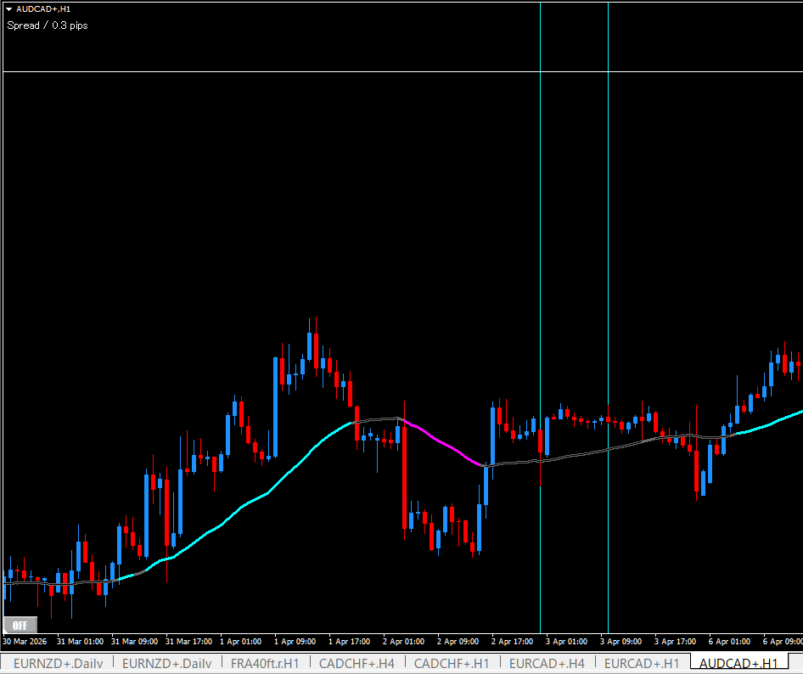
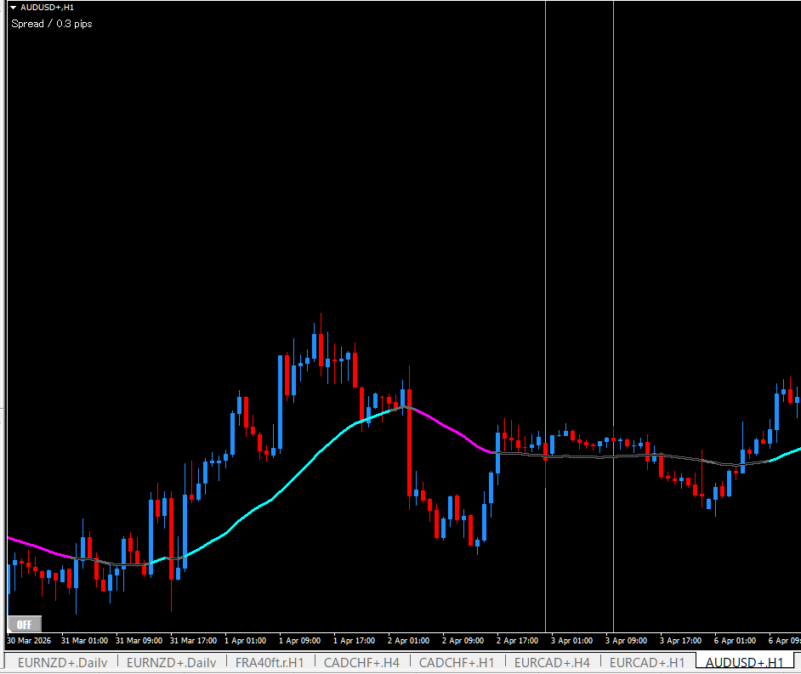
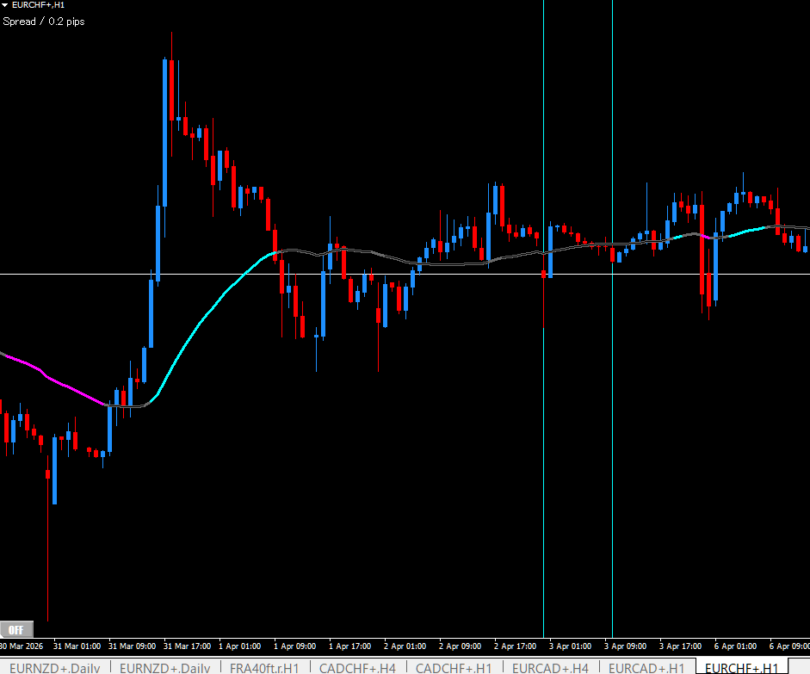
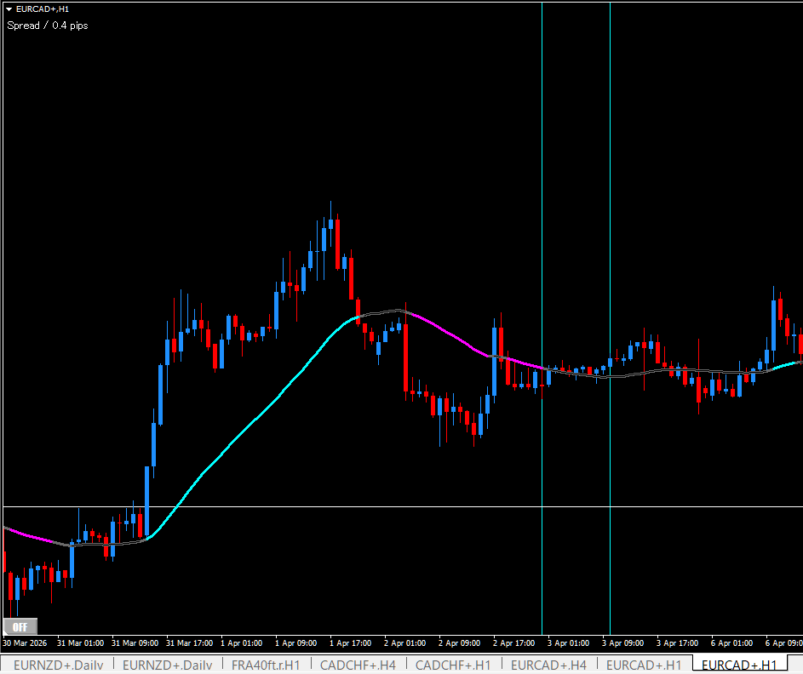
Tokyo time is inherently low in volatility, but when Hong Kong or Singapore are on holiday, you should be careful.
London Time
Only London in the UK has trading volume eight times that of Tokyo, a time that draws worldwide attention.
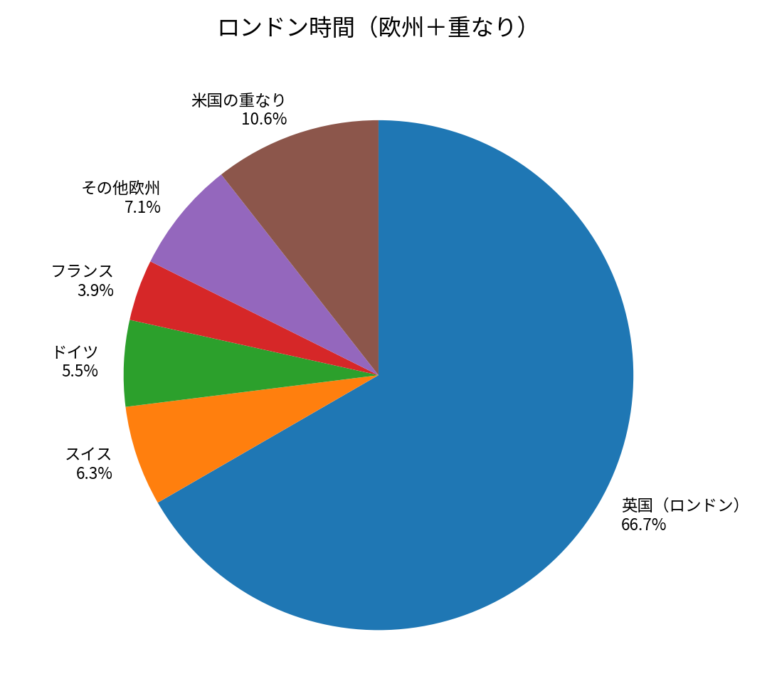
It also overlaps with NY time, so overlap is included.
As expected, London liquidity is remarkable when viewed this way.
There is often advice not to go against the momentum at the start of London sessions,
and I think this is easier to understand from this view.
It affects 28 currency pairs, but EUR, GBP, and then USD tend to have higher trading volumes.
Recently there wasEaster Monday holiday. It’s still fresh in memory.
Actual market 1-hour chart (currency pair names are below or in the top-left) 16:00–24:00
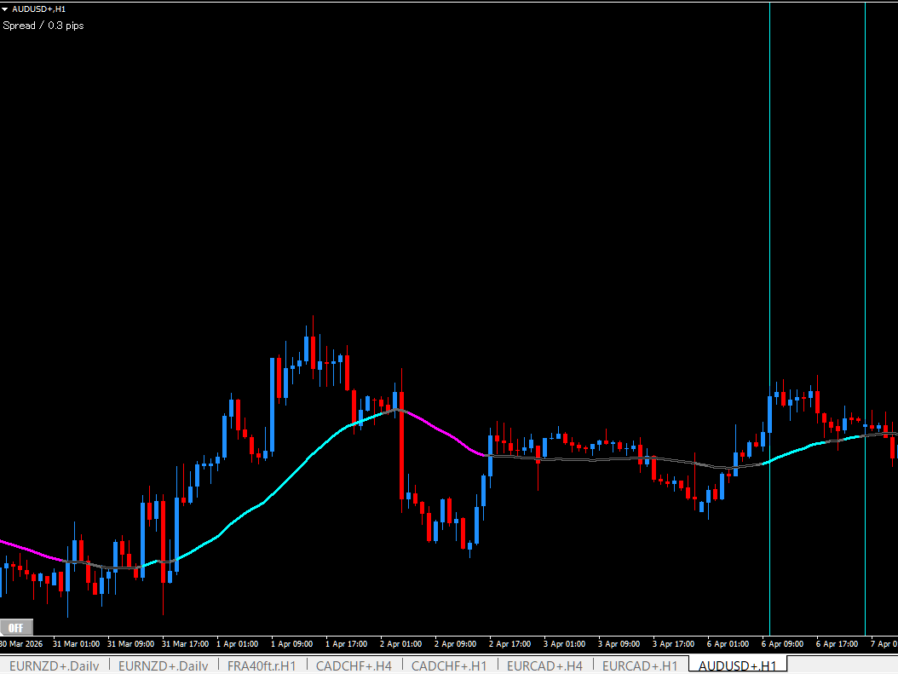
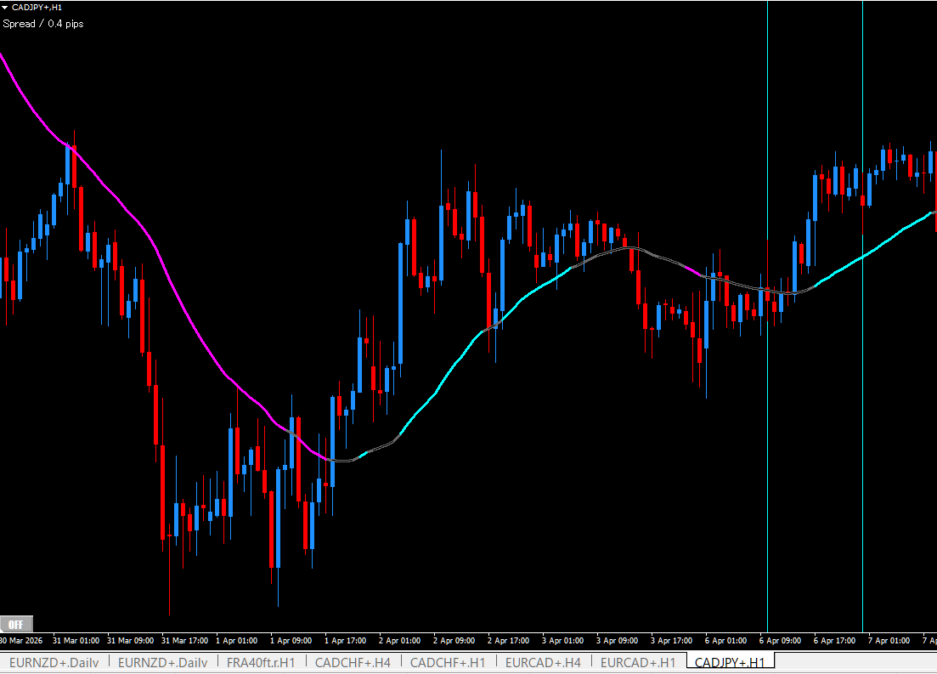
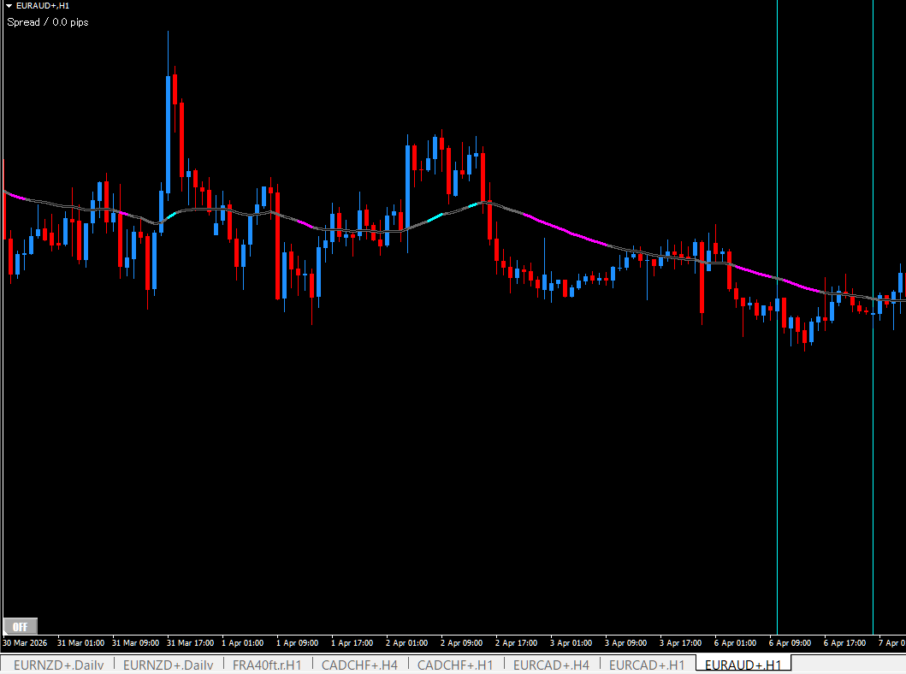
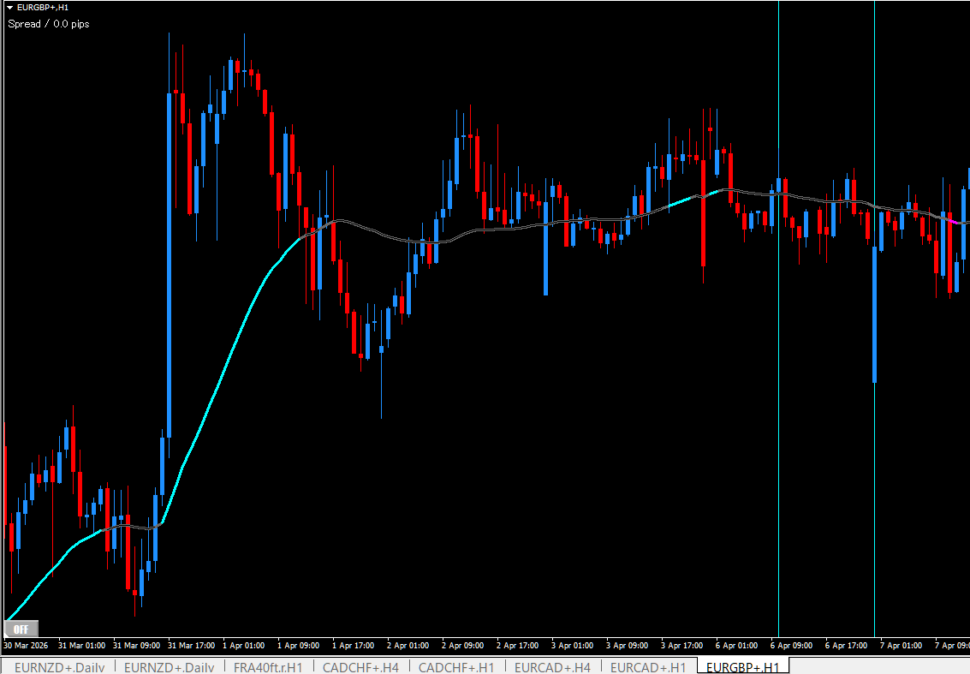
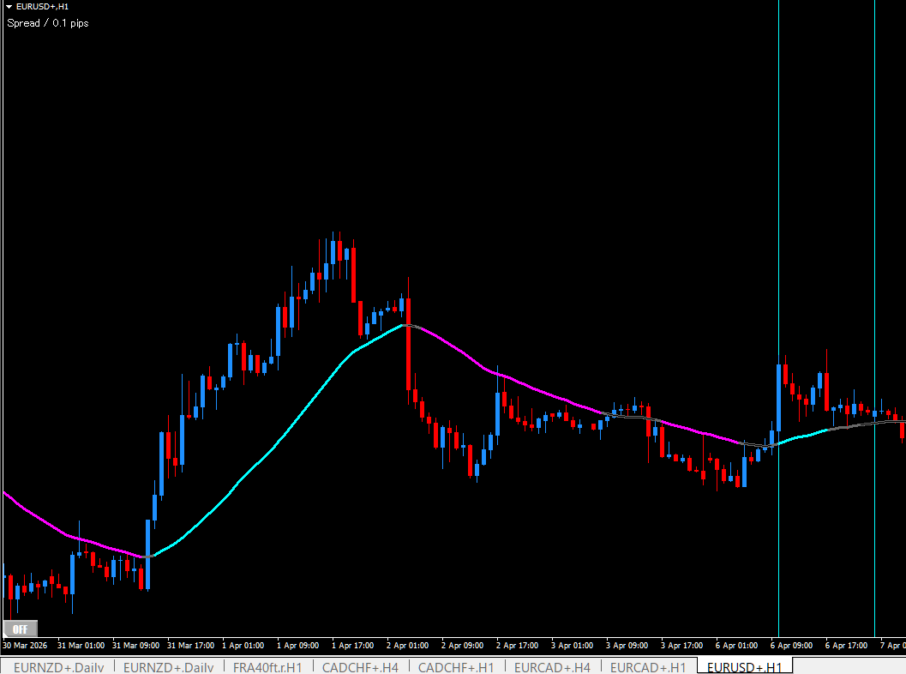
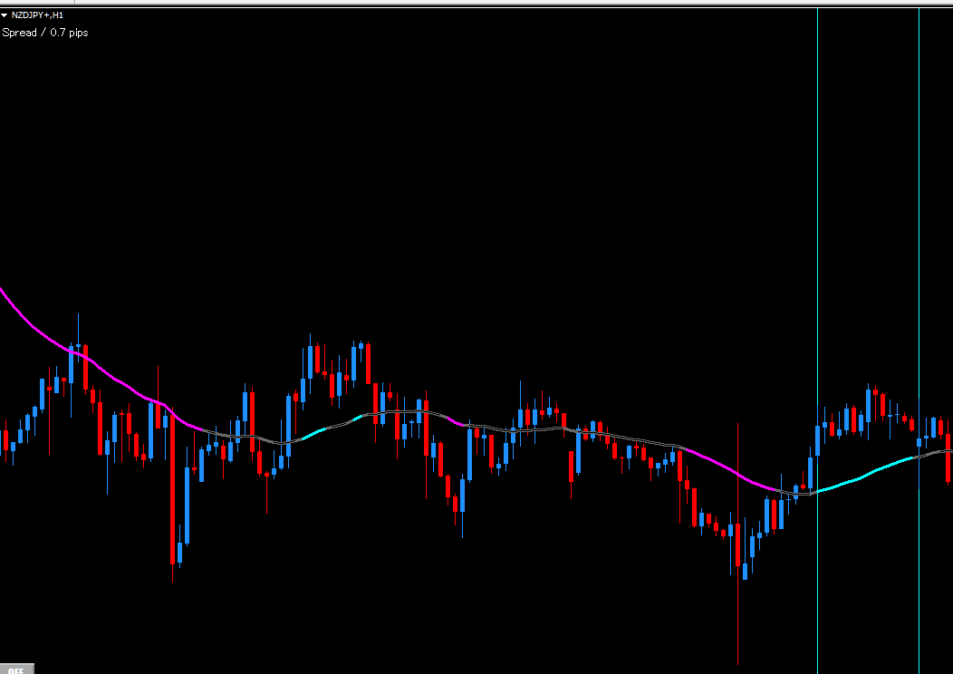
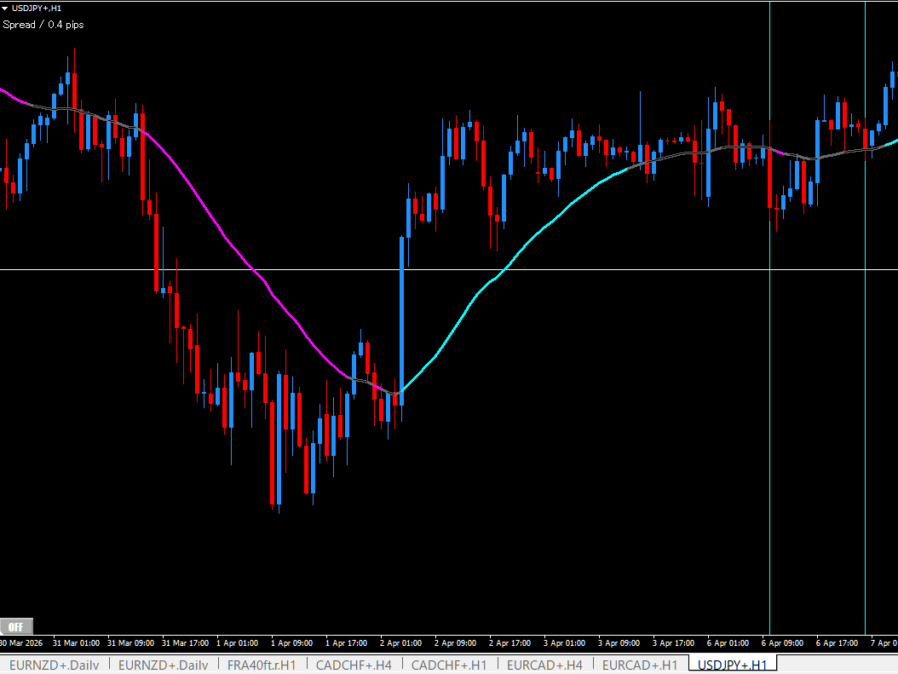
Easter Monday, at first glance, doesn’t look much different from usual, butvolatility is lowerseems to be the case.
When London is closed, you don’t need to worry as much, but
EUR, GBP, USD move somewhat more with limited volatility
andpositions are more likely to be carried over to the next dayso you should consider it.
New York Time
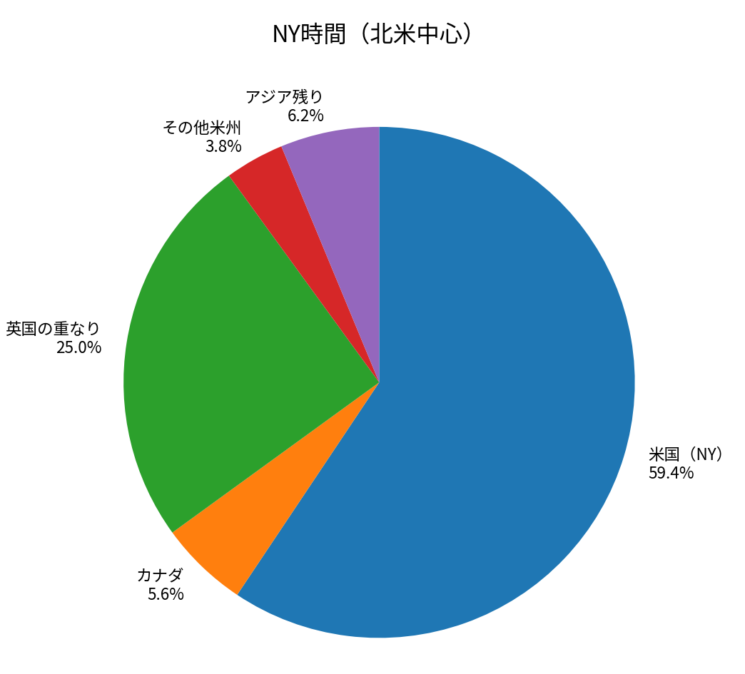
When it’s New York time, liquidity is higher among the Americans.
This is because London time ends midway during NY time.
In chronological order
- Oceania (NZ, Australia) 6:00–15:00
- Tokyo 9:00–18:00
- London 16:00–Next day 1:00
- NY 21:00–Next day 6:00
- Sydney, Tokyo, London, NY rotate in 24-hour cycles
Since London time ends at 1:00 the next day, the remaining 5 hours are NY time.
When the US is on holiday,
there is little overlap between London and the US, making it harder for the market to boost
so the trend may be somewhat weaker.
Summary

Proceeding to the summary.
- During Tokyo time, if Singapore or Hong Kong are closed, volatility tends to be even lower
- During London time, since London dominates, volatility tends to be lower on holidays
- During American time, the market operates as usual, but it’s harder for the market to accelerate
- After 1:00 AM the following day, it becomes difficult to forecast the developments
That is all.
Thank you for reading until the end!