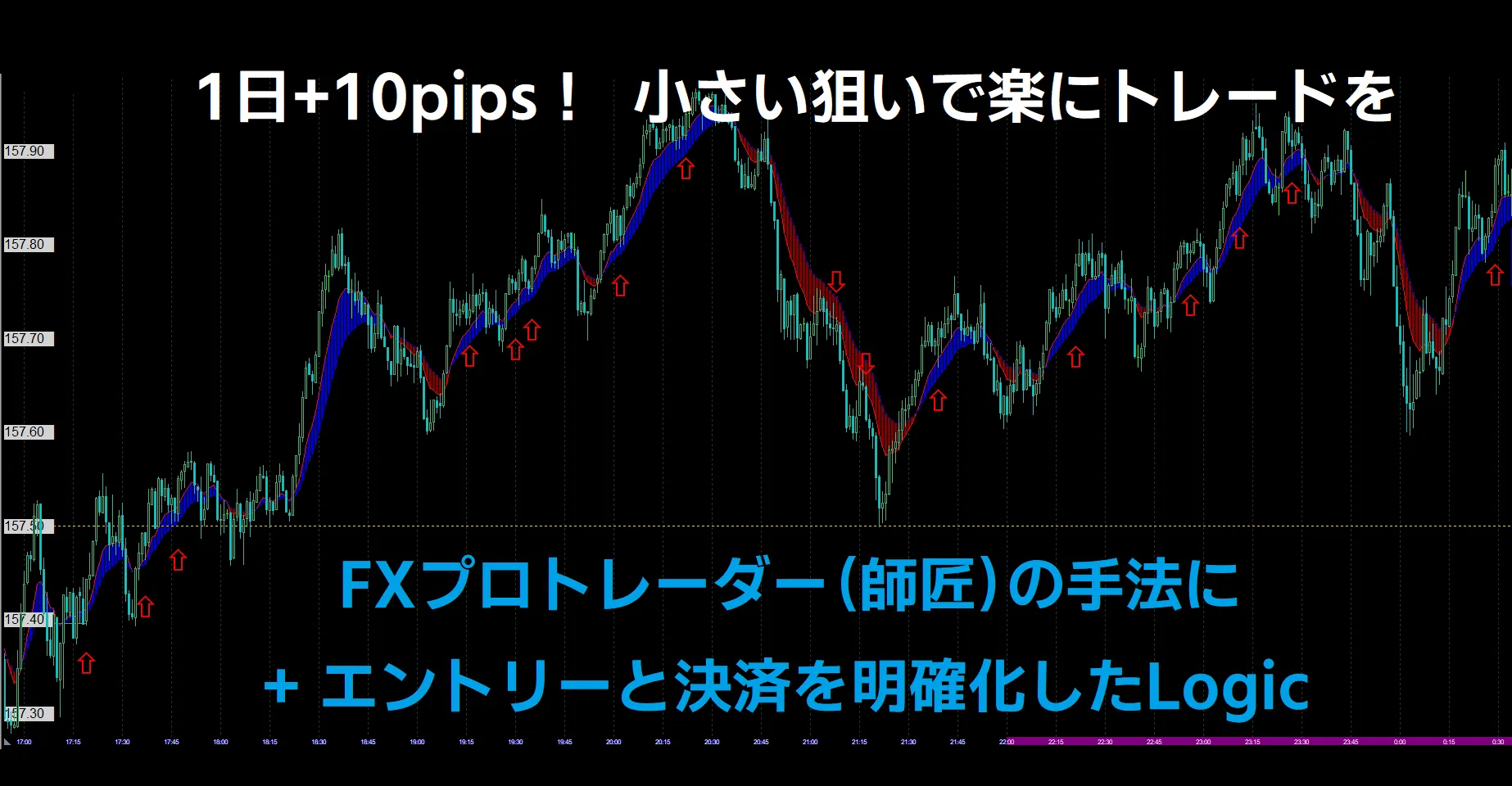
[Method Logic] Do you have to keep monitoring the chart continuously for scalping?
【Method Logic】With scalping, do I have to monitor the chart all the time?
I often get this question
“How long do I need to monitor the chart?”
“Do I have to monitor the chart all the time?”
“Is chart monitoring exhausting?”
Chart monitoring is, of course, necessary
However, you don’t have to stare at it continuously
In 1-minute timeframes, for scalping,
When you trade, of course focus is required, and
Naturally, the chart must be open
The question is, how often? how much focus? how many hours?
How should you monitor the chart?
What is the content of chart monitoring?
Of course, you need to have the chart open during trading times
But do you have to stare at it intensely during that time?
That’s not necessary
If you have to keep your full attention on the chart, that’s exhausting
Raise your focus gear according to the phase
While keeping the chart open, look sideways for a while,
If the right moment comes, focus, and you’ll enter when the logic is satisfied, so it isn’t that hard
As the entry point approaches according to the logic
Until then, it’s fine to glance at it sideways
Then, when it approaches, start chart monitoring, and once you reach the point that satisfies the logic, you should enter with concentration
Only when the conditions seem to be aligning do you focus on the fine movements of the 1-minute chart
Frequency and duration depend on the day, but the level of concentration should be about like this
Also, this is another monitoring method, not related to the method logic, but
When I have the chart open, the indicators that I display separately from the logic are
An indicator that shows time in seconds
An indicator called CCFp that represents currency strength
CCFp is an indicator that includes multiple currencies in its calculation,
and is completely different from indicators that are calculated only from the currency pair on the chart
With this CCFp, you can immediately see which currency is strong or weak right now, so
You look at the strength relations of the dollar, yen, euro, pound, Australian dollar, Canadian dollar, Swiss franc, etc.
Simply put, trading with a pair consisting of a strong currency and a weak currency is advantageous
Well, putting that aside for a moment,
For example, in USD/JPY, is the strong-weak relationship between the dollar and the yen wide enough? If there is no clear separation, it becomes a range
In simple terms, you can see at a glance that it is in a range
Depending on the time, there are periods when no currency pair has any real opportunity
Volatility is low, charts stay flat
In such times, you don’t seriously monitor the chart, and it’s not necessary
During those times, you perform various tasks while glancing at the situation
You can just look at the logic, but for monitoring multiple currency pairs
First, I look at it with CCFp
Of course,
It’s fine to have all the trading currency pairs charts open
However, for me, a CCFp that is easy to understand at a glance is convenient
With CCFp, you can consider currency pairs from the currency-wide situation
By the way, a note.
In the past, I researched a form of logic that incorporated CCFp through repeated backtesting
The approach of using it as logic is not currently practiced, but
It has become helpful for chart monitoring
In the logic, we determine the presence or absence of volatility by other indicators and by time of day,
So including the width of CCFp in the entry conditions is not done, but
The advantage of calculating multiple currencies is very useful,
So I use it as a monitoring tool to see which currency is about to move against which
For example, when the dollar and yen are very close on CCFp, it means the difference in strength between the dollar and yen is not large
In other words, on the chart it’s flat and there is no volatility
Even without looking at the chart, you can understand such a scene by looking at CCFp
And since CCFp can display multiple currencies,
If you just look at CCFp, you can tell which currencies are moving
However, CCFp is heavy to display on the chart.
Because it calculates multiple currencies, it tends to be heavy, I suppose.
★★Supplementary explanatory PDF to clarify settlement methods added (4/16)★★
What is the now-public “New Life FX Method”
Aim for 1,000,000 yen per month with 1 day + 10 pips trades (1–2 to 5 hours of trading per day)
Pro trader’s two methods combined in a good way★Added logic that clarifies entry points
Added explanations that clarify settlement methods
■ Thinking of overseas pro traders (legendary investors Buffett and Soros)
A trading method aimed not at “winning” but at “earning”
Trade with the expectation of “long at high-probability up moves”
Coconala is ↓
https://coconala.com/services/3849967
Note is ↓
https://note.com/touji_fuc/n/n759050ccd1d5
#USDJPY #EURUSD #FXMethod #FXBeginner #FXGrimoire #FXWinning #RealTrade #Scalping #Indicator #ProTrader #FXTrade #DayTrade #DayTrader #DayTrade #WantToBeATrader
#Investment #SelfInvestment #InvestmentLifestyle #WantToBeAnInvestor #Freelance #WantToBeFreelancer #FreeWork #Freedom #SecondCareer #StockActivity #JobChangeInProgress #RemoteWork
#AssetFormation #Financing #AssetManagement #IndependenceStartUp #SoleProprietor #WantToBeSoleProprietor #Entrepreneur #WantToMakeMoney #HowToMakeMoney #WantToStartBusiness #LeaveCorporateLife #SideBusiness #WantASideJob #HousewifeSideJob #EntrepreneurialWoman #MomStarts