
Weigh what you enter and control what you exit — Tips for making a profit
Hello! It’s Sunday.
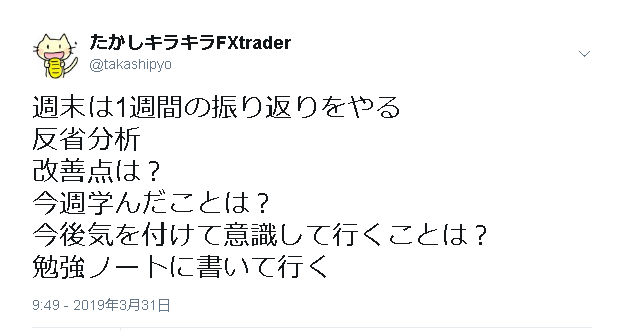
Are you all doing a weekly review?
Last week, I asked everyone to draw a Euro-Dollar scenario.
Most of you had a selling scenario ready.
Of course, just being able to draw a scenario does not guarantee you’ll win.
But basics are important first.
The flash crash drop that occurred on January 3 this year.
If you can grasp the market environment and draw a scenario, you’d be at a level where it’s almost impossible to buy around that area.
Now, returning to last week’s euro-dollar discussion, it was a selling target.
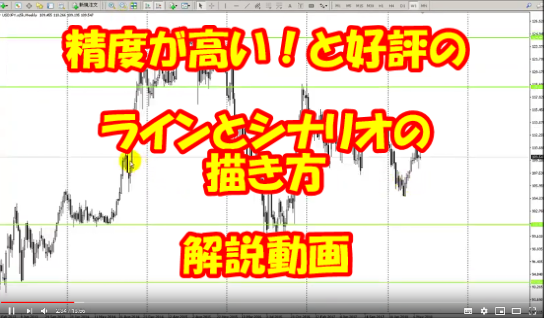
In reality, I entered a sell. This is the video. ↓
Isn’t that a stop loss! lololol
Some of you might think, “You’re talking big, but you’re losing!”
In trading, winning is not about hitting one win, but about winning or losing over time and ending up overall profitable.
Losing (taking a loss) is very important.
Rather than simply saying “You’re losing lol,” it’s crucial to understand how you’re losing.
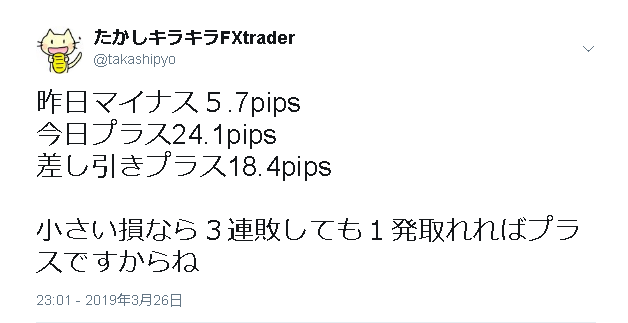
A loss of minus 5.7 pips, a very small loss.
In trading, some say losses are “necessary expenses.”
Just like in running a company, there are necessary expenses.
They are necessary, but it’s better to keep expenses as low as possible, right?
For example,
Sales +1,000,000 yen
Expenses -500,000 yen
Net profit +500,000 yen
As a result of aiming for higher sales next month, you work hard.
Sales increased by 200,000 yen, and profit rose to 700,000 yen.
Sales +1,200,000 yen
Expenses -500,000 yen
Net profit +700,000 yen
To make a profit of 700,000 yen,you can achieve it without increasing sales.
How should you do it?
By reducing expenses.
If you can reduce expenses from 500,000 to 300,000 yen, the final profit will be 700,000 yen.
Sales +1,000,000 yen
Expenses -300,000 yen
Net profit +700,000 yen
Raising sales by 200,000 yenandreducing expenses by 200,000 yen(or limiting them)results in the same profitabilityoutcome (this is a simplified view not considering taxes, etc.).
Trading is the same.
I entered another sell the day after closing a euro-dollar loss, and took profit. It’s overall profit.