
I may have found the Holy Grail
As I mentioned in the previous article, we are progressing a project to further train the AI portion of Kinisoku AI on external servers.
So, once again, let me explain the previously less-discussed “AI” part of Kinisoku AI in detail.
※ There is nothing difficult here. Kinisoku AI simply presents results based on this complex data.
Kinisoku AI applies an enormous amount of training data and incorporates appropriate parameter design and statistical elements.
However, if you just put the training data on MT4 as it is, it won’t run. Consequently, on the product page, it is designed as “microAI” that runs on MT4.
The design prioritizes functioning on MT4.
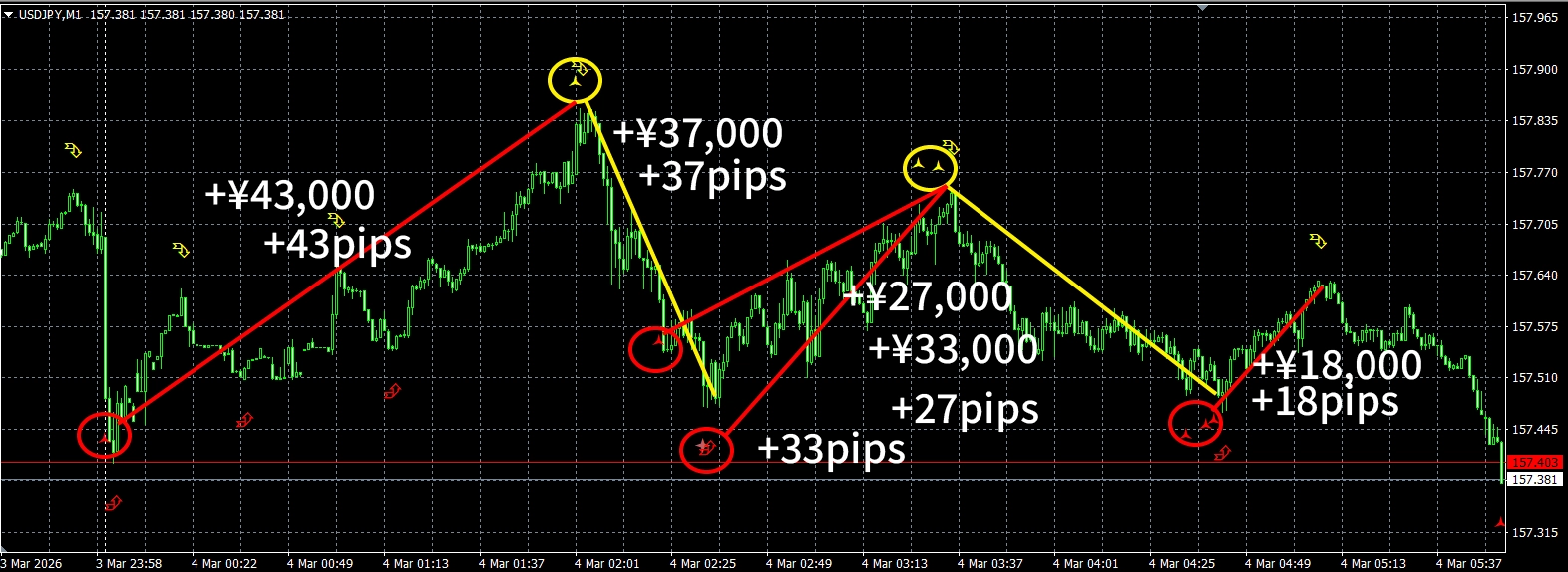
Of course, with this mode of operation, forward performance matches what is published on the chart in Investor Guide, as per backtests.
However, as explained before, there are restrictions such as GOLD not being appropriate for use, among others.
This is largely due to fundamental factors, but it is also caused by the training data being biased toward currencies such as the dollar, euro, yen, and pound.
If you train major currencies, you can apply it easily to FX currency pairs that move in tandem, but commodities posed more difficulty.
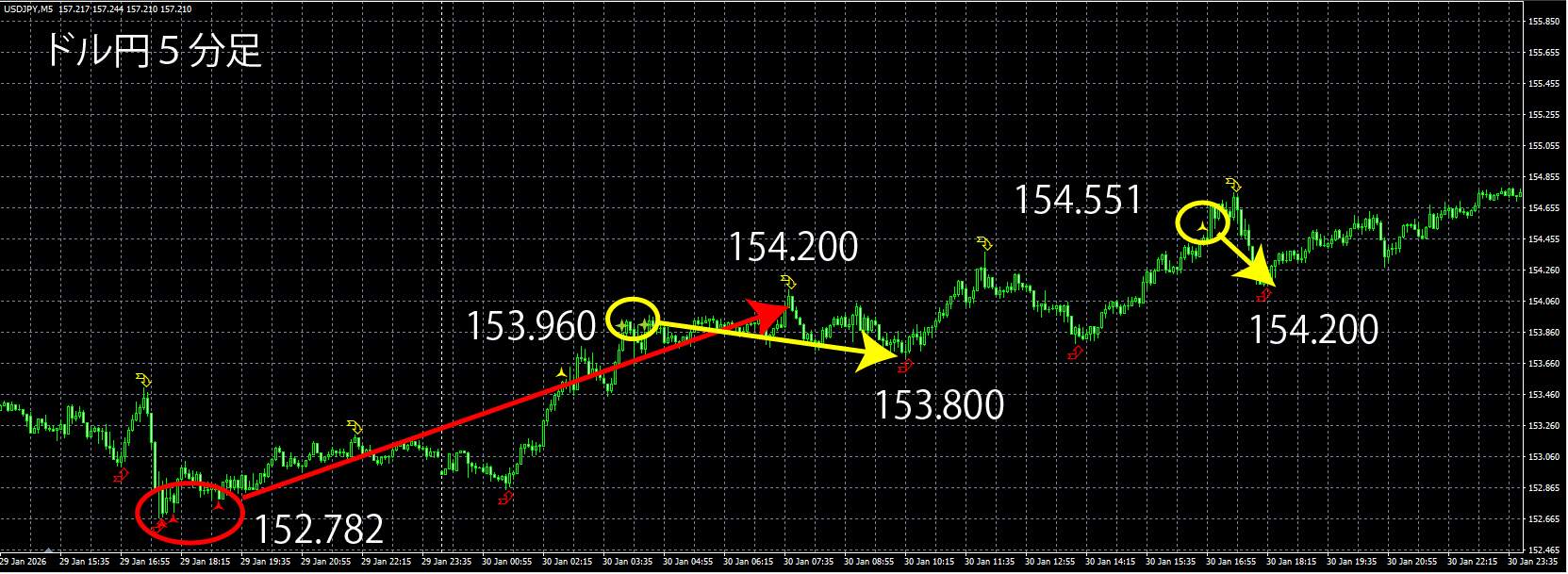
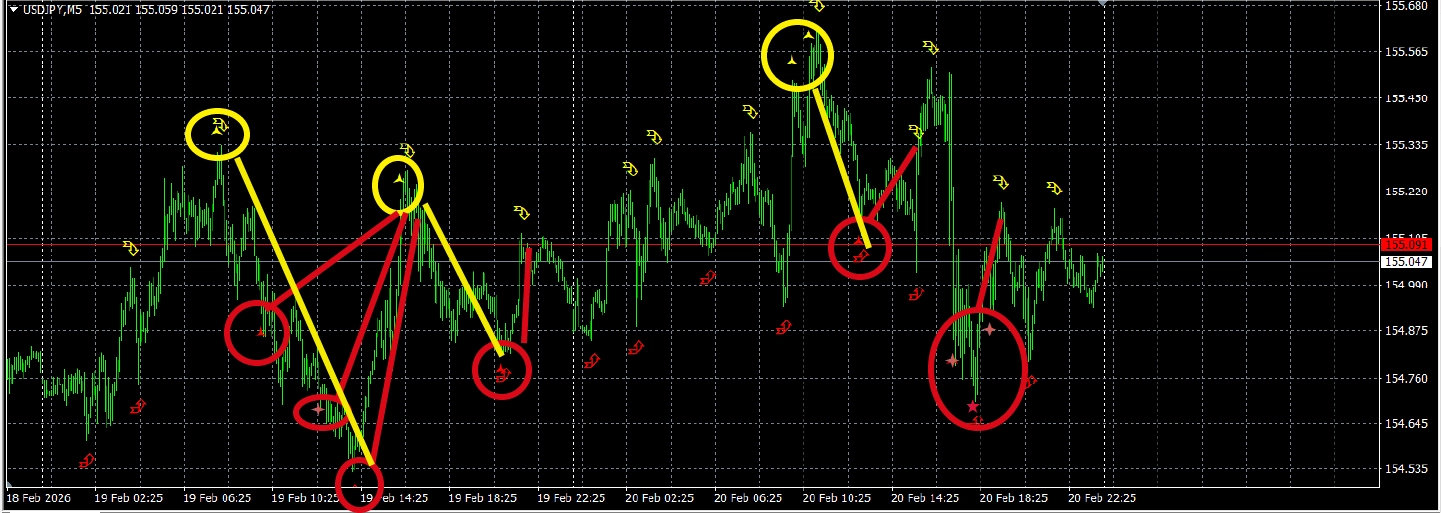
For this project, instead of generic training data, we prepared currency-pair-specific training data, which yielded astonishing results.
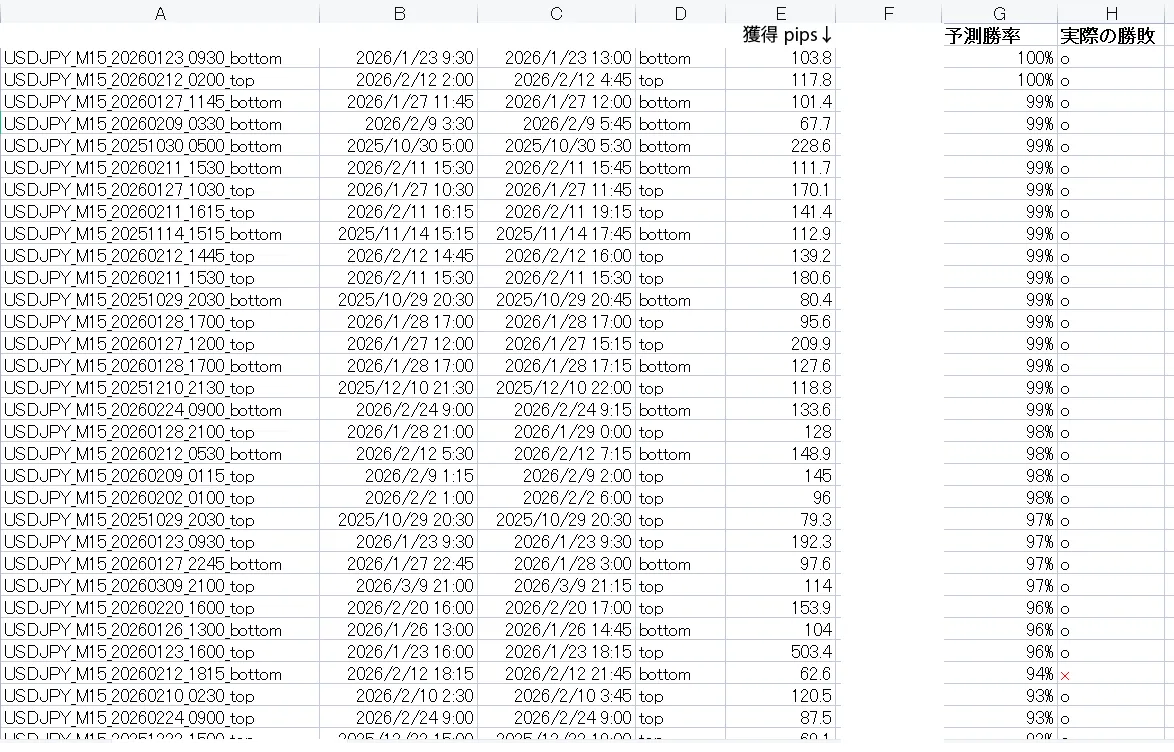
When applied to the test data (training data → forward simulation), the win rate sign exceeded 90% frequently.
That said, this win rate is merely the AI's self-proclaimed win rate (confidence level).
Therefore, we determine in actual trading whether that self-proclaimed win rate is correct.
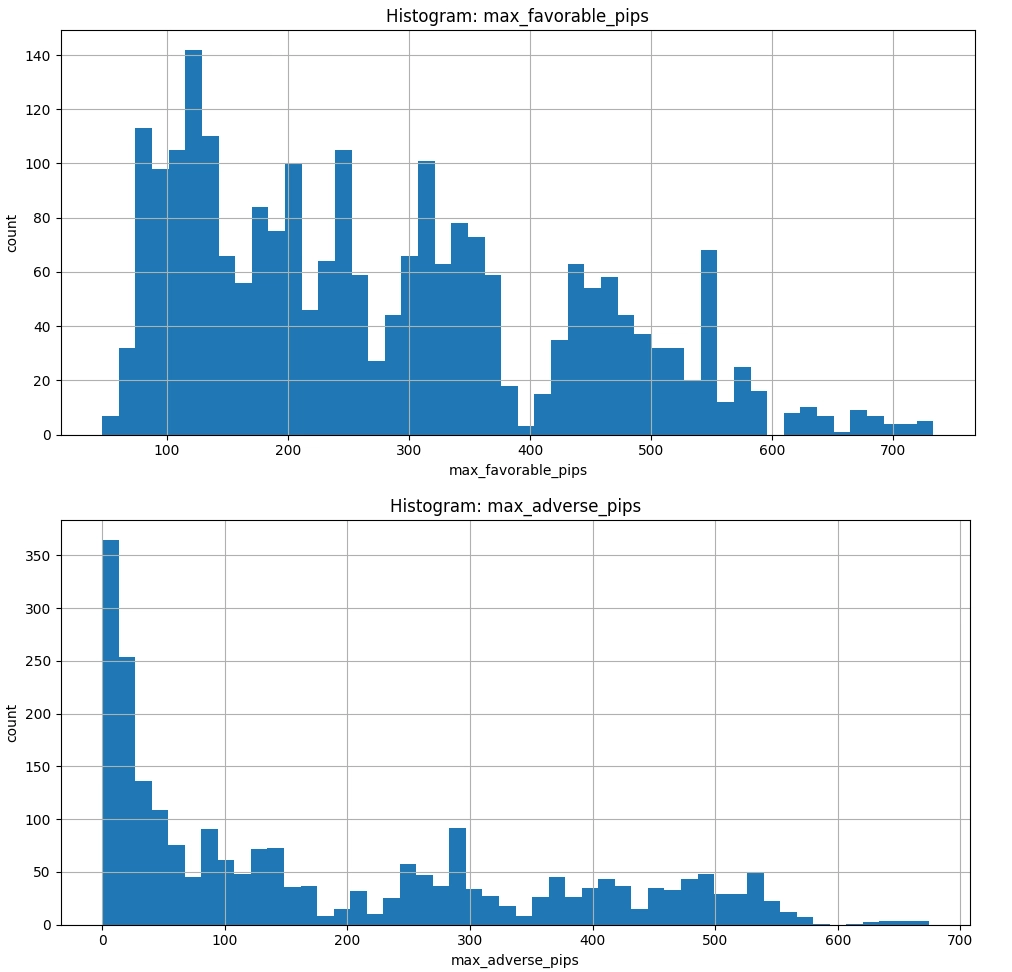
The results are these data.
You might find it hard to believe, but at points where the AI is confident with a 90% win rate, there is virtually no loss.
One “X” mark is also just because it failed to capture more than 70 pips, not because it lost.
Of course, these forward simulation data do not include these signs.
In short, we trained the charts up to 2024 by themselves and tested them on charts from 2025–2026.
In that test, such a high win rate (confidence) was achieved.
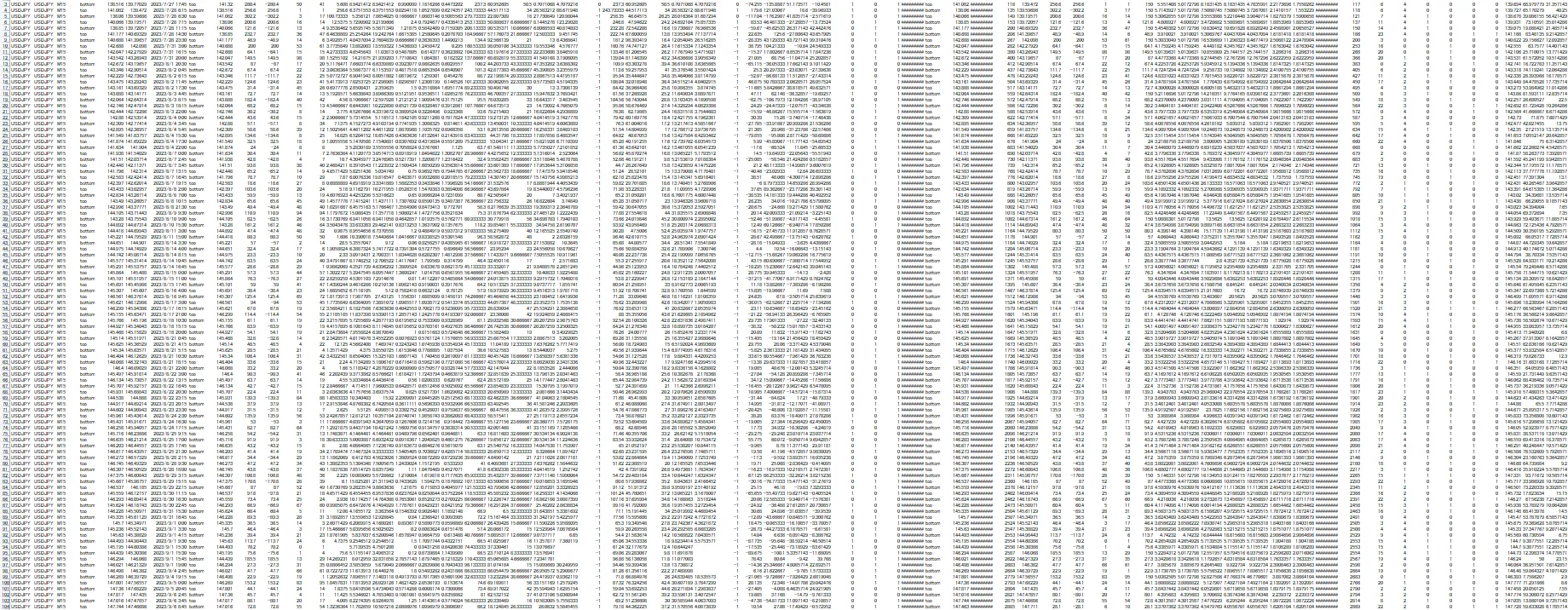
The amount of data the AI learns from is enormous.
The image above shows only a portion of the data the AI learns from.
It becomes possible to automatically learn the environmental recognition of such charts and, on new charts, determine where to enter from similar points and how far the price will move.
However, simply because it is AI does not mean it always wins.
For example, there can be overfitting where it fits too closely to a particular environment.
In EA terms, this is called curve fitting.
Or, if the data given to the AI is poor, it may engage in erroneous learning.
For example, even if you train the AI based on moving averages, if the moving average and market movement are actually unrelated, and what matters is the cross of moving averages, no matter how much you train, it often does not work at all. More often than not, it does not work.
During the training of Kinisoku AI as well, we trained with various chart information (indicators, candlesticks, deviation rates, recent movements, time of day, day of week, ... ) and kept resetting.
This cannot be automated and requires trial and repetition of running it and testing it.
And ultimately, Kinisoku AI used the training data that clearly showed a clear edge.
Some may think, “After all, it’s just a computer.”
Some may feel that human intuition is better.
However, human intuition is also derived from “experience.”
Humans, especially traders who continually profit, unconsciously convert experience into intuition.
And human learning inevitably involves errors (biases, misunderstandings, forgetfulness).
For example, if you have food poisoning from a certain food, a single experience can cause you to never want to eat that food again, which is a form of overlearning.
In trading terms, once you have a big win, that experience is never forgotten and you end up over-leveraging again.
AI learning also exhibits similar errors.
However, even if errors occur, you can recognize numerically that “learning errors are occurring.”
Humans cannot recognize this and may continue trading with flawed learning.
In this sense, it can be said that Kinisoku AI is a tool that can input the correct intuition of consistently successful traders directly.