|
Hello! This is Tanaka from GogoJungle.
A hugely popular series: a conversation between our CEO, Hayakawa, and developers!
This time,Kabu Chiehas joined us.
|
|
|
| A professional boasting roughly 40 years in the investment industry |
|
Kabu Chie
CEO of Kabu Chie. After joining Nikko Securities as a new graduate, he served in roles including executive officer at the renowned investment advisory firm Fisco, Inc. He is now independent and disseminates information primarily on individual stocks for investors. Actively featured in various media, including the magazine “Zai.”
|
|
| Table of Contents |
| Judge “buy timing” visually! How to use SuperTrend |
| The importance of “swing trading” that dramatically changes capital efficiency |
| Why you should chase the “market’s hot themes” over your personal preferences |
| Discern the quality of catalysts! Kabu Chie’s unique “rating” |
| No need to fear “buying at the top”? Asset-building strategies in an inflationary era |
| Eliminate hesitation and achieve efficient investing |
|
Judge “buy timing” visually! How to use SuperTrend
|
| Today we’ll speak with the representative who has been active on the front lines of the securities industry for nearly 40 years and now shares information mainly on individual stocks at Kabu Chie. This is our second session. |
|

|
| Hayakawa |
|

|
| Kabu Chie |
|
| Yes, thank you for having me again. I hope to share insights that will be useful to investors. |
|
| In the previous interview, we briefly discussed trading methods using “SuperTrend.” Today, I’d like to dive deeper and also ask about your initiatives within the investor community! |
|
|
|
| Hayakawa |
|
| I’d like to look at the “SuperTrend” screen as we talk—how should this tool be used? |
|
|
|
| Hayakawa |
|
|
|
| Kabu Chie |
|
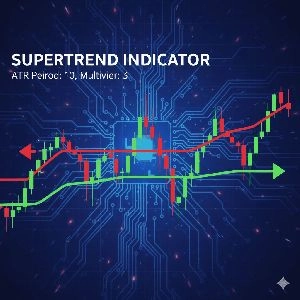
| It’s very simple. On the chart, the green and red lines are clearly separated. The green period indicates a “buy phase,” and the red period indicates a “sell phase”—you can tell at a glance. |
|
| For example, looking at this SoftBank Group chart, it entered the “green phase,” in other words the buy phase, around November. |
|
|
|
| Hayakawa |
|
|
|
| Kabu Chie |
|
| That’s right. It was in a red phase until recently, but SuperTrend lets you visually and quickly judge that the tide turned at this timing. |
|
| Even if you’re not good at complex analysis, just watching for the color change should help you avoid hesitation. |
|
|
|
| Hayakawa |
|
|
The importance of “swing trading” that dramatically changes capital efficiency
|
| When dealing with individual stocks, you recommend “swing trading,” switching names every few weeks to a few months. Is it indeed more efficient than long-term holding? |
|
|
|
| Hayakawa |
|
|
|
| Kabu Chie |
|
| Personally, I think so. Holding long-term while an uptrend continues is fine, but the issue is when it turns into a downtrend. |
|
| In other words, letting a position get “stuck” is the biggest waste. |
|
|
|
| Hayakawa |
|
|
|
| Kabu Chie |
|
| Exactly. When SuperTrend shows a sell signal, exit once. By being strict about this switching, you can boost capital efficiency dramatically. |
|
| Having clear rules for cutting losses and taking profits becomes the shortcut to building assets. |
|
|
|
| Hayakawa |
|
|
Why you should chase the “market’s hot themes” over your personal preferences
|
| Beginners tend to pick stocks from familiar industries. Any tips for selecting names? |
|
|
|
| Hayakawa |
|
|
|
| Kabu Chie |
|
| I recommend identifying “the themes and stocks the market is currently most focused on” and shifting toward them. |
|
| Why is it better to focus on popular stocks rather than fields you personally know well? |
|
|
|
| Hayakawa |
|
|
|
| Kabu Chie |
|
| Because they have liquidity and volatility (price movement). Popular names can potentially yield large short-term gains. |
|
| Of course there are risks, but the idea is to use tools to assess them calmly. |
|
|
|
| Hayakawa |
|
|
|
| Kabu Chie |
|
| Exactly. Precisely because the situation is high-risk, it’s important to have clear criteria like SuperTrend and respond calmly. |
|
|
Discern the quality of catalysts! Kabu Chie’s unique “rating”
|
| What kind of information is shared within the community specifically? |
|
|
|
| Hayakawa |
|
|
|
| Kabu Chie |
|
| We share up-to-the-minute hot-stock information that’s hard to track alone, and what’s especially unique is our “proprietary rating.” |
|
| Is it different from the ratings issued by securities firms? |
|
|
|
| Hayakawa |
|
|
|
| Kabu Chie |
|
| Completely different. For example, if a stock hits a limit-up, we independently grade the “catalyst” behind it—whether it’s truly significant (Grade S) or not a big deal (Grade C). |
|
| I see. So even with the same limit-up, you judge the subsequent upside potential based on the quality of the catalyst. |
|
|
|
| Hayakawa |
|
|
|
| Kabu Chie |
|
| Yes. By sharing those judgments within the community as quickly as possible, we aim to support investors’ decision-making. |
|
|
No need to fear “buying at the top”? Asset-building strategies in an inflationary era
|
| The Nikkei Average has hit an all-time high, and some worry that entering now might mean “buying at the top.” |
|
|
|
| Hayakawa |
|
|
|
| Kabu Chie |
|
| Japan has finally entered an inflationary phase, and stock prices have started to reflect that. I see this trend as only just beginning. |
|
| So you believe the current level is by no means the finish line. |
|
|
|
| Hayakawa |
|
|
|
| Kabu Chie |
|
| Correct. Just because the Nikkei has risen doesn’t mean the risk of buying at the top is high at this point. I’d rather see investors harness this tailwind for asset building. |
|
| It’s a very important time now for building assets with a 10–20 year horizon. |
|
|
|
| Hayakawa |
|
|
|
| Kabu Chie |
|
| Exactly. I hope you won’t miss this opportunity and will ride the wave well. |
|
|
Eliminate hesitation and achieve efficient investing
|
| Thank you for your valuable insights today. Finally, let me summarize the key points. |
|
|
|
| Hayakawa |
|
|
|
| Kabu Chie |
|
| There are three main takeaways: (1) Use tools to visually capture “regime changes.” (2) Improve capital efficiency with swing trading. (3) Evaluate the quality of catalysts from a unique perspective. |
|
| You’ve provided clear criteria to address investors’ common questions: “What should I buy?” and “When should I sell?” |
|
|
|
| Hayakawa |
|
|
|
| Kabu Chie |
|
| I hope investors will also make use of the Morning Report on Investment Navi and proceed with investing and asset building to their satisfaction. |
|
| Part 1 |
[Includes a free bonus] A 40-year market professional explains
“The risk of not investing now” |
|
|
| Part 2 |
[The right way to pick stocks] Even with the Nikkei at record highs, it’s not “buying at the top”!
Sharing proprietary ratings based on 40 years of experience
|
|
|
|