|
Hello! This is Tanaka from GogoJungle.
A hugely popular series: a conversation between our CEO, Hayakawa, and top developers!
This time,Kabu Chiehas joined us.
|
|
|
| A seasoned professional with about 40 years in the investment industry |
Kabu Chie
President and CEO of Kabu Chie Co., Ltd. After joining Nikko Securities as a new graduate, he built a career at a major investment advisory firm and as an executive officer at Fisco Ltd., a financial and economic information provider. He is now independent and disseminates information for investors. Active in many fields, including the magazine “Zai.”
|
|
| Table of contents |
| A 40-year industry veteran talks about his “investment career” and a “special gift” |
| See the “best time to buy” at a glance! What is the Credit Supply-Demand Scoring Sheet? |
| The trap for individual investors: the risk of ignoring “supply and demand” |
| The end of the lost 30 years. Why now is the time to start investing |
| Make stop-losses mechanical. How to use the technical indicator “Supertrend” |
|
A 40-year industry veteran talks about his “investment career” and a “special gift”
|
| Mr. Kabu Chie, you joinedNikko Securitiesas a new graduate, then worked ata major investment advisory firm, and served as an executive officer atFisco Ltd., a financial and economic information provider—an illustrious career at top-tier institutions. |
|

|
| Hayakawa |
|

|
| Kabu Chie |
|
That’s right. It’s been close to 40 years in the world of stocks.
I now run an independent firm that provides information for investors. |
|
You truly know Japanese equities inside and out.
And this time, you’re kindly offering a special tool called the “Credit Supply-Demand Scoring Sheet,” correct? |
|
|
|
| Hayakawa |
|
|
|
| Kabu Chie |
|
| Yes. I distilled the essence of the “supply-demand analysis” I’ve honed over many years into an Excel format that individual investors can easily use. |
|
| As a special gift for the first installment, this is not to be missed. |
|
|
|
| Hayakawa |
|
|
|
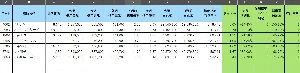
| Quantifying distortions in credit supply and demand |
|
Credit Supply-Demand Scoring Sheet
A checklist tool that visualizes with a score whether a stock is likely to experience a short squeeze!
|
|
|
See the “best time to buy” at a glance! What is the Credit Supply-Demand Scoring Sheet?
|
| About the “Credit Supply-Demand Scoring Sheet” you mentioned—how exactly does this tool work? |
|
|
|
| Hayakawa |
|
|
|
| Kabu Chie |
|
| By inputting data such as a stock’s margin balances, trading volume, and deviation from moving averages, the tool calculates that stock’s “supply-demand strength” on a 100-point scale. |
|
| A 100-point scale makes it very intuitive. Are there any guidelines for judgment? |
|
|
|
| Hayakawa |
|
|
|
| Kabu Chie |
|
| If it’s 70 points or higher: “Supply-demand is extremely favorable; likely to rise.” In the 60s: “Worth watching.” Below that: pass. It’s designed for mechanical decision-making. |
|
| Are the input data points easy for us to obtain? |
|
|
|
| Hayakawa |
|
|
|
| Kabu Chie |
|
| We use figures available from sources like Yahoo! Finance. There’s also a manual for how to enter the data, so even beginners should be able to use it right away. |
|
|
The trap for individual investors: the risk of ignoring “supply and demand”
|
| Many individual investors tend to focus only on price movements and news. Why is “supply and demand” so important? |
|
|
|
| Hayakawa |
|
|
|
| Kabu Chie |
|
| Ultimately, whether a stock rises or falls is determined by the balance of “demand and supply.” Yet surprisingly few individual investors check margin supply-demand in detail. |
|
| True—many look at charts, but few analyze margin balances. |
|
|
|
| Hayakawa |
|
|
|
| Kabu Chie |
|
| Buying without looking at supply-demand is like driving with poor visibility. This sheet helps visualize whether a stock is “overbought now” or whether “selling has dried up.” |
|
| So this single tool can cover the “supply-demand check” that pros take for granted. |
|
|
|
| Hayakawa |
|
|
The end of the lost 30 years. Why now is the time to start investing
|
| The Nikkei Average may soon break into the 60,000 range. How do you view today’s Japanese market? |
|
|
|
| Hayakawa |
|
|
|
| Kabu Chie |
|
| Japan has finally exited its long deflation and entered an inflationary phase. For equity investing, there’s hardly a better tailwind. |
|
| Does this mean we’ve completely shifted from the era known as the “lost decades”? |
|
|
|
| Hayakawa |
|
|
|
| Kabu Chie |
|
| Exactly. Investing during inflation makes sense. Whether you engage now or not will create a huge gap in your assets 10 or 20 years from now. |
|
| For everyone from those in their 20s to retirees, now is trulythe perfect time to learn and start investing. |
|
|
|
| Hayakawa |
|
|
|
| Kabu Chie |
|
| Yes.As long as you don’t make major mistakes, this period offers a high possibility of building substantial assets—I’m convinced of it. |
|
|
Make stop-losses mechanical. How to use the technical indicator “Supertrend”
|
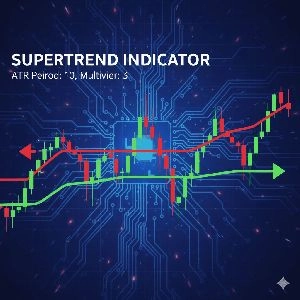
| I hear you also mainly use an indicator called “Supertrend” to assess stocks. |
|
|
|
| Hayakawa |
|
|
|
| Kabu Chie |
|
| Yes. It’s visually very simple—the trend is shown in red and green. I use it as my main decision-making tool. |
|
| Many investors struggle because they can’t cut losses. Can this tool help? |
|
|
|
| Hayakawa |
|
|
|
| Kabu Chie |
|
| That’s exactly the key. When it shifts from green (buy) to red (sell), cut it mechanically. By relying ontechnicalsignals, you can prevent “bagholding.” |
|
| So it serves as a guide to remove emotion and follow the rules. |
|
|
|
| Hayakawa |
|
|
|
| Kabu Chie |
|
| I don’t deny long-term investing, but I don’t recommend holding long-term while sitting on unrealized losses. I want people to learn the joy of cutting losses appropriately and rotating capital efficiently. |
|
| Thank you. Next time, we’ll dive into the community that veteran investor Kabu Chie has launched, and explore Supertrend in detail! |
|
|
|
| Hayakawa |
|
| Episode 1 |
A 40-year market veteran explains “the risk of not investing now”
President and CEO, Kabu Chie Co., Ltd. |
|
|
|
|
| Quantifying distortions in credit supply and demand |
|
Credit Supply-Demand Scoring Sheet
A checklist tool that visualizes with a score whether a stock is likely to experience a short squeeze!
|
|
|
|
| Graduate from “not being able to cut losses” |
Ticket to join the Kabu Chie Community
“I just can’t seem to win at stock investing...”
But if you truly want to achieve “cut losses short, let profits run,”
please join the “Limit-Up × Supertrend” community hosted by Kabu Chie!
|
|
|