These days, more and more tools, indicators, semi-discretionary and fully automated EAs used for trading incorporate AI.
In every case, the developers arepeople with substantial trading experience who thoroughly understand trading and technical analysis.
They leverage their trading knowledge and experience to either write code themselves or partner with engineers well-versed in AI to develop their tools.
Among the traders (developers) who create AI tools and use them in trading, some also share their thoughts and daily trading on Investment Navi+.
There are many insightful comments—golden nuggets—on trader mindsets and considerations about AI.
The content is extremely informative.
Today, we would like to introduce an article byMr. n_k_i__, who contributes such writings.
Backtesting is not a guarantee of the future, but it is the minimum requirement Naturally, developing AI-based tools involves using accumulated historical price movements and, depending on the tool, information from fundamental analysis and various news sources. By learning from that data, the tools forecast future price movements, so conducting backtests is a given. 
The real reason signal tools “suddenly stop working”is that the market changes. Most signals are not designed with change as a premise. AI-driven toolsautomatically re-learn in line with market changes, switch the logic they use, and even modify parameters. You could call this a level of testing performance that is difficult for humans to replicate. 
Why non-discretionary trading can win Discretionary trading isn’t evil, but relying on discretion alone makes it hard to keep winning. With non-discretionary methods, you can reproduce the same decisions over and over,and you can backtest them,so you can improve your trading. If you add discretion, place it at the exit (closing) rather than the entry. Adding discretion at the entry increases hesitation, prevents testing, and breaks reproducibility. 
Converting an AI indicator into an EA and testing it Even fully automated systems can deliver excellent performance, but by adding discretion to exits—for example, “I want to take profit here” or “let it run more”—you can potentially achieve even better results. 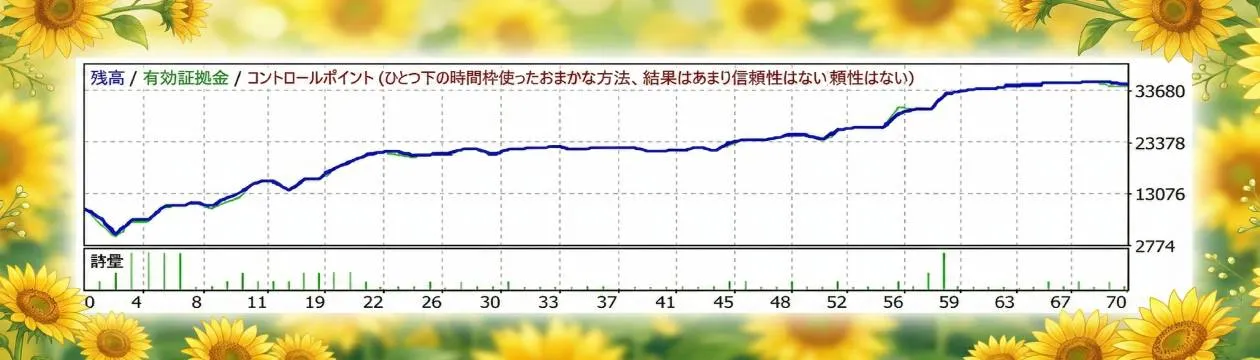
Winning trades = Boring Only boring trades protect capital and grow it. The trading of those who consistently survive in FX is, without exception, plain. - They don’t aim for flashy one-shots - Few entries - Just repeat the same thing
- Emotions are hardly stirred 
Many other articles have been posted as well, so by all means, please take a look at the content. |