

[Employment Statistics Trade Review] The reason I had decided, “If it spikes, I short”
This month's employment statistics.
There was only one pre-decided rule.
"When it spikes, go short."
The market environment favored fading rallies.
An ascent does not equal a trend change.
Therefore,
if it moves up, you don't “chase” it—you “hammer” it.
Indicators are not for predicting,
but for exploiting overreactions.
■ Price action right after the employment data
・Instant surge
・Then it stalls
・Almost all the way back
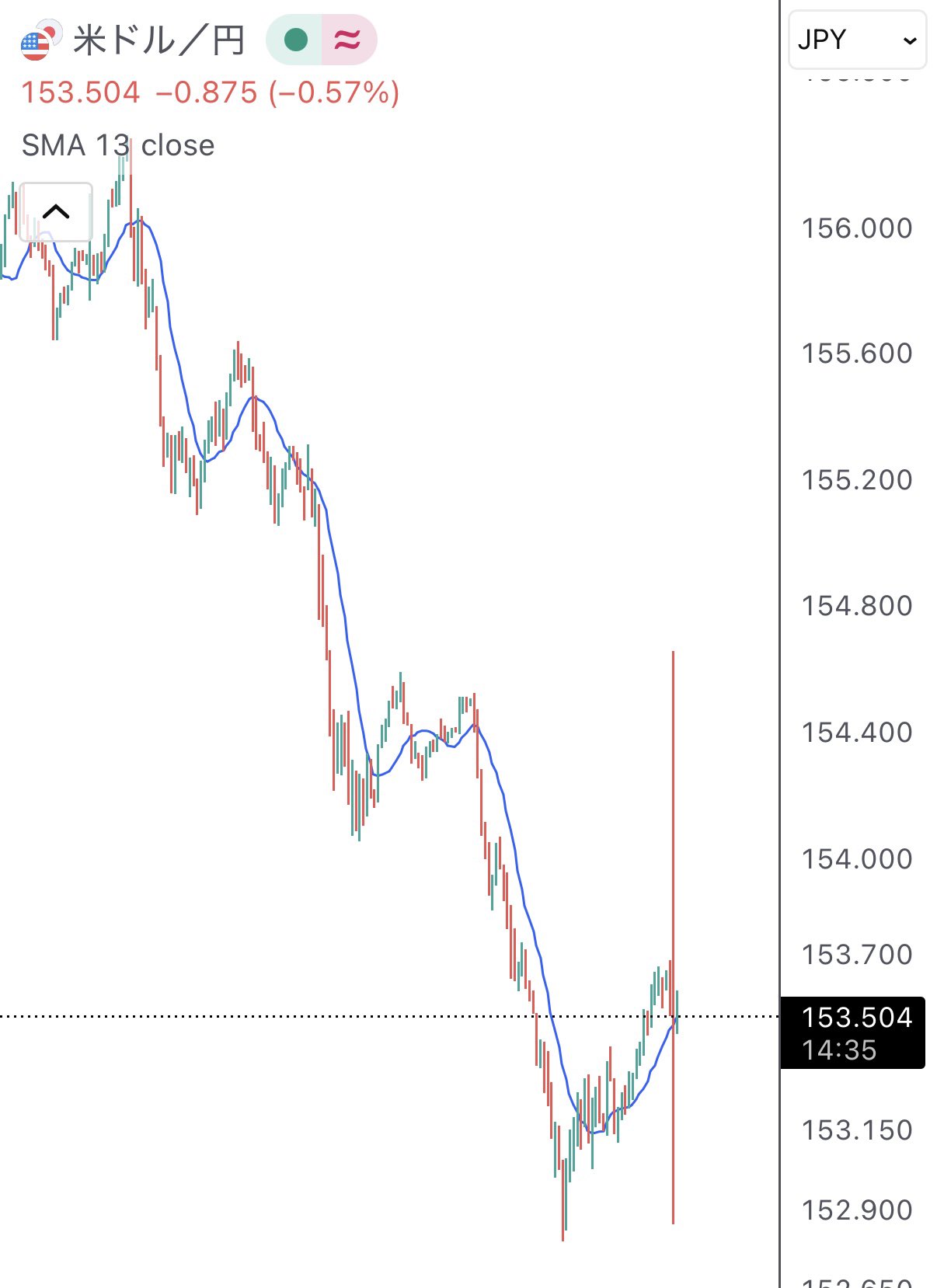
A typical "liquidity retracement" pattern.
The difference between those who jumped in here and those who waited becomes clear.
■ Actual trades
This time the approach was simple.
① Rotate long during the decline
② Confirm the stall after the spike
③ Short several times around 154 yen
What was particularly significant was
154.275 → 153.817
+229,000 yen
Final result:
+656,400 yen
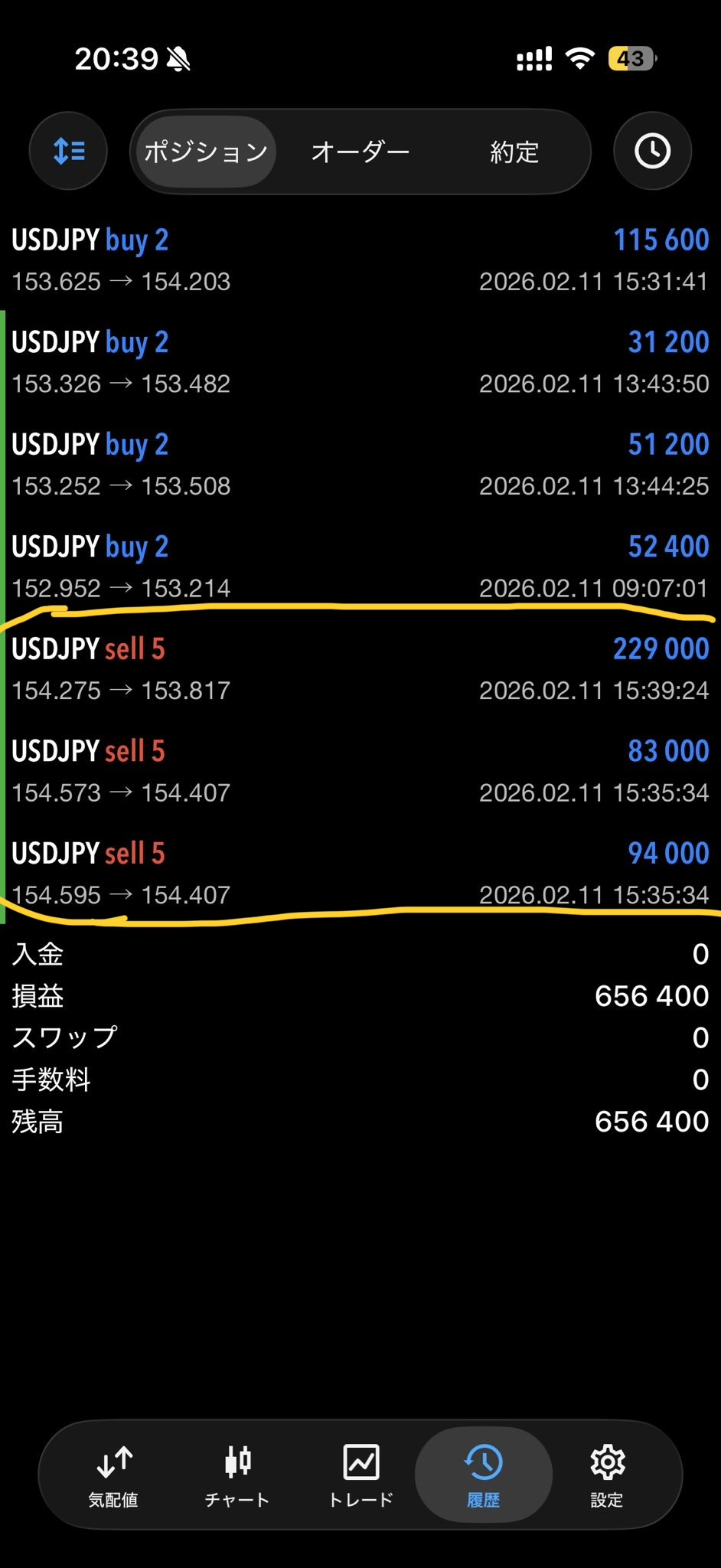
It was not a one-shot victory,
but a buildup of an advantageous position.
■ Why did it work?
✔ We had decided in advance to “sell if it spikes”
✔ We did not jump in the direction of the move
✔ We “attracted” the selling pressure
The winning factor was not technique.
It was the prior decision making.
■ Summary
Indicator trading is not scary.
What’s scary is
・Entering without a scenario
・Judging movements based on emotion
What I realized again this time is
the outcome is decided before entry.
The market favors those who are prepared.
For those who read this article and feel you want to learn more, I’d like to introduce the special support I offer.
1. For those who want to perfectly understand the logic (e-book)
A culmination of 12 years in FX. It’s a "trading blueprint" to stop getting lost with moving averages.
https://www.gogojungle.co.jp/tools/ebooks/75266

2. For those who want to train from a professional perspective (one-on-one coaching)
https://www.gogojungle.co.jp/tools/rooms/75837

Unlimited questions. I will become your dedicated mentor and coach you to victory.