
Why is it better to not look at the chart after entering the FX trade?
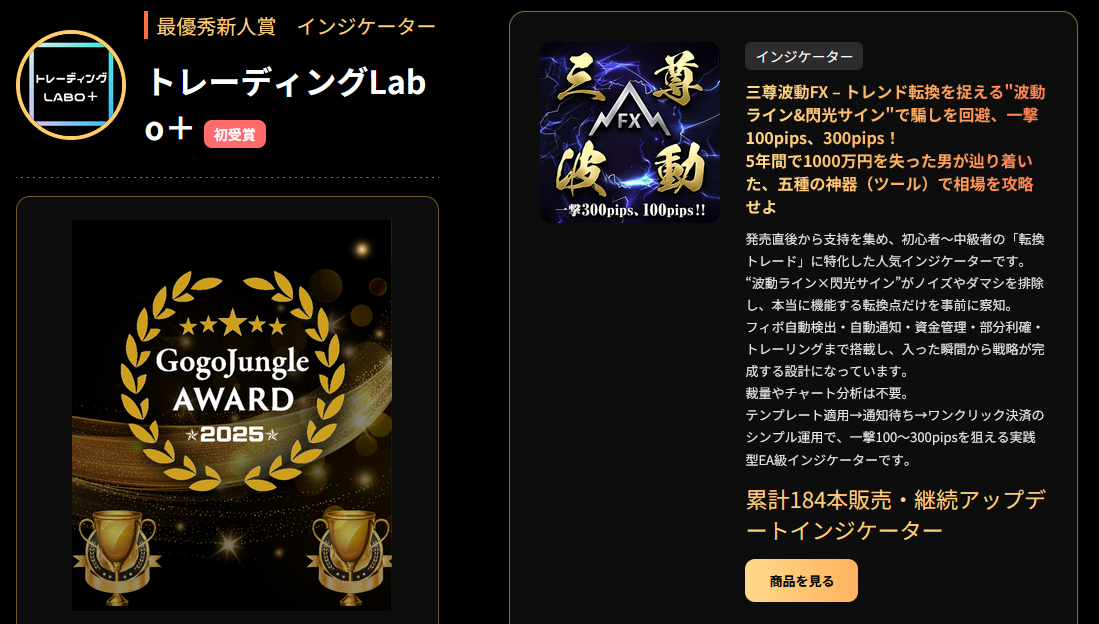
▼Details page for Sando Wave FX
https://www.gogojungle.co.jp/tools/indicators/65204?via=users_products
This is SEI from Trading Labo+.
Thank you for always watching.
Today’s topic is “Why is it easier to win in FX if you don’t look at the chart after entering?”
◆ Reasons you win by not looking at the chart after entry
“After entering, don’t look at the chart.”
What did you think when you heard this?
“That sounds too anxiety-inducing.”
“Won’t I miss chances to grow profits?”
“What if I miss the timing to cut losses?”
That’s what seems normal. I thought so at first too.
However, after I actually stopped looking at the chart after entry, my trading results improved dramatically.
Why is it that not looking at the chart after entry leads to winning?
The reason is clear.
1. You stop making emotional judgments
When you’re watching the chart, you swing with every price movement.
If it’s in profit, you think, “it might go further,” and greed arises.
If it’s in drawdown, you hope, “it’ll come back,” and optimistic speculation takes over.
If you don’t look at the chart, these emotional judgments disappear.
2. You can execute according to your rules
You can follow the take-profit and stop-loss points you set at entry exactly as planned.
Without being swayed by intraday price moves, you trade according to your plan.
3. Stress dramatically decreases
Staring at the chart continuously is more stressful than you might imagine.
Being freed from that stress helps you stay calm.
Mental leeway improves the quality of your next trade.
◆ Reasons you lose when you look at the chart after entry
Conversely, why is it easier to lose if you keep watching the chart after entry?
I’ve failed many times by watching the chart post-entry. From that experience, there are clear reasons.
1. The plan collapses
Before entry, you were calm. You analyzed properly, decided on profit-taking and stop-loss, and entered.
However, after entry, watching the chart makes the plan easily crumble.
“Move is weaker than expected. Let’s take profit early.”
“The stop-loss line is close. If I wait a little more, it might come back.”
Thus, the calm judgment before entry is overwritten by emotional judgments after entry.
2. You’re swayed by minor price movements
Watching the chart makes you focus on every minute movement.
If it goes up a little, you become hopeful; if it goes down a little, you become anxious.
However, those small movements are rarely related to the final outcome.
What matters is whether you ultimately reach profit-taking or stop-loss.
Being swayed by intramovement is entirely detrimental.
3. Early take-profit, late stop-loss
Watching the chart makes you prone to classic mistakes.
When in profit, you take profit too early.
“If it reverses, I’ll lose this profit. Let me secure it now.”
When in loss, you delay cutting losses.
“It might come back. Let me wait a bit longer.”
This pattern is the opposite of “cutting losses early and letting profits run.”
If you repeat “losses small, profits small,” you cannot win.
4. Position-popping disease worsens
Keeping an eye on the chart makes you think about the next entry point even while you still have a position open.
You start planning the next entry while you’re still in a position.
Right after you close a position, you immediately enter again.
Watching the chart worsens the position-popping disease.
◆ FX is almost all decided at the entry point
Here’s an important truth.
In FX, almost everything is decided at the entry point.
After entry, there is little you can do.
What to decide at the entry point
Entry point
Stop-loss point
Profit target
Risk-reward ratio
Decide all of these before entry.
And once you enter, leave it to the market.
“But what if market conditions change?”
You might think that. But consider this:
If you can judge after entry that market conditions have changed, why couldn’t you have predicted it before entry?
Most of the time, it’s a post hoc justification.
What actually happened is you just felt more anxious as unrealized losses grew, or as unrealized gains shrank.
Your emotions fabricate the reason that “market conditions changed.”
What to do after entry
There is only one thing to do after entry.
Do nothing.
Wait until you hit the profit target or stop-loss.
That’s all.
It’s simple, but many traders cannot do it.
Because doing nothing is harder than you think.
That’s why it’s better not to look at charts.
◆ The biggest benefit I gained from leaving the chart alone
After I changed to a chart-free trading style, the most significant change was in my mental stability.
Previously, from the moment I entered, I stayed glued to the chart.
But after switching to a chart-free style, this mental burden nearly disappeared.
Benefits gained
1. You can focus on other things
After entry, return to work. Spend time on hobbies. Be with family.
Trading no longer dominates your life.
2. You can make calm judgments
Being away from the chart reduces impulsive decisions.
You can analyze the next trade calmly.
3. Trading becomes enjoyable
Previously, trading was painful and a battle with stress.
Now, trading is enjoyable.
Because trading has become simpler.
Analyze, enter, and wait for the result.
That’s all.
Not looking at the chart helped me reclaim the essence of trading.
◆ What kind of trading style can you leave alone without looking?
“I understand not looking at the chart, but how?”
You’re right to wonder.
A chart-free, leave-alone trading style has conditions.
1. Clear entry rules
Not “somehow,” but enter with a solid basis.
Having confidence in this entry is why you can leave it alone.
2. Pre-set stop-loss and take-profit
Enter with orders for stop-loss and take-profit at the same time.
Using OCO or IFO orders allows automatic settlements.
No need to decide yourself, so no chart watching required.
3. Appropriate risk-reward ratio
Profit potential is substantial relative to stop-loss.
For example, a risk-reward ratio of at least 1:2.
With that, even a 50% win rate can be profitable overall.
That’s why you can leave it alone without overreacting.
4. Suited for swing or day trading
Honestly, not suitable for scalping.
Scalping requires decisions on small time frames, so chart watching is needed.
But for day trading or swing trading, leaving it alone is feasible.
If you trade over hours to days, you don’t need to watch every minute movement.
5. Proper money management
The amount you lose in one trade should be within your tolerance.
If you lose 10% or 20%, you’ll be anxious and cannot stay away from the chart.
But if you risk only 1–2% of capital per trade, you can think, “Worst case, stop-loss is fine.”
This mental margin enables leaving it alone.
◆ Summary: Not watching the chart is not weakness, but strength
“Not looking at the chart after entry”
This is not the act of fleeing trading.
Rather, it is proof that you trust your own rules.
If you still lack confidence in your entries, you’ll keep glancing at the chart.
“Is it really okay? Maybe I was wrong after all.”
That anxiety makes it hard to look away from the chart.
But if you can enter with true confidence, you don’t need to watch the chart.
The market will reveal the results.
Things you can start today
At entry, place stop-loss and take-profit orders simultaneously
After entry, close the chart
Check results only after settlement
The initial steps may feel uneasy.
But please try it.
You’ll be surprised by the peace of mind and improved performance you gain from not looking at the chart.
FX is not a game of staring at a chart.
It’s a game of calm analysis and executing according to plan.
After entry, leave it to the market.
This mindset will change your trading.
◆ “Sando Wave FX” is perfect for these people.
・Those with night shifts or irregular work hours limiting trading time・Those raising children and cannot stay glued to charts
・
・Those who are not confident in chart patterns and want a simple way to trade
・Those who find it tedious to look at dozens of indicators
・Those who lack confidence in judging chart patterns
・Those who want to aim for large pips efficiently with little time
・Those who prefer swing trading to scalping
・Those who get tired from price movements fluctuating emotionally
・Those who tend to salt away trades due to confusion over stop-loss lines
・Those who have become a hobbyist of collecting know-how
・Those who are troubled by not being able to win even after buying signal tools
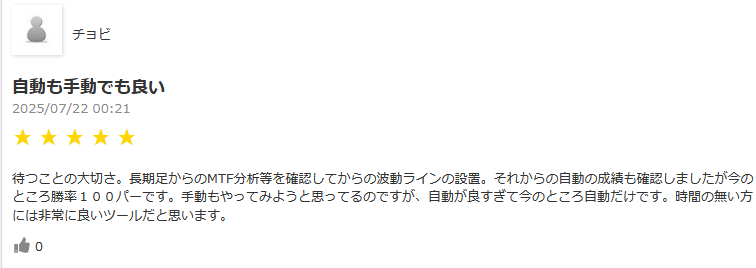
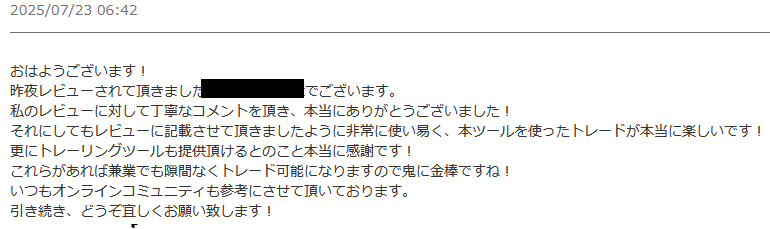
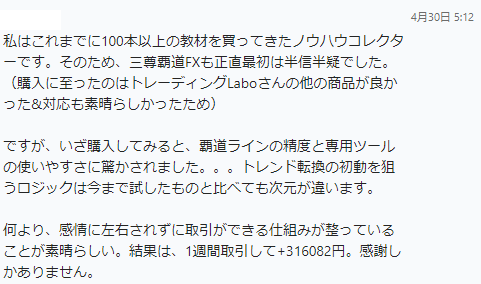

◆ Join Sando Wave FX here ↓↓↓
https://www.gogojungle.co.jp/tools/indicators/65204?via=users_products