

Verify the difference between the overall signal and actual entry with Prime Combo Signal! (Upper timeframe filter verification)

This is Shirou!
In Prime Combo Signal, when you use two higher timeframes, the actual
- win rate
- number of entries
- entry points
may differ.
So how about the filter on one higher timeframe?
I conducted a test and would like to share.
Method and Rules
The method and rules for this time are as follows.
- 15-minute trades
- Filters
- 1-hour ADXDX
- Current ABUDMI
- Line touch moment entry
- FUTUREBAND2 only for settlement
- Automatic trading with DSATEA(operates only from 9:00 to 24:00)
- Testing period January 8–9 (roughly 9:00 a.m. to the next morning 9:00 a.m.)
I wanted to test whether there are differences between FX brokers, but since it cannot be described on GoGoJion, I will omit it.
Verifying the differences between signals in Prime Combo Signal and actual entries!
Overall,
there are no major differences, but entry points do differ somewhat.
That sort of thing.
Let’s go through them one by one.
EURCHF 〇
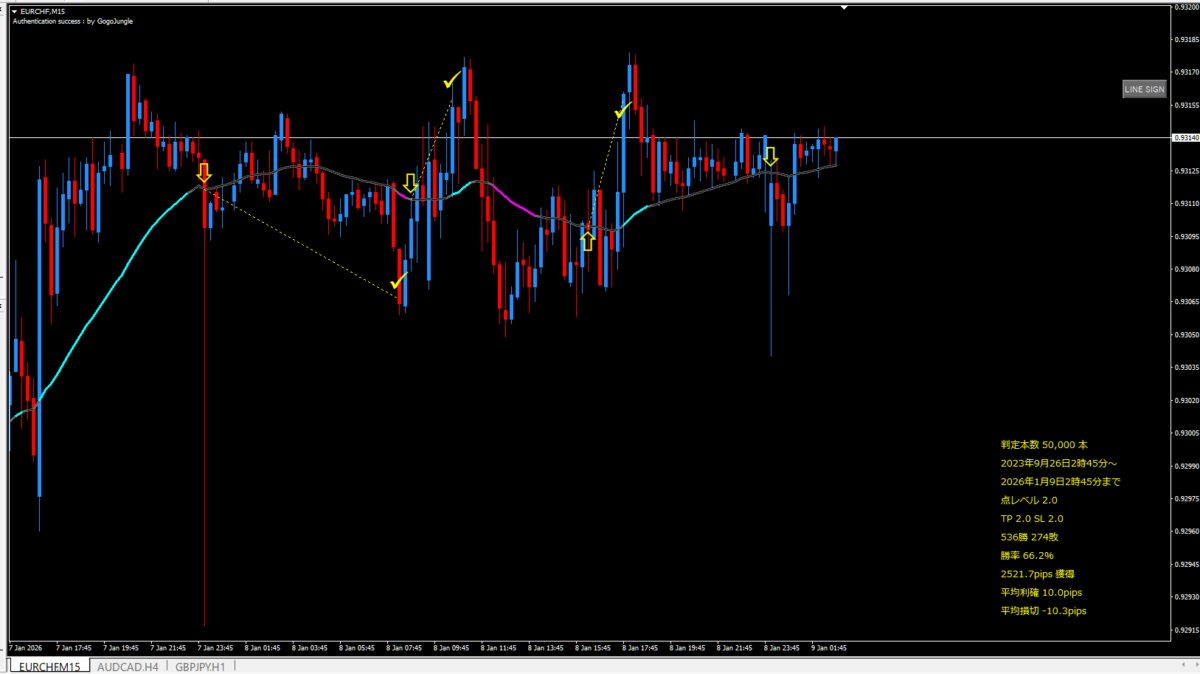
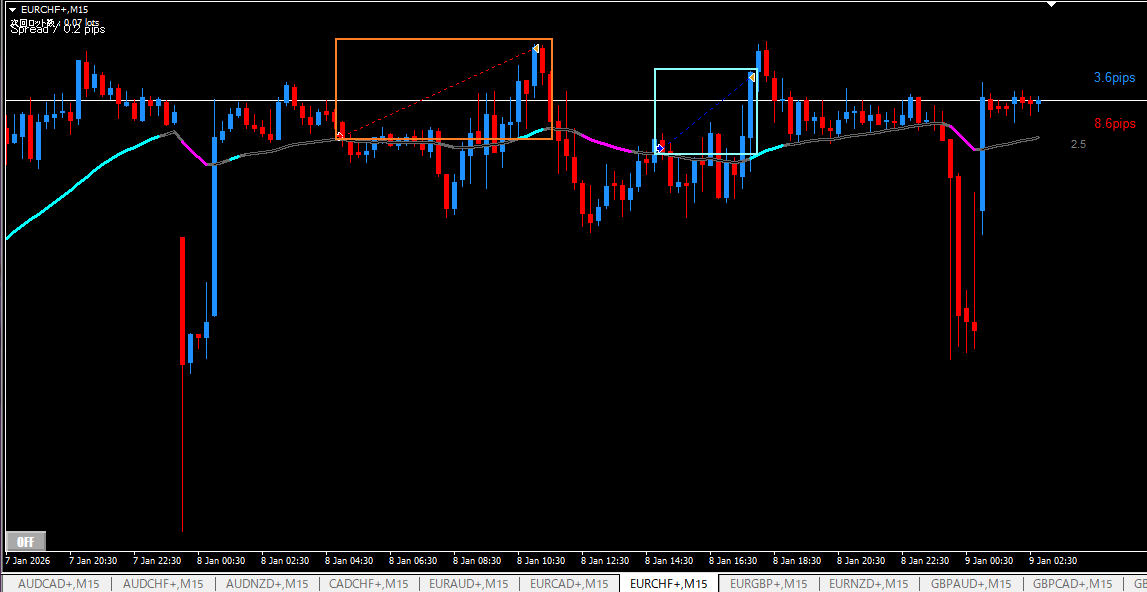
It seems different from the actual entry,
Prime Combo Signal runs 24 hours, while actual entry (DSATEA) is set from 9:00 to 24:00.
The first real entry is after 9:00 a.m., so the result will differ from Prime Combo Signal.
The second real entry is the same as Prime Combo Signal.
EURGBP 〇
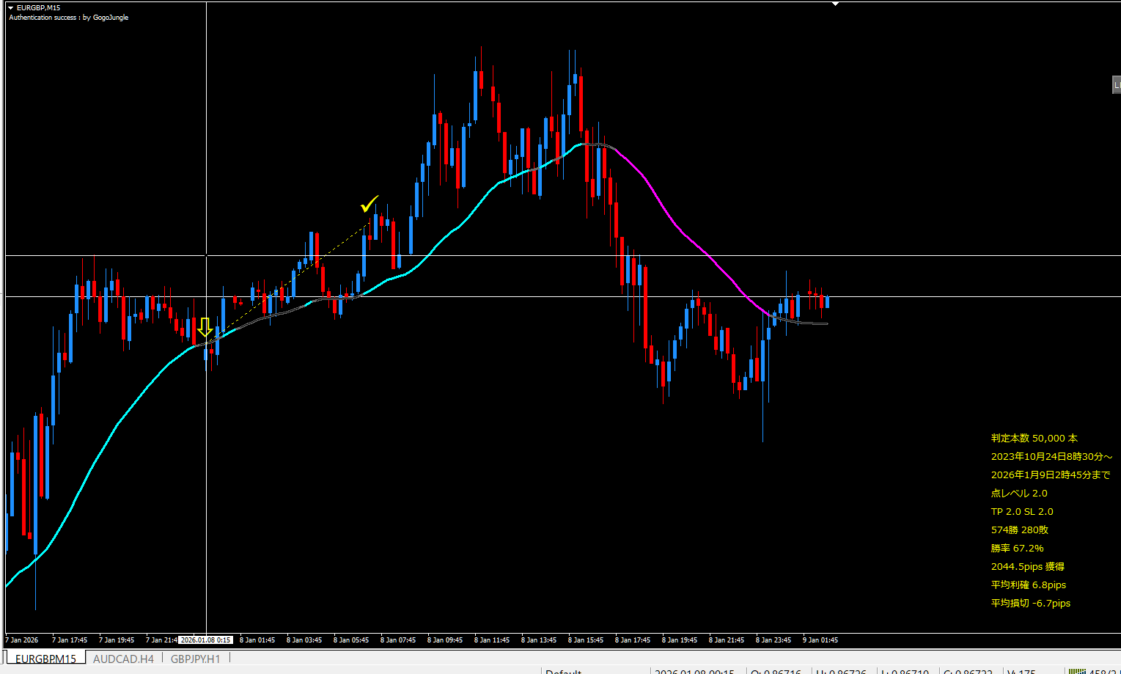

In Prime Combo Signal, entry on MT4 time is 0:00 = 7:00 a.m. in real time
Real entry starts at 9:00 a.m., so there is a mismatch, but since it uses the trading ban hours, it is considered normal.
Real entry occurs after 9:00 a.m., and take-profit is at the same point.
GBPAUD 〇
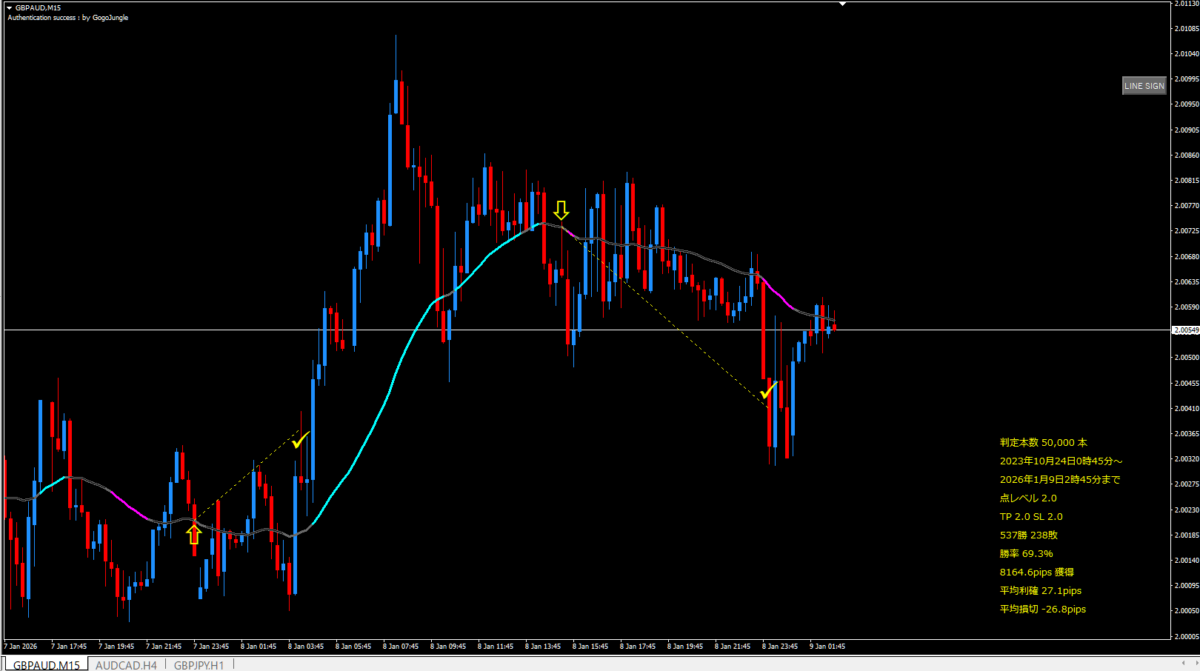
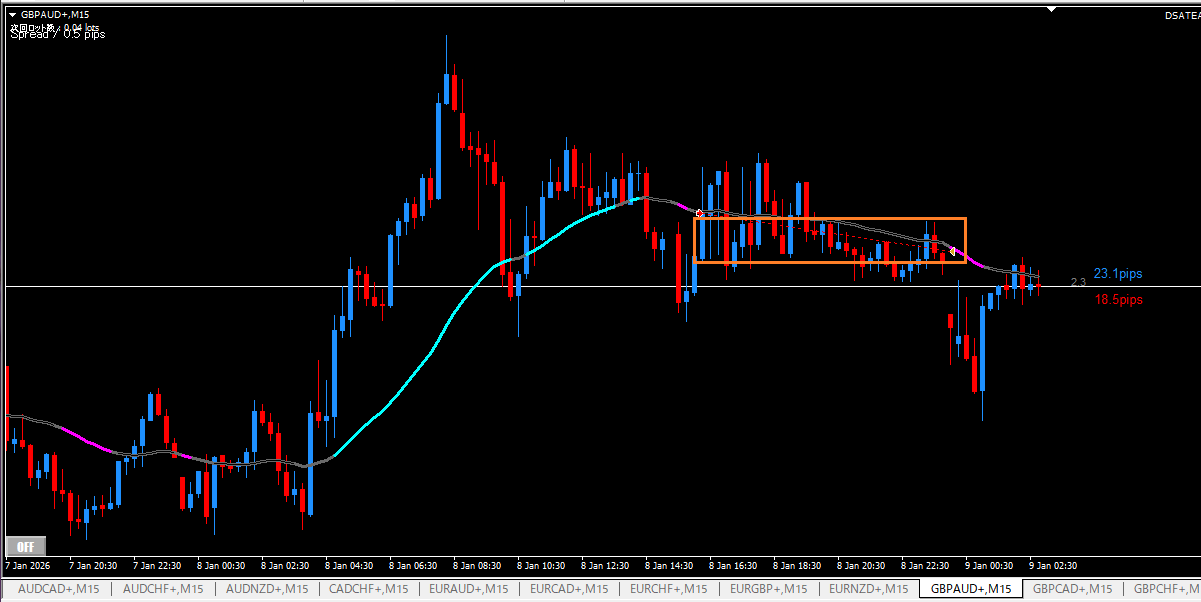
First entry of Prime Combo Signal is for the 7th, so I will skip it.
Second entry is almost the same point for both real entry and Prime Combo Signal (slight mismatch).
However, real entry’s take-profit happens at an odd place.
In real entry, candlesticks are not displayed, so the EA might not recognize it. (or might have slid?)
Take-profit timing was the same.
This is more due to broker specifications, so considered correct.
GBPCHF 〇
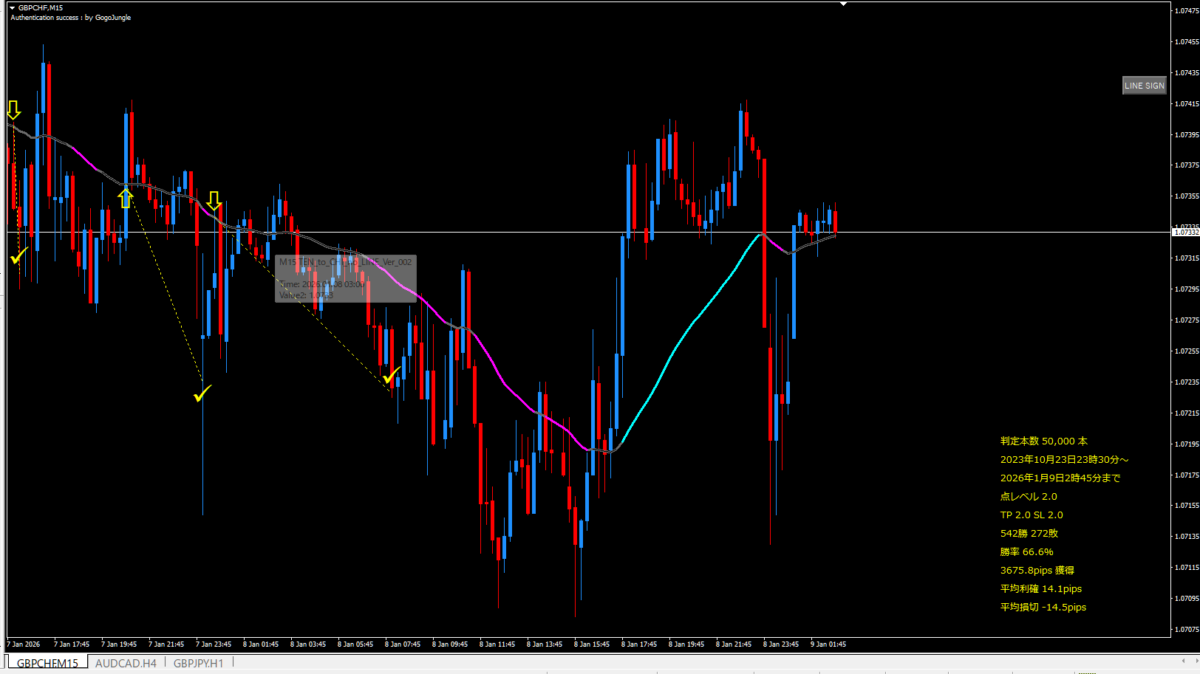
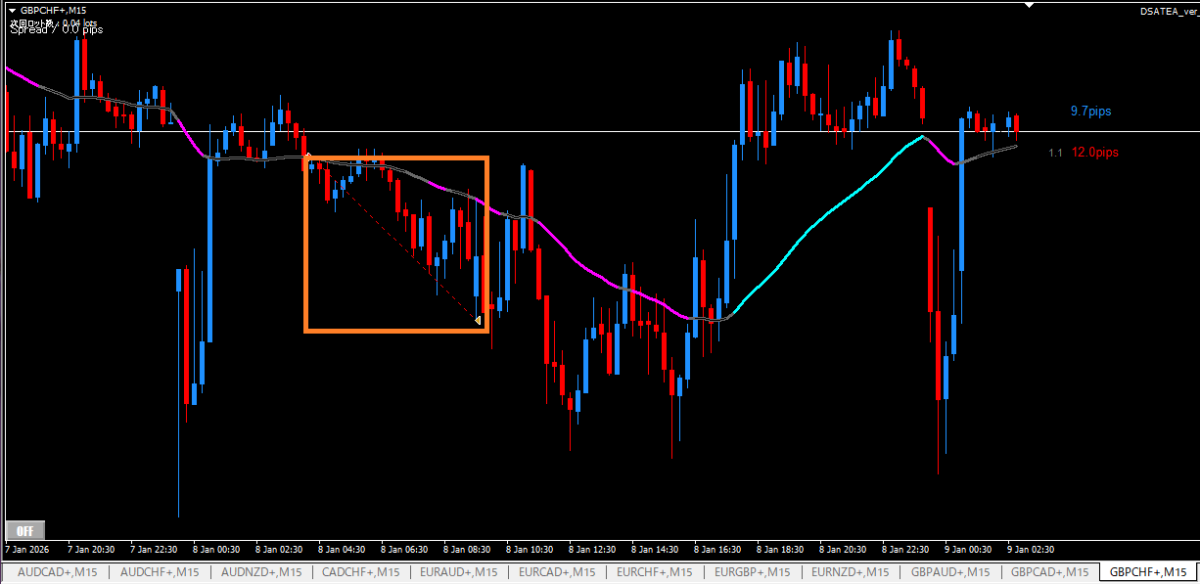
Short in the boxed frame.
Entry point seems slightly off.
However, real entry is around 9:00. It runs from 9:00, so earlier entries are not made.
Therefore, considered correct.
GBPJPY 〇
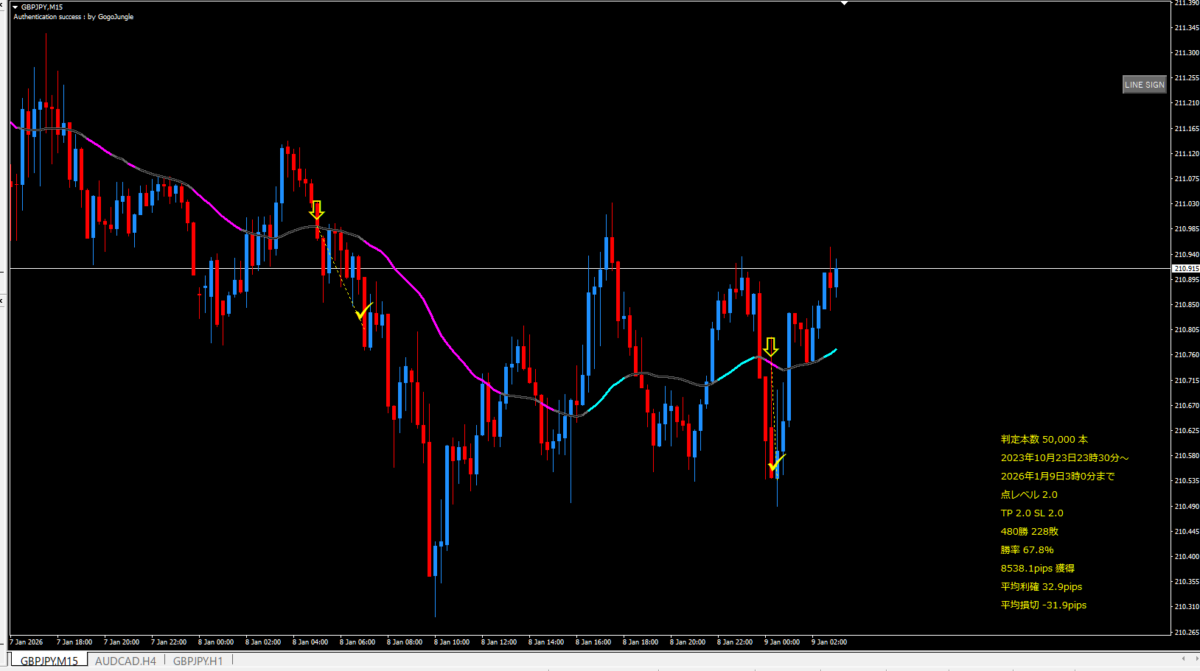
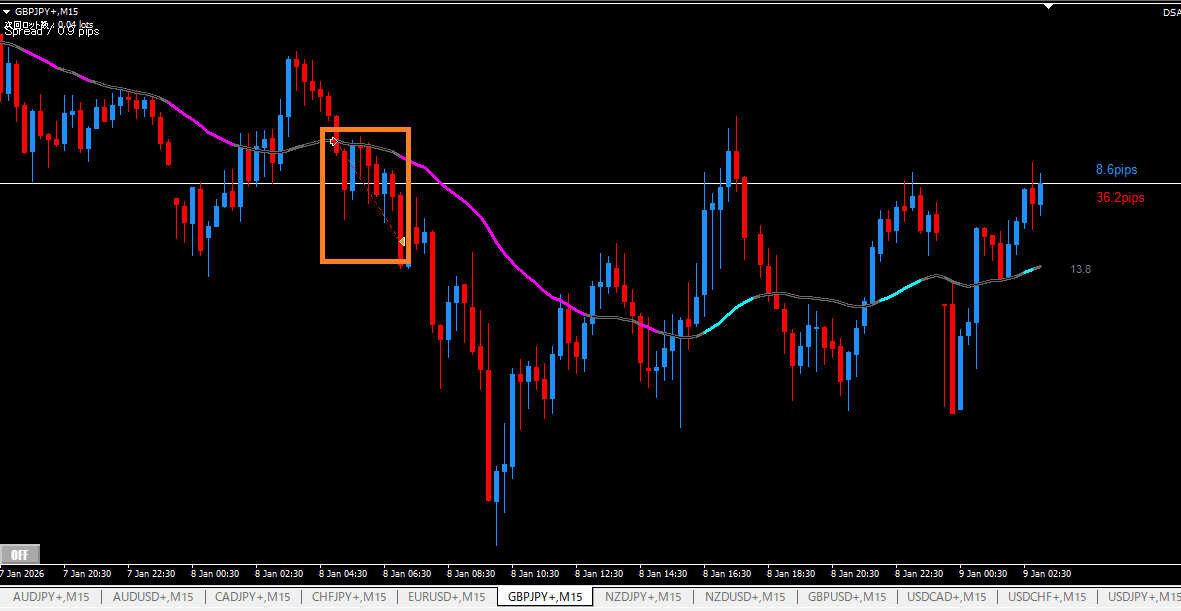
Real entry and Prime Combo Signal enter and take at the same place.
Considered correct.
Prime Combo Signal also has a second entry.
But since it is early morning, real entry did not occur. (DSATEA real entry operation hours are 9:00–24:00)
GBPUSD 〇
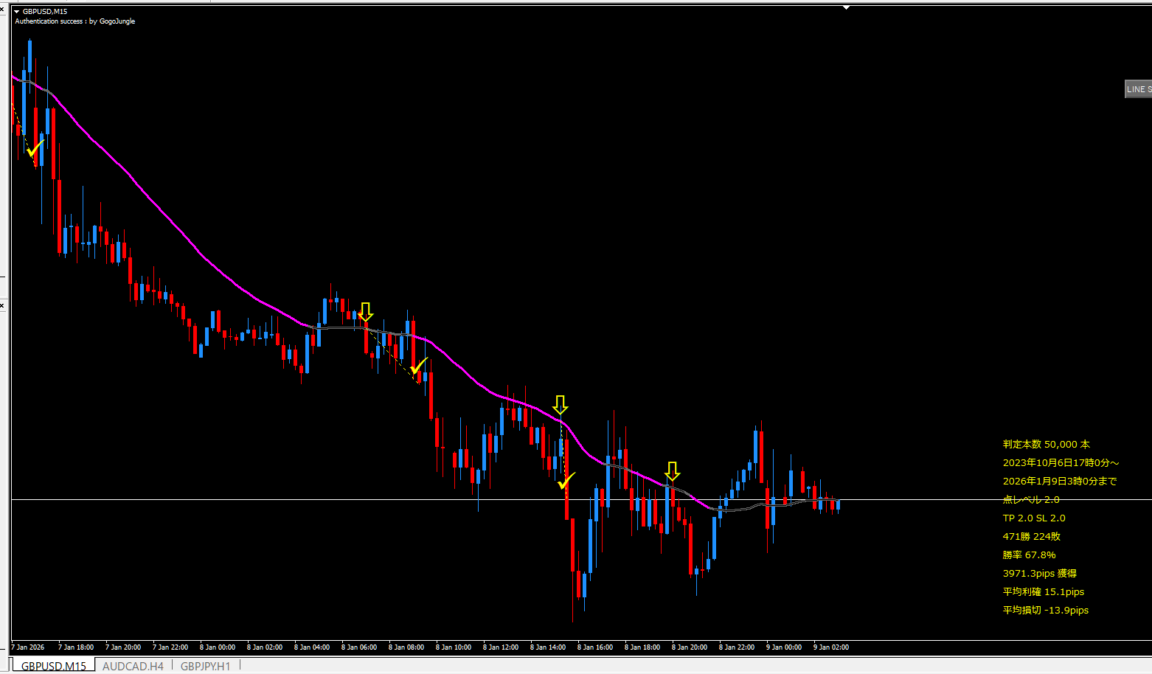
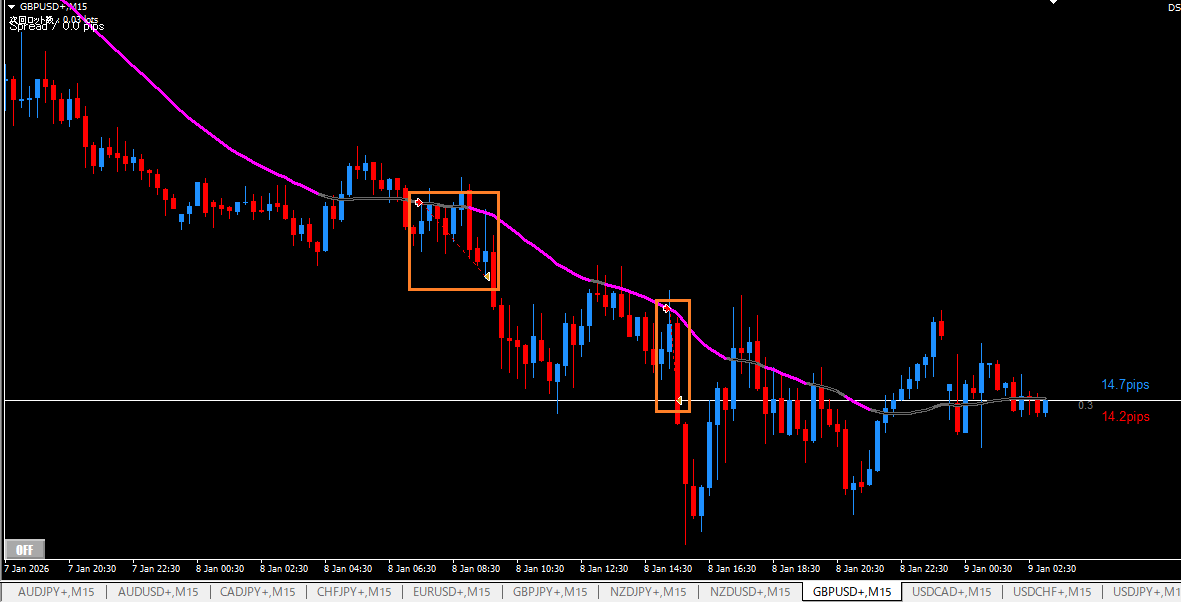
This is also correct.
Prime Combo Signal has a third entry, but it is at night, so there is no real entry (due to trading ban hours)
NZDUSD 〇
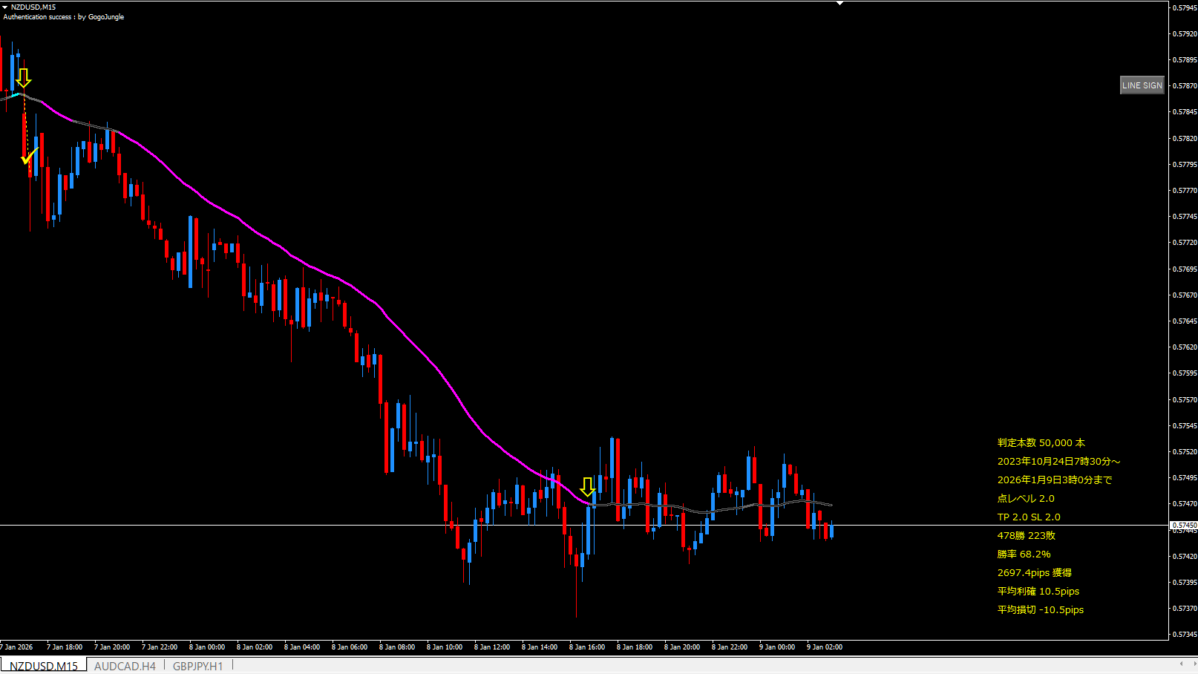
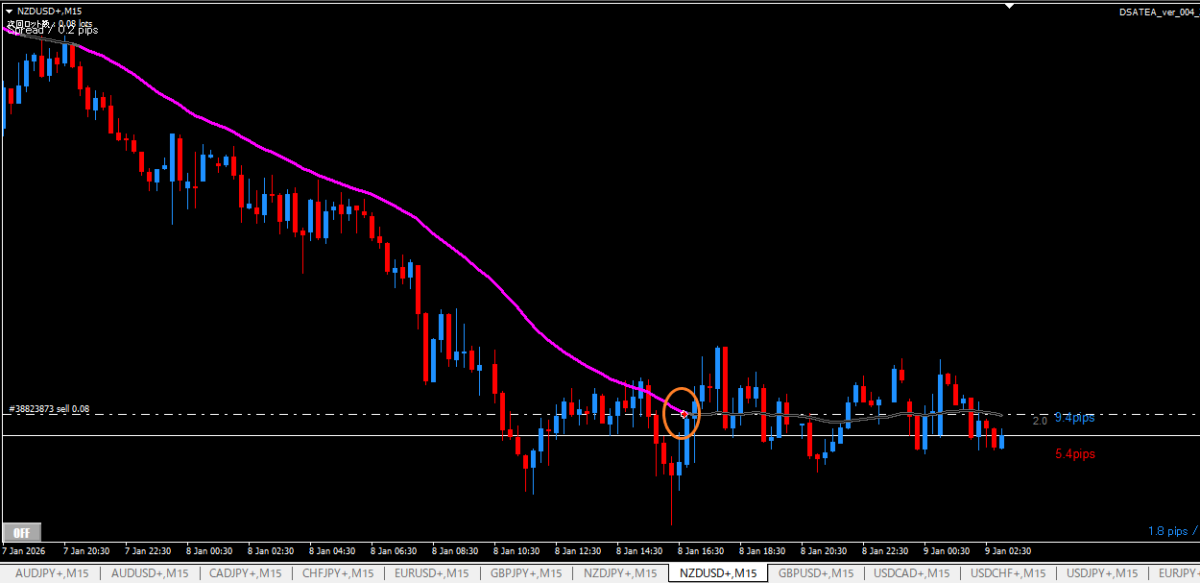
Entries at the same point.
Took profit around 10:00 on the 9th (Japan time).
USDJPY ×
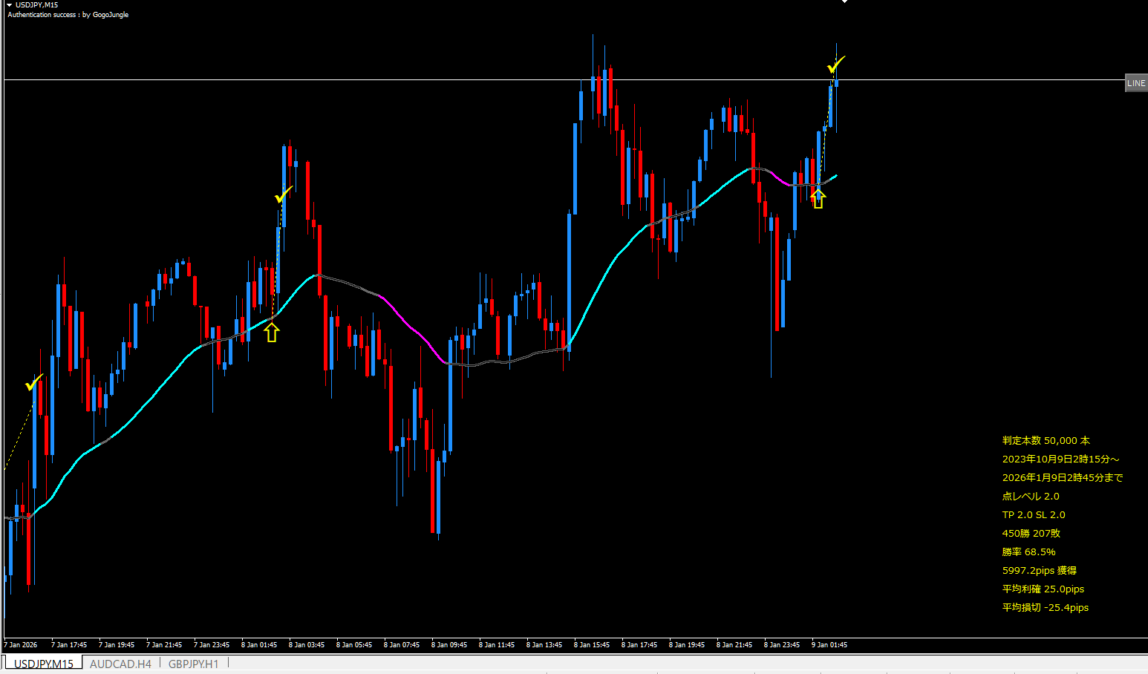
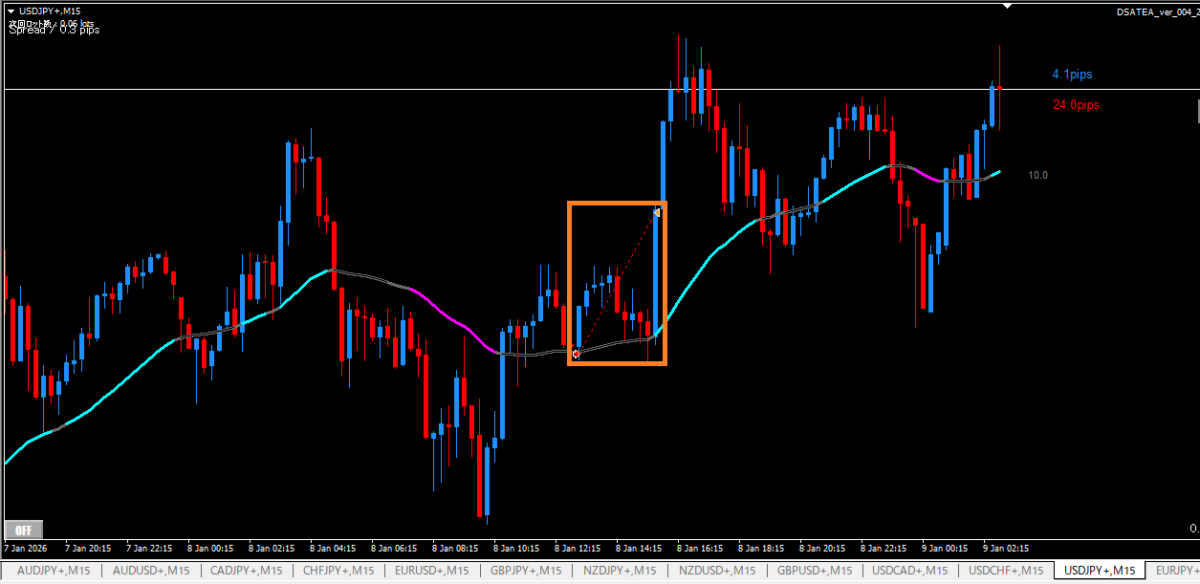
Finally, USD/JPY.
Prime Combo Signal has 2–3 entries, but DSATEA has no entries due to trading ban hours.
Converselyin real trades, the short-entry stop-out occurred, and Prime Combo Signal did not display this.
Regarding thisit is due to the MTF specification of Prime Combo Signalthat occurred.
I have judged this as a fault for USDJPY alone.
Conclusion

Let me summarize this article.
Using a higher timeframe filter (1H, ADXDX) can
- cause a small discrepancy between Prime Combo Signal and entry points※
- take-profit points are the same, so there is not much change in win rate
- slippage and candlestick insufficiency causing occasional FX broker differences may occur
※Because entries are determined by the instantaneous switching timing of MTF, it cannot be helped by the specification, but by using the MTF filter confirmation and instantaneous confirmation in late January 2026, it should yield the same results as Prime Combo Signal.
In rough terms,
using two higher-timeframe filters yields results that are more stable and similar to Prime Combo Signal
in comparison.
After two days of testing, the win rate was about 60%.
Over two days, with 1% of the account, the balance went from 100,000 to 109,000 yen (monthly return about 10%).
Since one month of testing is necessary to assert reliability
If you want to try it, I strongly recommend using a demo account for at least one month.
And in this test, looking at the chart, I felt thatbuying on dips and selling on rallies is being done appropriatelyhere.
Wonderful, the indicators that seemed distant have come this far... I am impressed.
That is all for this article. I would appreciate it if you could share it.