

[Environmental Awareness and Verification] July 31st data - Verified with the Heaven and Earth O-Sime-ter DX and Histogram DX2
This is Shirou!
This time as well, I tested environment recognition.
Day 2 of the verification.
For how to perform environment recognition, please see the following article.
【Environment Recognition & Verification】July 31st edition - Verification with the Heaven & Earth Oximeter DX and Histogram DX2
On the second day, unlike the first day, the results mainly showed candles in the opposite direction.
Results
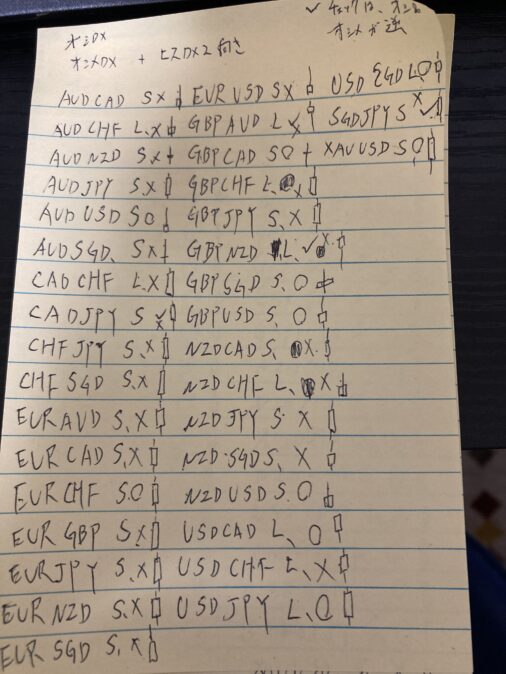
Candles in the same direction: 〇; Candles in the opposite direction: ×
S means Short, L means Long
Even for candles in the opposite direction, for example if a candle forms a hammer shape, there are opportunities to buy on dips or sell on rallies, but this time
there were also noticeable candles that were opposite-direction and large bearish or bullish candles
as well.
We will verify large bearish and large bullish candles in the opposite direction.
This time, in the cross-yen pairs, the large bearish and large bullish candles stand out.
Let’s take a quick look.
- Left red line: start of the 31st
- Center red line: London session start (Japanese time 16:00)
- Right red line: end of the 31st
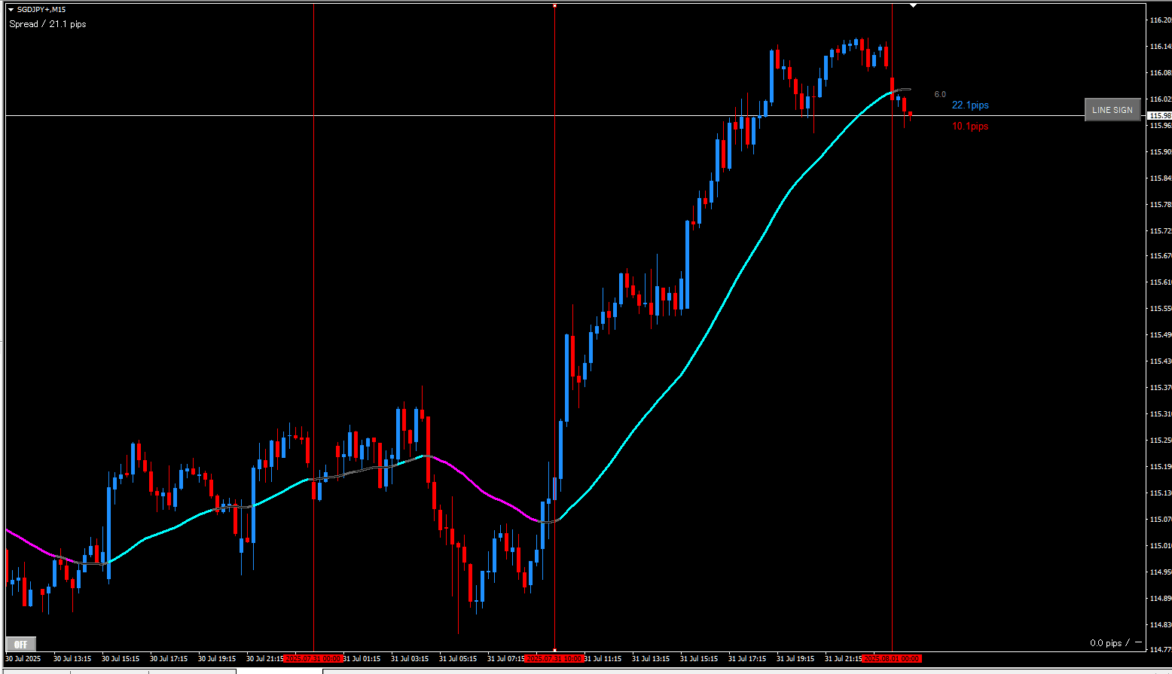
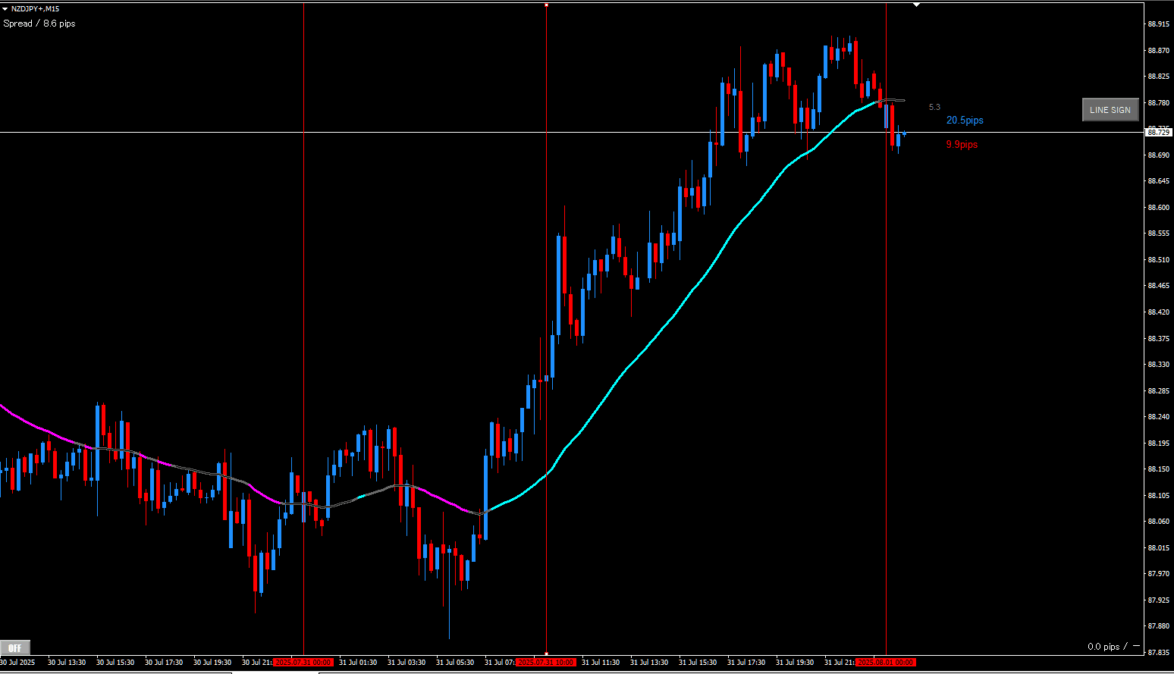
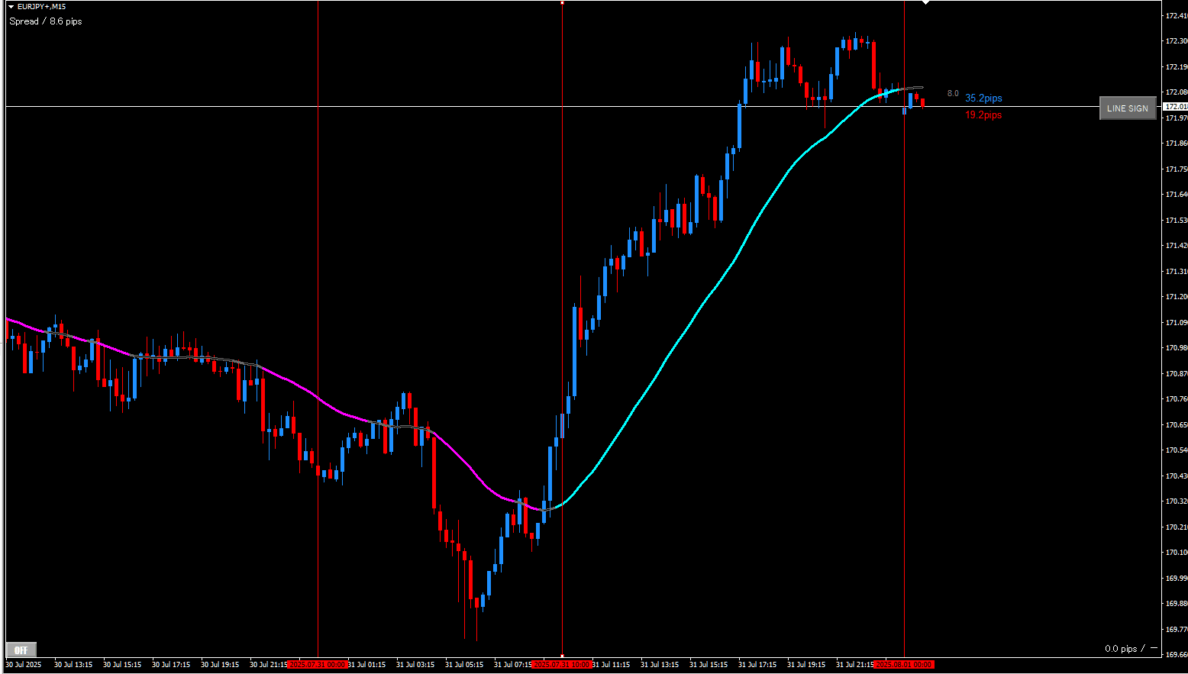
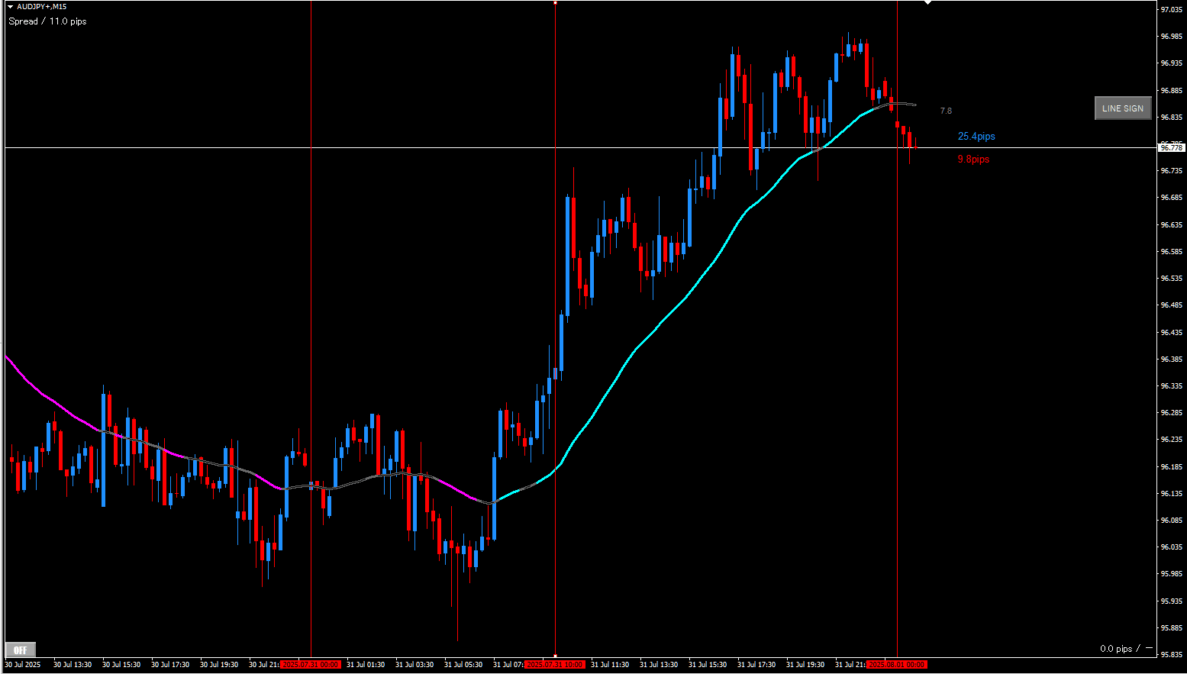
There are other cross-yen charts as well, but they all showed the same pattern.
With the horizontal lines, the nearest resistance zone also seems to have turned into a support line.
In environment recognition,there are times when the answer comes from a majority vote.
For example, this timethe dollar/yen was the only one with a long (buy) bias(using this method of environment recognition).
However, other cross-yen pairs were all short-biased, so in this kind of situation
.
But this time, all results were Long.
It seems the yen selling trend was quite strong.
Possible reason is that
policy rates remained the same at 0.5% for expectation, previous, and current period
.

(Foreign traders) The yen may stay unchanged... then we'll sell it to buy other currencies and earn the interest
This mindset among the London players was the cause.
Selling the yen and buying other currencies leads to swap (interest) accrual and makes carry trades more successful.
Below are reference interest rate values.
? Central banks’ policy rates (as of July 2025)
| Currency | Central Bank | Policy Rate (approx.) | Source |
|---|---|---|---|
| Japanese Yen (JPY) | Bank of Japan (BoJ) | 0.50%Fixed (unchanged) | [Reuters report] |
| US Dollar (USD) | Federal Reserve Board (FRB) | 4.25–4.50%Fixed | [FOMC statement / reports] |
| Euro (EUR) | European Central Bank (ECB) | 2.00%(Main rate) kept | [ECB official announcements & reports] |
| British Pound (GBP) | Bank of England (BoE) | 4.25%Kept | [BoE decisions & reports] |
| Australian Dollar (AUD) | Reserve Bank of Australia (RBA) | 3.85%Kept | [RBA official / Reuters reports] |
| New Zealand Dollar (NZD) | Reserve Bank of New Zealand (RBNZ) | 3.25%Kept | [RBNZ official / reports] |
If you’re not careful, interest rates can differ by nearly ten times... as usual, Japan’s interest rate remains too low.
In conclusion
During London time, trends tend to change easily, so be careful! On days when policy rates are announced in each country, one option is to refrain from trading.
Basically, charts move according to the environment recognition, but various factors
- After London time
- Economic indicators
- News
- War
can push prices in the opposite direction, so there are cases where environment recognition becomes meaningless.
Don’t force entries,I personally think entry should be made only when you have no choice, so in such times it’s best to refrain.