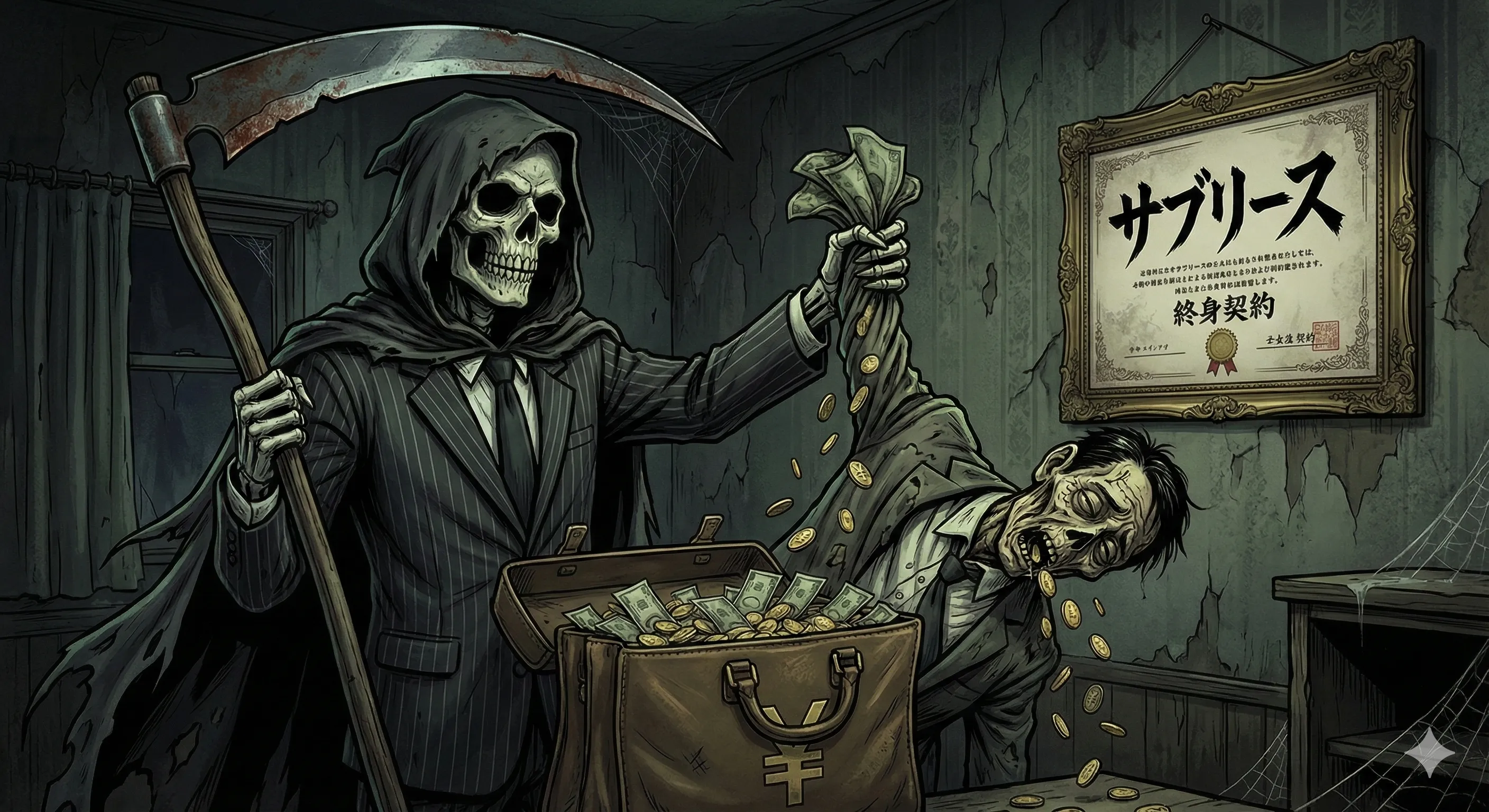

"Rental guarantee" is a contract with the devil. The true face of subleasing as a naive-targeting scam②
The downfall of rent guarantee. The “perfect money-collecting system” that sucks the marrow dry
I am an FP rank 1 who manages assets worth 150 million yen. Continuing from the last piece, I will uncover the darkness of “sublease (rent guarantee)” in real estate investment. Why do firms push so hard to propose “we will guarantee the rent”? They are not kindly partners. A sublease contract is a high-risk, low-effort, high-return alchemy that shifts risk onto others and drains profits for them.
Profits go to the operator, costs to the owner
From the revenue structure, the absurdity is obvious at a glance. The “key money” and “renewal fee” paid by tenants should be the owner’s income, but under a sublease contract, all of it ends up in the operator’s pocket. Meanwhile, costs such as “restoration costs” and “maintenance costs” are billed to the owner. Moreover, there is a trap here as well. In many contracts, maintenance must be done by designated contractors, and even if the bill is inflated far beyond market rates, the owner cannot refuse.
The tasty fruit is monopolized by the operator, and the owner only gets the seeds and peel processing costs. This is the reality.
The greatest despair comes at the time of sale
The highlight of this hell is when you try to hand over the property—that is, at the exit (sale). I can state with certainty: properties with a sublease attached are not desired in the market. They are treated as industrial waste.
The reasons are obvious. First, the financing institutions give a low appraisal, making it hard for buyers to obtain loans. Second, even if the owner changes, you cannot live there. Third, because the operator’s fees are deducted, the yield is extremely low.
As a result, market value collapses, and you fall into a “liquidity trap” where you cannot sell even if you want to.
The final blow is “purchased for pennies”
A worried owner who faces vacancy risk, battles repair costs, and is exhausted from not being able to sell. At this moment, the operator approaches with a savior-like face. “This must be tough. Shall we buy it from you?”
Of course, the price offered is well below market value—pennies (less than half of the purchasing price). A heartbroken owner must accept the offer to cut losses. What does the operator do with the purchased property? They immediately terminate the sublease (it's easy since it’s a contract with themselves), put it back on the market at a fair price, and resell it at a high price. They even skim capital gains.
Conclusion
From entry to exit, they siphon off every drop of blood. This is the full picture of the “perfect money-collection system” known as sublease.
The price paid for succumbing to the term “rent guarantee” will be paid in the form of asset loss. There is no path other than protecting your life and assets with your own knowledge rather than leaving it to operators.