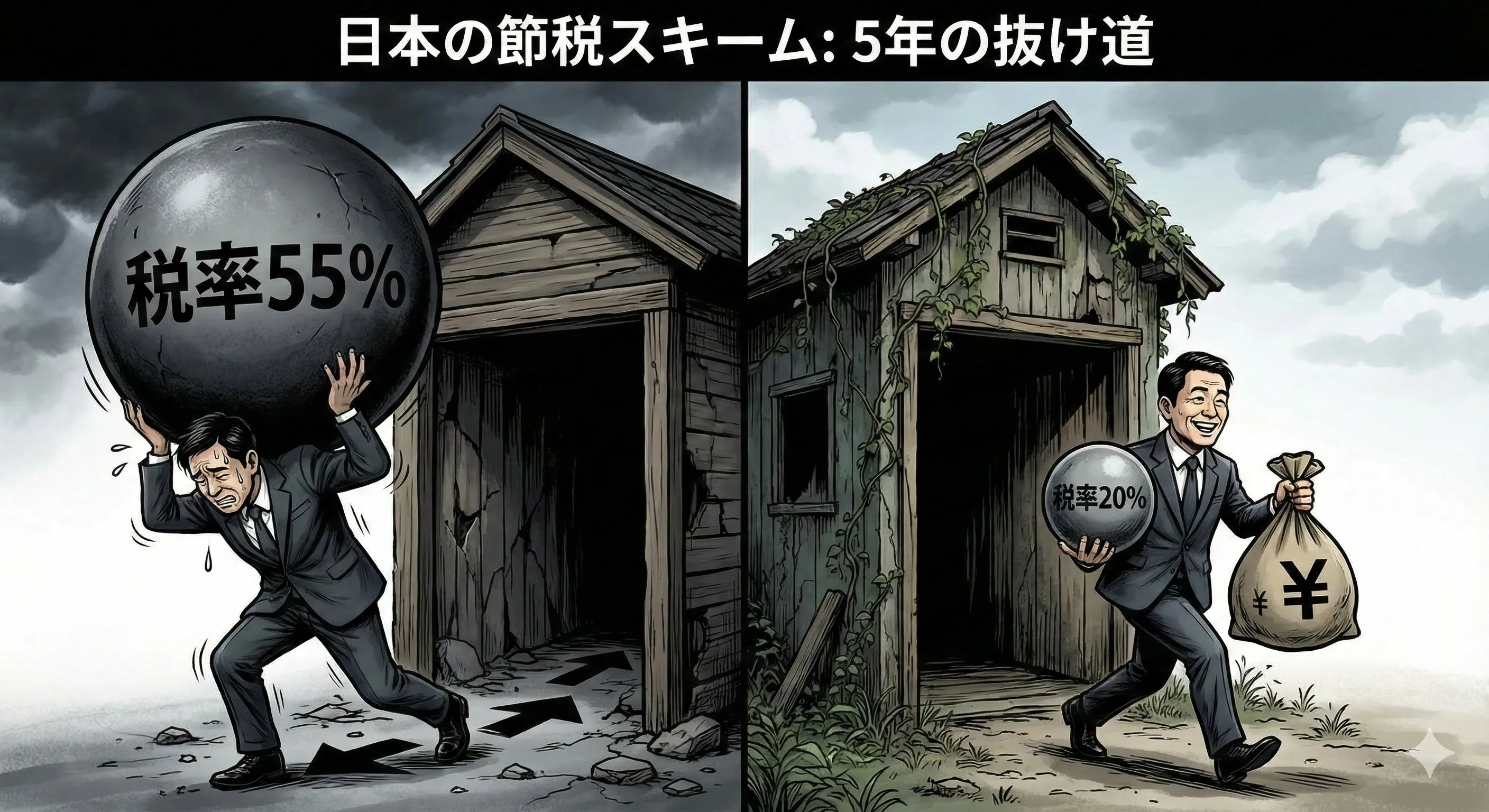

Old wooden apartment buildings are "alchemy." The true nature of tax refund machines that only high earners can use
He is an FP1 whose specialty is the 1st class in asset management, an S-class strategist. In the streets you’ll see old wooden apartments that look ready to collapse. Dear readers, you might smirk, thinking, “What a shabby place.” It is that very mindset that is the biggest reason you cannot become a wealthy person.
That is not merely a shabby house. It is a powerful “tax refund machine” that only a chosen few high earners are allowed to use. This time, I will explain the trick of “old-property real estate investment” where ordinary people get burned, and only the wealthy can suck up the honey.
The Magic That Creates Huge Expenses in Just Four Years
Why old wooden structures? The reason lies in Japan’s tax system. The legal useful life of wooden houses is 22 years. For properties that exceed this period, depreciation is allowed at 20% of the useful life, meaning a mere “4 years.”
Here’s how it works. First, purchase an old wooden building with value close to land value, and raise the building ratio appropriately through renovations, etc. Then depreciate the building’s value in just four years and create a massive “loss” on the books. By offsetting this loss against your high salary income (loss offsetting), you forcefully reclaim the withheld income tax and inhabitant tax.
Erase taxes with the expense called “depreciation” that does not involve cash outflow. This is the basic form of alchemy in real estate investment.
Do Not Be Fooled by the Word “Tax Saving”
But there is an important fact you must not misunderstand. This is not “tax saving.” It is simply “tax deferral.”
Depreciation makes the book value (carrying amount) of the building zero. If you then sell the property in that state, the gains will be enormous and heavily taxed. If you naively think you won’t have to pay taxes, that is simply a lack of study. The country is not that lenient.
The Battle Is Decided by the Gap Between Entrance and Exit Tax Rates
So why do the wealthy favor this scheme? Because it lets them exploit the distortion (arbitrage) between the entrance taxation on salary income and the exit taxation on capital gains when you sell.
Entrance (refund):Income tax top rate 45% + resident tax 10% =Maximum 55%Maximum 55%
Exit (sale):Long-term capital gains (held over 5 years) =Around 20%
This “roughly 35% tax-rate gap” is the source of profit in this game. Receive a refund at 55% tax rate and pay later at 20% tax, and legally pocket the difference — that is the true aim of old-property investment.
Conclusion
In other words, if your annual income is moderate and your tax rate is around 20%–30%, this method won’t make sense. Because the exit tax rate is not the same, you’ll lose to the effort, fees charged by operators, and interest costs.
The “old-apartment” alchemy is a privilege reserved for those with high attributes — those who have the right tools. If you enter the field mimicking influencers without properly understanding your own attributes (specs), you’ll just be treated as a sucker. Know your place.