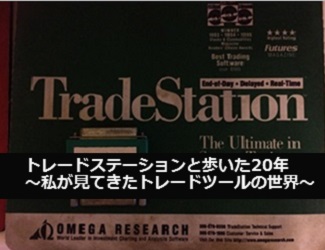

Completion and deployment of TradeStation Version 4.0
Hello everyone, thank you for your hard work.
Now, I will continue the story.
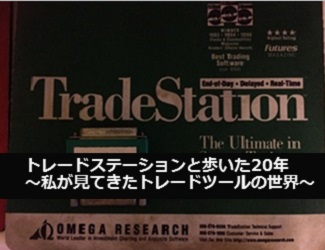
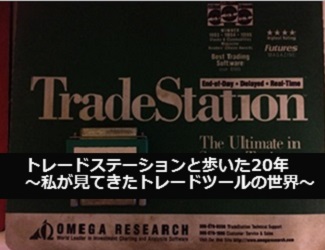
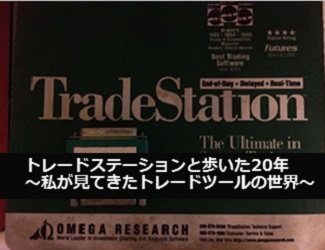
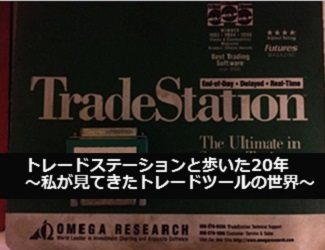
In the latter half of 1995,TradeStationVersion 4.0の世界もwill improve with the spread of Windows 95 and the Internet, and its convenience, along with a trading style that follows the rules, gaining worldwide popularity.Futures Truth, a quarterly publication evaluating trading systems, saw many users bring in programs written inTradeStation’sEasyLanguage, further spreading its name. Around the same time,OMEGA ResearchcreatedTradeStationto supplement analyses that it lacked,OptionStation,RadarScreen,Portfolio Maximizer, releasing products, and as a cheaper versionSuperChart, releasing applications with limits on amount of code and number of trades, rapidly expanding sales due to their low price. The products were sold as perpetual licenses,TradeStation, OptionStationeach priced atabout 3000dollars.RadarScreenandPortfolio Maximizereach priced atabout 1500dollars,ProSuitesbundling everything together could be purchased forabout 6000dollars. In contrast,SuperChartwas not priced at300dollars.
OMEGAResearchwent public on theNASDAQ
At that time, a common topic was the “Robinson Cup,” a real-money trading contest that also circulated in Japan, with Japanese brokerage houses imitating it and running their own contests. Those who won often became famous traders or published books. This contest boom later carried over into margin forex trading company contests. I wonder if such contests are still held today. Similarly, around the world, the programming language used in these contests began to be used as a common language calledEasyLanguageEasyLanguage. In the back issues ofStock&Commodity, other company languages appeared only sporadically, butEasyLanguagewas featured in every issue. There were many related books published as well, which you may have seen often.
Through products and going public, the company grew stronger and gained worldwide fame.
(Next: Online brokers)