
基本は順張り~230億円稼いだ勝つ思考。その②
Continuing from the last time, this is a story from cis's book.
Thinking to win.
The basics are to follow the trend.
cis's explanation of trend-following and counter-trend.
“When the market is in an uptrend, you think it will continue to rise and bet on that, which is [trend-following].
What people are betting on when things are falling and they think they will rebound is called [counter-trend].”
If asked for advice for people starting investing, cis would answer like this.
“Things that are rising keep rising, and things that are falling keep falling.”
“What is currently being bought and rising, and what is being sold and falling
is a clear fact that exists there.
If that is the case, the best odds are to act along the tide of the market.”
cis says this isthe overarching principle.
At first, because I did not understand this overarching principle, I lost about 10 million yen continuously.
Whether it will rise or fall next is unknown, but if it is rising now, that is the fact.
If there is a fact that it is rising, you buy.
This is something I have written many times.
When it is rising, think about where to buy.
Buy because it is rising.
Those who lose, naturally, are doing the opposite.
When it is rising, think about where to sell.
This is the thinking of people who lose.
cis was losing with that thinking, but by changing his mindset he started to win.
“I was able to build my current assets by following this overarching principle.”
As the name suggests, it is a very important foundation of thinking.
In the world of markets, many lose.
Many people do not understand or cannot implement this overarching principle.
Why can’t many people do it?
cis says this:
“For example, if you flip a coin 10 times and get heads all 10 times, what will happen next if you flip again? It will be 50/50.
Yet many people tend to feel that the tails are due soon.”
“I think that is a natural instinct and reflex.”
“People tend to think, ‘It’s rising now, but it should reverse eventually,’ but that is just trying to fit into an image of ‘balance will eventually be achieved.’”
“There is no stock that rises forever, so you think it will fall sooner or later,” and you form predictions about when it will reverse.
That is counter-trend thinking, right?
cis calls it an instinct.
I have explained the same thing from psychology in a previous article. ⇒Psychology of counter-trend traders, gambler’s fallacy, the law of small numbers
“The balance should eventually be achieved.”
I wrote about this at the end of the above article.
Kaiji
This man’s thinking
In gambling, this way of thinking is the most dangerous
It is exactly a path leading to hell
Because there were three “Choki” in a row,
the idea that there is no more choki
is exactly a quagmire
The story of how the manga Kaiji came to be.
In a game of rock-paper-scissors, the concept of “balance theory” appears.
Choki, choki, choki, and it is hard to imagine that the next will be choki too.
There is a scene where they exploit psychology about people’s balance to outsmart and win by showing more choki.
“Gambling is most dangerous when
Trading is the same.
“It should reverse eventually”
“I think it should fall eventually” and you form predictions about when it will reverse.
This kind of thinking is the most dangerous. Counter-trend thinking. Balance thinking.
Recently too, when the dollar-yen was rising, many people who were selling were getting wrecked.
They thought it would fall eventually, would definitely fall soon, and moved to sell.
Among those selling as the dollar-yen rose, I saw this kind of statement.
“In the short term or long term, there is no doubt it’s overbought right now.”
There were several people who rode that statement and sold dollar-yen.
Some even believed that statement and sold even though it hadn’t fallen yet.
“I see... thanks to you I can recover some of today’s losses. Thank you.”
I almost spoke up, but if it drops right after cutting losses, there is a risk of being resented, so I didn’t.
Future price movement is unknown to anyone.
Regardless of whether it falls later, cutting now is the right move.
The result after cutting is irrelevant.
But many people only look at the result, so it’s hard to get them to understand.
Returning to the initial statement,
the fact is not that it’s overbought. Whether something is overbought or oversold is not knowable by anyone.
The fact is what cis is saying here.
“What is rising is what is currently being bought
as a clear fact that exists there.
Overbought is not a fact.
The fact is that it is rising.
You buy when you see the rising fact. This is trend-following.
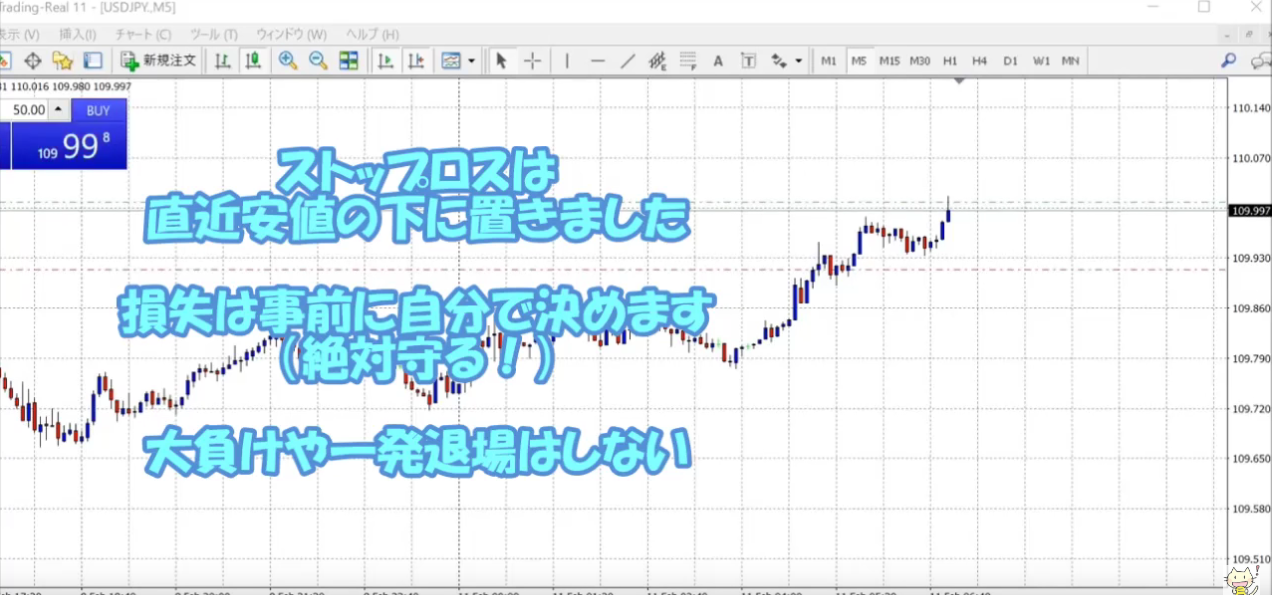
I actually bought when the dollar-yen was rising.When the market is in an uptrend, you think it will continue to rise and bet on that, which is [trend-following]
This trading video will be linked at the end.
Isn’t it psychologically hard to buy?
cis once hired someone to teach trading.
Even if you teach the overarching principle “Things that rise keep rising,” it is often difficult for others to actually do it.
“Things that rise keep rising” but actually doing it requires a very brave trade.
Some people fear buying at high prices.
I’m buying with prices at the high, and of course it could fall further.
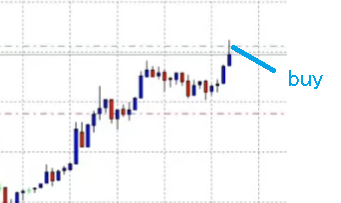
Just because you bought at a high price doesn’t mean your losses will be large though.
Once I enter, I immediately place a stop-loss order.
Then no matter where you buy, the loss is the same. It only becomes a loss you decided for yourself.
Whether you grab today’s high or the year-to-date high or the all-time high, it’s the same.
This kind of talk isn’t written in cis’s book, but by placing a solid stop-loss, trend-following becomes easier.
Wherever you buy, if it moves against you, the stop-loss is the same. Buy where it’s rising without fear.
I bought more dollars-yen as it rose.
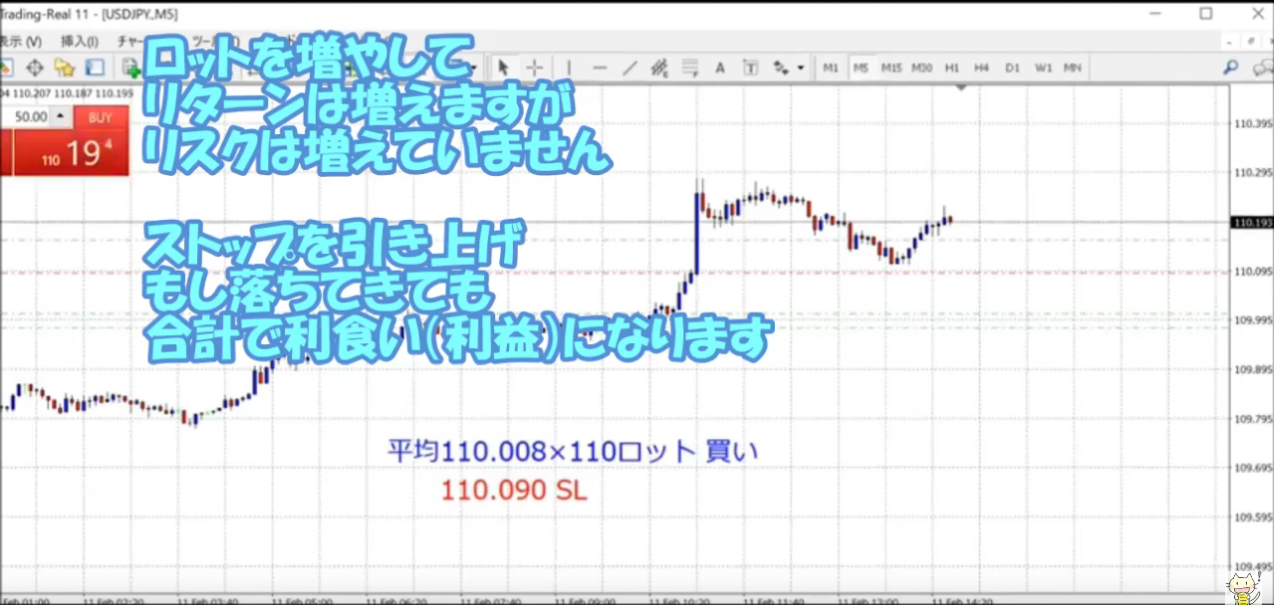
Among those taught by cis who started winning, some could also add to their purchases as it rose.
If it rises after you buy, you buy more again.
For counter-trend thinkers, that is very difficult.
Always thinking, “Will it fall soon?” makes it impossible to add to positions.
Rather than adding, you’d want to sell.
However, if you want to win, buy when it’s rising.
This is a trading video where buying dollars-yen while it’s rising yielded profits.
The scenario for buying dollars-yen is published in advanceFX Members Blogand some people managed to buy dollars-yen based on that.
Even if you have peeked at my scenario in advance, actually buying where it’s rising is hard at first, but with practice you’ll get better.
cis’s overarching principle
“What is rising is what is being bought now, and what is falling is what is being sold now
as a clear fact that exists there.
Therefore, acting along the market’s tide is most likely to win.”
“By following this overarching principle, I was able to build my current assets.”
This “winning mindset” isn’t something special to cis alone, but is a common overarching principle among winning traders.
If you want to win, imitate those who are winning.
Recently, I’ve linked several past articles together, so
this is also recommended.⇒An article to read when you lose with counter-trend and reflect
“Often people buy when prices have fallen, hoping for a rise, but professionals absolutely do not think that way.”
“They simply follow the market’s direction blindly. This may be the big difference between professionals and ordinary investors.”
You can pre-check my entry points:FX Members Blog serialization
I’m on Twitter:https://twitter.com/takashipyo
I have trade videos up:Trades that turned 100,000 into 1,000,000