

[Week 3] Serious Trading Battle!
Thank you for your hard work!
This is Nobushi!
Now, the trading battle has finally finished its third week, hasn't it?
Even though we call it the third week, the first week was only one day, so it’s effectively two weeks, right?
In other words, half a month has passed, and it went by in the blink of an eye...
There are two weeks left, but first I want to focus on how to increase assets efficiently rather than winning or losing, with low risk in mind as I trade.
For part-time traders, the thing they hate most is
having their hearts shaken by tradingthat’s what it is.
The most困る thing is not being able to focus on the main job, isn’t it?
So I hope to minimize the period of drawdown and keep the number of stop-outs low as much as possible.
Now, first, let’s go through this week’s profit and loss report!
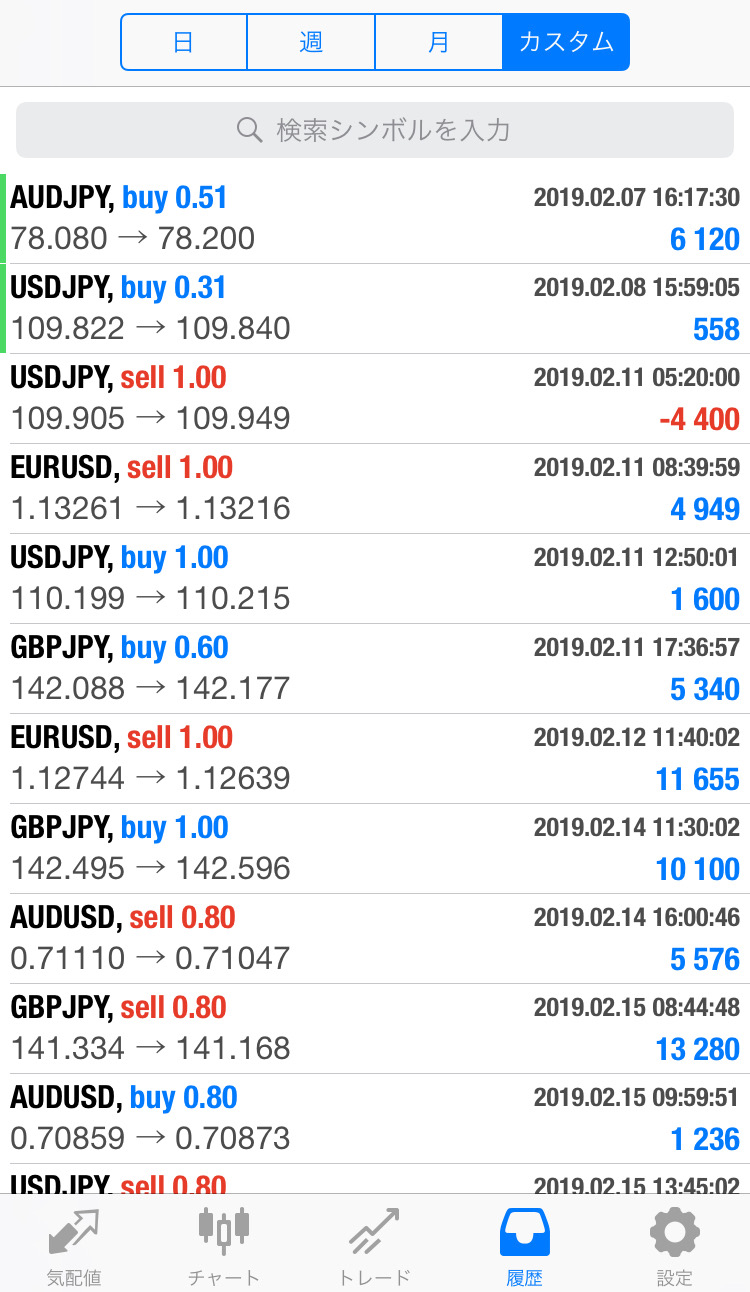
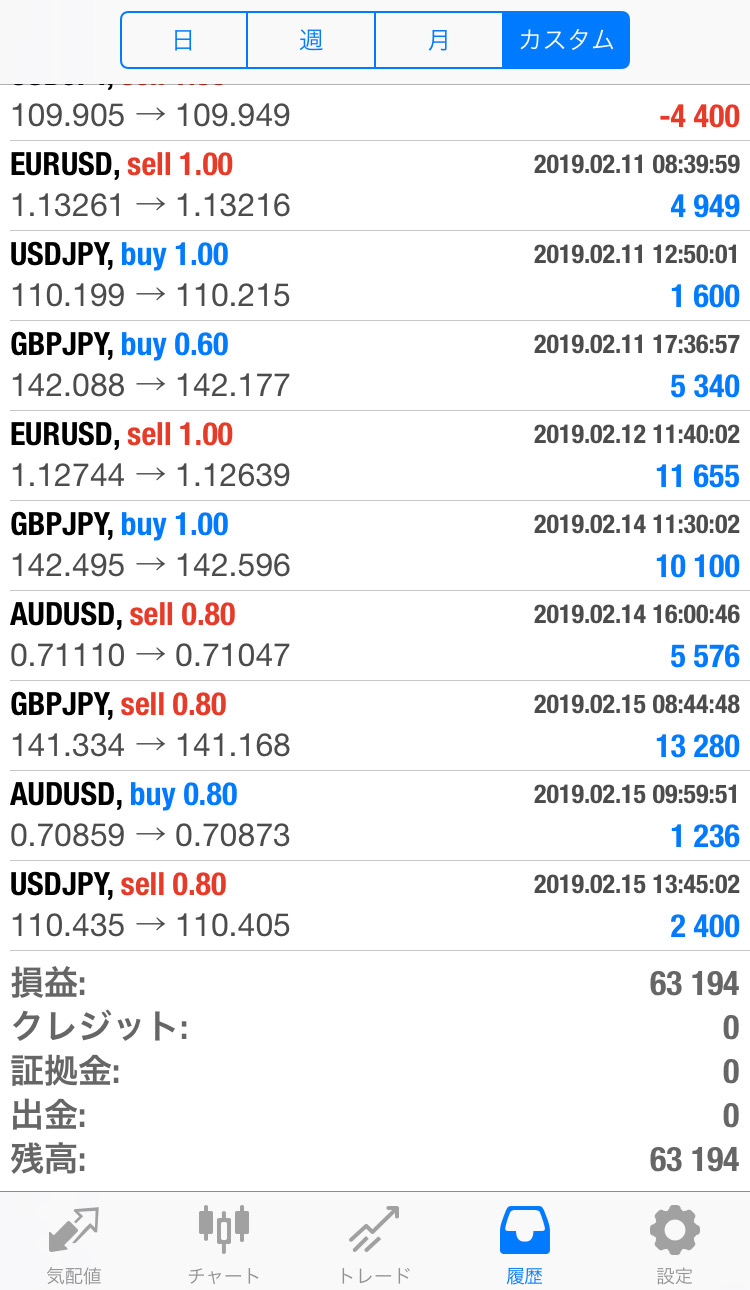
【Only this week】
Number of trades: 12
Gains: about 74.1 pips
Total profit/loss: 63,194 yen
Next is the overall balance for the entire trading battle period.
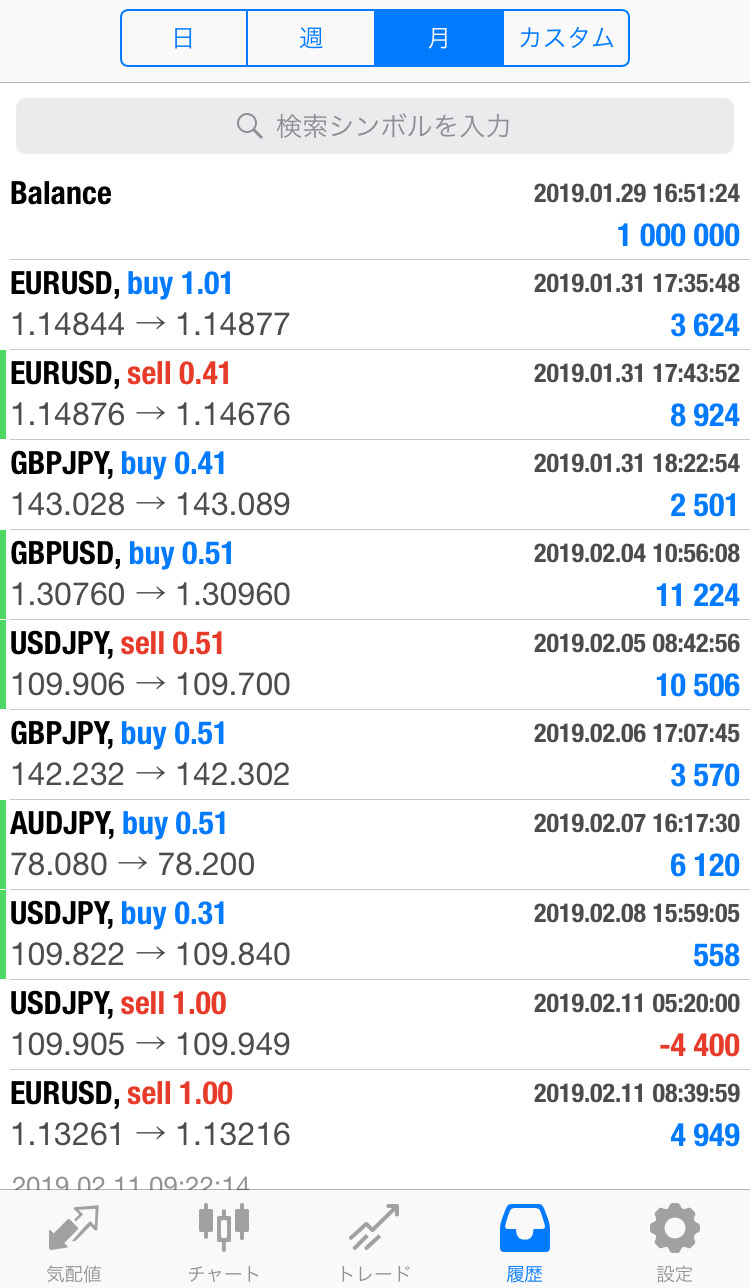
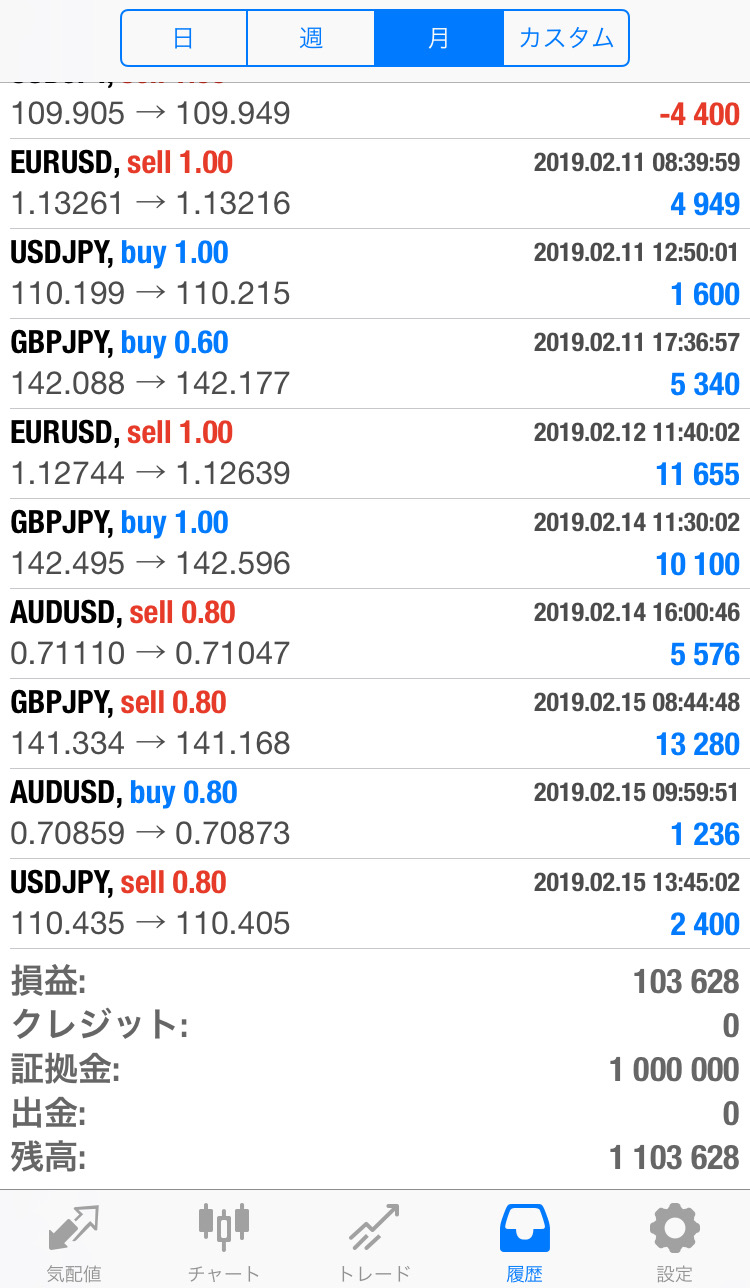
【Total for the trading battle period】
Number of trades: 18
Gains: about 150.1 pips
Total profit/loss: 103,628 yen
That’s how it stands.
This week I was able to allocate relatively more time for trading, but
the moves in USD/JPY pulled all currencies in odd directions...
I mainly watched USD/JPY and EUR/USD charts, but
there weren’t good entries, so I ended up touching other currencies, perhaps.
Now, I’ll introduce part of this week’s trades.
First is the midweek EUR/JPY 1-hour chart!
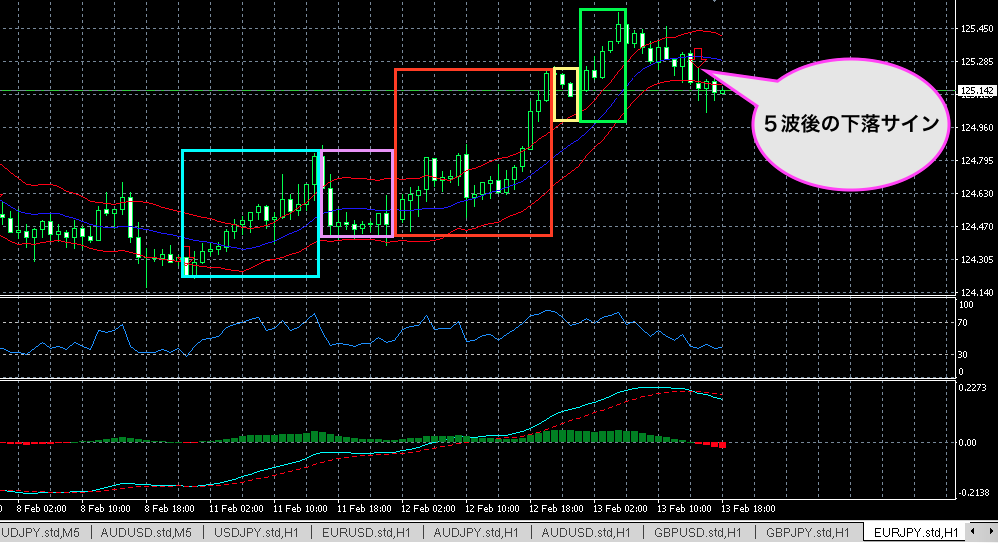
As I mentioned last week, we saw an upward 5-wave on the 1-hour chart,
and after that the indicator gave a downward signal,
which becomes very strong evidence, so I decided to go short here.
In such situations, you can wait for a pullback on the same 1-hour chart and go short,
but if you want to trade more frequently, you can also wait for a pullback on the 15-minute chart and go short.
It’s slightly more scalping-like, so
the number of trades increases, but you have to stay glued to the chart more.
Therefore, I don’t recommend it to part-time traders very often.
This week, Monday was a holiday and Friday was a paid day off, so
I used scalping frequently andpicked away at it(just for Valentine’s Day)
Anyway, what happened with EUR/JPY after that...
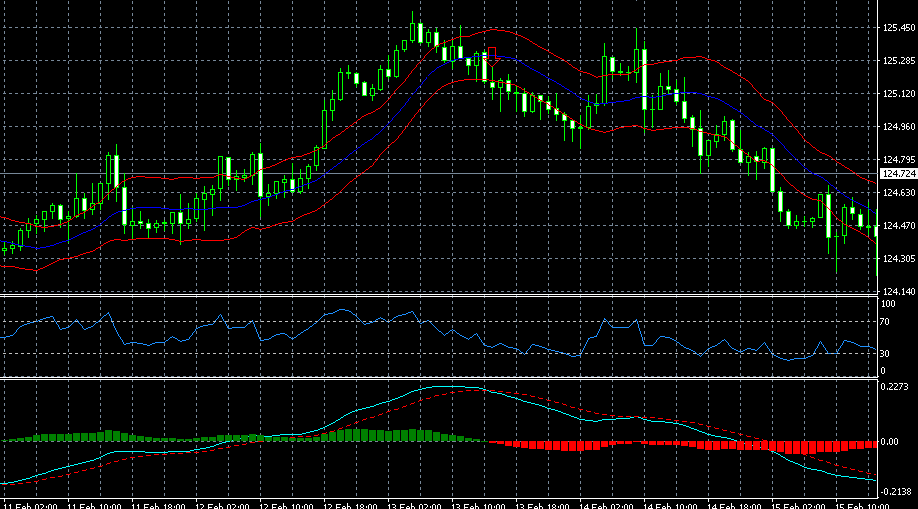
It fell like this, and
if you don’t lose the sense of direction, the time you carry drawdown becomes shorter,
even if you miss a few entries a bit,
it won’t lead to a big loss.
It’s very simple, but I think it has a high edge.
Please use it as a reference!
Also this week, many people were beaten by USD/JPY, weren’t they?
If it was going down, it kept falling; if it seemed to keep rising, it suddenly dropped—hence the tweets about USD/JPY being a pain.
Amongst that, I watched USD/JPY movement closely, but I didn’t find it that difficult.
According to the indicator signals, it looked like this.
USD/JPY 1-hour chart
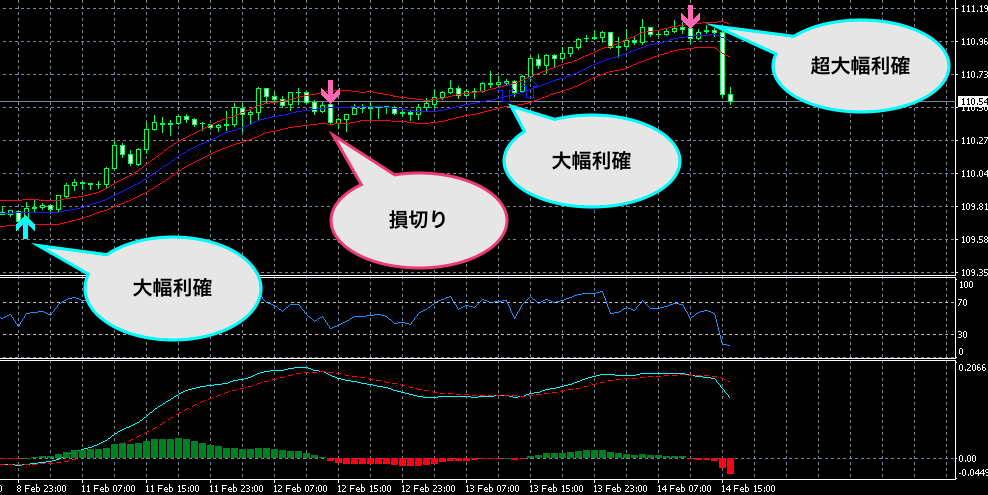
There were clear downward signals even before that big drop,
and if you trusted the signals and followed, there wouldn’t have been a big injury.
This week I focused more on getting a sense of direction on the 1-hour chart and
took trades using a very simple textbook-like strategy of scalping on the 15-minute chart.
And most of all, the number of stop-outs was1 out of 18
This doesn’t mean I didn’t cut losses at all, but rather
I didn’t reach the actual stop-out level yet.
Of course I wasn’t carrying drawdown either, so it was a very comfortable week psychologically.
Many people ask why there are so few stop-outs and why the stop-out width is small (one stop-out is -4.4 pips).
FX Object’s stop-loss explanation videoalso discusses this, but
in the first place, stop-loss should be decided before entering a trade.
What you shouldn’t misunderstand is that you fix the same stop-loss width every time.
So it’s not about deciding every time, “If I’m in a drawdown of 10 pips, I’ll close.”
It’s whether there is a clearly visible point on the chart where you must exit the trade if you enter now,
and if that width is large, you simply shouldn’t enter.
There isn’t anything complicated about it.
Because when you want something, you don’t buy it if it doesn’t fit your budget, right?
It’s the same thing.
Before entering, if you clearly know “how many pips you’ll lose if you’re stopped out,”
and the width is large, you simply don’t enter.
It’s not difficult at all.
Because even when you want something, you don’t buy it if your wallet can’t accommodate it.
It’s the same as well.
Before entering, since you clearly know “how many pips you’ll lose if stopped out,”
you pay this amount (the expected stop-out amount) for the entry (the chance of huge profit),
and then you don’t get anxious after entering,
and you certainly won’t lose sleep at night.
Because you’ve decided the loss amount yourself.
You simply shouldn’t enter above your means.
It isn’t that difficult, is it?
“Stop-loss” is a word that makes many people suffer...
Change the concept that stop-loss is something you carry later and
accept that you pay it upfront.
If you understand in your head that you pay this cost (stop-loss amount) to have the chance of huge profits,
trading becomes enjoyable.
It’s like buying a lottery ticket with a high probability each time.
Never decide your stop-loss amount based on your convenience.
The market is a living thing, so it won’t move exactly as you wish,
and there will always be some distortion somewhere.
Understanding the stop-loss point before entering means you don’t even need to be glued to the chart.
If you order the stop-loss together with the entry, you can just go about your business afterward,
which is a skill absolutely necessary for part-time traders.
I’m always in a part-time position.
My indicator explanationincludes, as you’d expect, the entry point
and also clearly states the stop-loss point.
If the revealed point doesn’t fit your funds, you can skip it,
and if it fits well, you just enter.
It’s a steady way to trade, so please use it as a reference!
Also, the other day on Twitter I asked my trading friends
“What monthly return are you aiming for right now?”
We’re still accepting responses, so I’d appreciate your reply.
So far, many are aiming for 1–15% per month
Of course there’s a big difference between full-time and part-time traders,
so I can’t say for sure.
I’m looking forward to the results!
Then, may you all have爆益 next week as well!
【P.S.】
Because some indicators’ buyers violated the rules (resale and harassment),
the sale of the day-trading indicators was suspended
and has now restarted in limited quantities.
There are currently 8 units left, so if you’re interested, please contact us soon.
Nobushi’s Day Trading Indicator